Gamma Counters were primarily used in Radioimunoassays which were rapidly being replaced at that time with non-isotopic assays. The Cobra and RiaStar counters made by Packard competed head-to-head with instruments made in Finland by LKB Wallac. Both of these companies, including Berthold, my former employer in Wildbad, Germany were acquired eventually by Perkin-Elmer.
While Packard favored instruments with embedded computers, LKB had built a strong following by offering a software program that ran on any PC. It offered far more powerful options and algorithms and provided LKB with “lock out” specifications that prevented Packard from selling to a portion of the market.
I made the case to my boss, the V.P. of Marketing, that Packard really needed to develop the next generation of software that would eclipse LKB. Senior management agreed with the concept but felt that the U.S. engineering resources had other higher priorities.
In 1992, shortly after the fall of the iron curtain, Packard opened an office in Moscow. In 1993, I was asked to travel to Moscow to train their new salesforce and to visit key customers in Moscow, most of whom owned LKB Wallac gamma counters from the Soviet days.
During my first trip I mentioned my vision of developing a software platform and improving the algorithms for data analysis to our Russian manager, Oleg. He informed me that he knew a former professor of his at MEPHI (Moscow Engineering and Physics Institute now called the National Nuclear Research University) who had a team who could do the basic research and would do so at a very affordable price.
My First Trip to Moscow
PanAm was the first American airline to fly a direct route from the U.S. (JFK) to Moscow (Sheremetyevo). After deplaning with my fellow passengers - nearly all businessmen whose mission was the same as mine - we soon realized we were definitely not in Kansas.
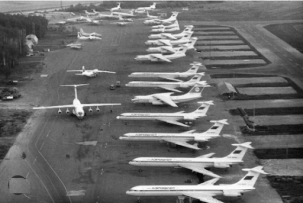
Looking out over the airfield, we saw dozens of old Soviet-era airplanes parked around the airfield, none of which appeared to be airworthy. Nearly all of these old planes were bad copies of familiar U.S. designs like the Boeing 727. None of these planes had oxygen bags. The theory was that if there was a hole in the fuselage, you were all going to die anyway.
Getting to customs and immigration meant walking through a gauntlet of armed soldiers. The customs agents seemed interested in only one thing - how much money did you bring with you? In the U.S., new arrivals see nobody until they have cleared customs. In Russia in the early ‘90’s there were large windows allowing any Russian person to watch the customs process - foreign visitors laying out all of the cash they were carrying and having a customs agent count it out in full view of the public! Keep in mind, in those days Russia had no banks, and credit cards were only accepted at very-high end hotels.
Once I cleared customs, I was met by Oleg and an armed guard with a very large, chrome-plated revolver that he kept his hand on at all times under his coat. Just in case. Then we made our way to the recently-purchased company VW minibus that Oleg drove. Like most Russians of that time, they had never owned nor driven a car and were all learning how to drive at the same time. The roadways were 10-lanes of sheer chaos. Lane markers were mere suggestions of where one might drive.
Police sat in crow’s nests on telephone poles along the roadway. The concept was that if a policeman wanted you to pull your car over, they would motion to the driver (from 30 feet up) to pull over. Drivers would then dutifully pull to the curb, wait for the officer to climb down, come over and issue a ticket. I asked Oleg how he watched traffic and kept an eye on the crow’s nest, and why he would ever pull his car over when it was clear that the policeman in a crow’s nest would never be able to give chase? He said simply, “we don’t do that.”
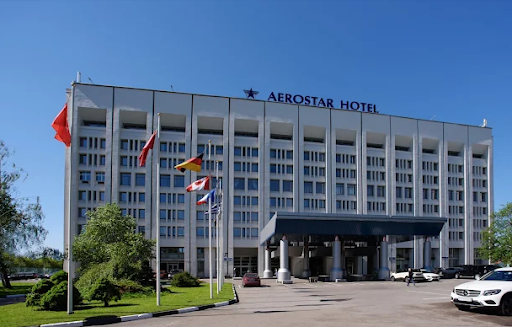
My hotel for most trips was the Aerostar. In those days this was the only good-quality hotel in Moscow and they charged accordingly - $350 to $500 per night - in 1992! You could have bought a large apartment in Moscow for the price of a one week stay!
The Aerostar felt more like a gilded prison than a hotel. If you wanted to go somewhere, taxis in those days were just private cars that belonged to young men, always with a friend riding shotgun, that would take you where you wanted to go for a fee. The problem was, none of these guys spoke English, so the fare negotiations had to be handled by a hotel employee that you could never fully trust. Most of the time I had an interpreter to make the arrangements but when she was gone, I was in for the night.
My First Day at Work in Moscow
I looked upon myself as a salesperson. I was there to get the Russian team prepared to sell, and secondarily, to visit customers who were interested in buying. The Russians referred to me as a scientist. They treated me with far more respect than I ever felt entitled to.
The Russians never seemed to have an issue with traveling long distances. On more than one occasion I met with people from Kamchatka, 4,200 miles, 9 time zones and a 9 hour flight away. Back then, if you had a passport from Russia or any of the Soviet-aligned countries (e.g., Belarus, Ukraine), ticket prices were dirt cheap. If you didn’t, then you had best be prepared to have your bank account drained! I never asked, but I’m guessing an Aeroflot flight from Kamchatka probably cost well under $100 then. If that’s the case, and a state-run institution is paying the bill, travel on!
Training sessions in Russia with people from various countries was an education in the Slavic cultures.There existed a sort of class system, with Muscovite men at the top. Following, in order, were:
-
Men from closely-aligned countries, such as Belarus
-
Men from Ukraine
-
Men from Baltic nations
-
Russian women
-
Non-Russian women
At lunch, women weren’t even allowed to sit in the same room with the men! The Russians weren’t at all embarrassed about making fun of the Ukrainians or the Greeks. It was downright embarrassing to witness.
We called on a customer at the Center for Advanced Medical Studies in Moscow. My first visit was in late March and Moscow weather was frigid. Winter snow wouldn’t be gone for months. In the Soviet times, everyone had a job. There was someone to clear the snow off the sidewalks, sweep the hallways of the hospital and to do all the jobs we take for granted. When Communism fell, the people doing these jobs were no longer being paid and there wasn’t a government in place yet to replace them.
The sidewalks in Moscow resembled half-pipe snowboarding runs. As people walked on the snow, it packed into an icy “U” shape. A large portion of the people we saw at the hospital had arm slings on, due to broken or bruised elbows from falling on ice. In second place were broken ankles and knees. The stairwells in the hospital hadn’t been swept since the fall of Communism, and the dirt had piled up in the corners of each step, making them resemble the sidewalks outside.
The restrooms at this “Center for Advanced Medical Studies” were the thing I remember most. First, the Russians saw no need to heat the bathrooms. The Russians saw no need for toilet seats when you could just as easily sit on the porcelain rim. The Russians saw no need for toilet paper when you could just tear up newspaper into strips approximately 3” X 12” and lay them next to the toilet.
What was perfectly normal to a Russian was to me one of the most memorable - and terrible - memories of my time in Russia. To gain perspective, try putting your toilet in the freezer for a day or two, pull it out, pull down your pants and sit on the bare porcelain. It is an experience you will never forget.
The visit to the lab wasn’t that much different than any other sales call, other than the fact that the unmarried lady who ran the department, and who had a twelve year old son named Dimitri, became instantly infatuated with me. I made it very clear that I was married, but that fact didn’t phase her. She invited me to her apartment to meet her family the following Saturday.
Her father, who was in his late sixties, picked me up at the Aerostar Hotel.Their apartment door was covered in steel for security, but the flat itself was a total surprise. It was fully furnished, they had all modern electronics and the wall was covered in souvenir dinner plates from 38 of the U.S. states. Where did they come from? Dad brought them back from the U.S. where he traveled frequently as a “hat salesman.” I busted out laughing! I told him “You were a KGB agent!” He stuck to the hat salesman line the whole time.
Outside on the snow-covered terrace was a case of Stolichnaya vodka being chilled. Four of us would consume that entire case before I would return to the hotel on a ride that never exceeded 15 mph and where a very drunk granddad gave the middle finger to his fellow Muscovites who were honking at him the entire way. How we made it home, I haven’t a clue.
At this point I will attempt to explain Russian’s fondness for Vodka. They drink it at every meal, with the possible exception of breakfast. Socially, the amount of vodka one is expected to consume at a typical dinner is 1 liter. These are just guidelines, of course. Pepsi and Coca Cola had pioneered deals in Russia just after the empire collapse, and were putting vending machines all over the city. You could buy a Coke or a Pepsi for the equivalent of a dollar, or for $.50 you could buy a 12-oz can of vodka. Russians can tolerate blood alcohol levels that would knock a westerner (like me) on his ass. They are very fond of proving that to be true.
I mentioned Dimitri earlier. It turns out that he was studying at a full-immersion U.S. English school. His English was American dialect and without an accent. It was amazing how much he knew about the U.S. at twelve. I couldn’t help thinking his KGB grandfather had a hand in getting him in this program.
My First Group Dinner in Moscow
Oleg, our Russian Office manager, took me to my first Russian dinner. We drove somewhere into the downtown area of Moscow. I had no idea where we were going, nor did I see any landmarks that would help me navigate back to the hotel if the need arose. Everything was dark and gray. There were no signs to identify what any of the buildings or stores were. I asked Oleg, “why no signage?” He said that during the Soviet days, if you had business, you knew where to go, so no signs were required.
We got out of the van and walked along dark streets, where I felt no sense of security. We came to a door guarded by an obvious bouncer. A few Russian words were exchanged, and we were allowed in. We took an elevator to the 3rd floor. Note that in those days, every elevator in Moscow looked like the ones you see in 1930’s Hollywood movies.
As we made our way to our table, I noted the dining room’s high ceiling, and windows covered with thick drapes. Russian meals are all served “family style.” All the meats and vegetables are served out of a common bowl. Every seat came with its own 1 liter bottle of vodka. And the first course was - what else - caviar. There was a good deal of discussion about the source of these fish eggs. The general consensus was that they were from the Caspian sea. Caviar is an acquired taste.
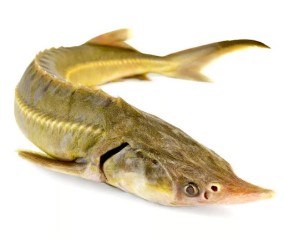
Sturgeon are prehistoric "living fossils" that have existed for over 120 million years, swimming alongside dinosaurs. These massive fish, which can live over 100 years, are found in 36 Northern Hemisphere rivers and coasts. They are known for their bony, armor-like plates called scutes, slow growth, and lack of teeth.
Looking around at my fellow diners, I noticed many older men, and much younger women dining at the other tables. I couldn’t help but notice that the young women were paying an inordinate amount of attention to the older men. As the amount of vodka consumption increased, so did the revelry. It looked a lot like my perception of an ancient Roman dinner.
My First Trip Home from Russia
Getting out of Seremetyevo airport was just as difficult as getting in. The Russians were on high alert to see if any Russian antiquities or anything of value was being flown out of the country,so my luggage was thoroughly examined.
I boarded the PanAm flight back to JFK, and the moment the wheels left the ground, everyone aboard that flight spontaneously broke out into applause and cheers. I’ve never experienced anything like that on any previous trip to Russia, or on any of my subsequent travels.
My Second Trip to Moscow - One Year Later
I had told my boss about the professor (Dr. Sergry Fedotov) that Oleg knew, and my idea for improving curvefitting algorithms used in immunochemistry. He encouraged me to meet with Dr. Fedotov to determine if he would be willing to do the research at a bargain rate.
There were questions to be resolved:
-
Did he understand the challenges?
-
Could he solve them in a timely manner?
-
Would he agree to have our engineering team verify his solution prior to receiving payment?
If he came up with a solution ahead of the deadline, we would pay a bonus.
In addition, newly-hired sales reps would need training on the Cobra gamma counters.
So, my trip was booked. Aerostar reservations were made at ridiculous room rates, and I was off to Moscow again.
A Metamorphosis Had Taken Place in Russia in Just One Year
The dark, gray, signless and depressing Moscow I experienced on my first trip had disappeared. In its place was a brightly lit city, with signs everywhere! Most remarkably, the new signs were almost entirely in English! Asian countries including South Korea, Hong Kong, Taiwan, and to a much lesser extent, Japan had moved in quickly, and had completely changed the landscape.
Western cars everywhere - Mercedes, BMW’s, Audi’s, you name it. It was as if Europe had packed up their used car lots and shipped them all to Russia!
Russia was enjoying a brief few years of democracy and capitalism. The Russians fully expected the U.S. to bail them out as we did Europe after WW2. What they got instead was wave upon wave of Western businesses who swooped in to capture this new market. McDonalds, KFC, the GAP, they were all moving in at light speed and Russia was transformed seemingly overnight.
The only problem was that buildings and property were still state owned. The many entrepreneurs who had something - anything - to sell solved this problem by setting up kiosks just big enough to fit a human in the area between the street and sidewalk. There were thousands of them selling anything some other Russian had acquired on a trip to western Europe. And Muscovites were eager to buy.
To me it looked as if capitalism was growing like a weed here, and there would be no turning back. My friends in Moscow warned me that this impression was an illusion, and that very powerful people would acquire former Soviet controlled businesses such as gas, electricity, real estate, etc. What I was seeing was just the stuff they didn’t want. I didn’t believe them then, but they were right and I was wrong.
Getting a Russian Scientist a Permit to Come to the U.S.
After seeing Dr. Sergey Fedotov’s team successfully complete each project he was given - ahead of schedule - the U.S.software engineers insisted that before the company could adopt any of his innovations, they needed him to visit and present his work.
This was the ‘90’s, a time when the U.S.and Russia were getting along as well as any time in recent history. Getting the visa wasn’t a problem. Getting the Russian military authorities to let him travel outside Russia was.
It seems that Dr. Fedotov was involved in the development of Russian nuclear weapons, and someone who knew how to build a nuclear bomb was not a citizen they wanted traveling outside Russia.
This problem went on for well over a year. Finally, I received an email from Sergey telling me that the problem had been solved, and that he was now permitted to come to the U.S.
How did this happen? Dr. Fedotov explained that he invited the Russian General to his apartment and offered him two cases of Vodka in exchange for permission to travel. The General agreed. I agreed to reimburse Sergey for the Vodka.
We flew Sergey and his translator to New York City; as we toured the city I watched him as he marveled at all that he saw. His favorite store was FAO Schwartz, where he bought toys to take to his young son as souvenirs.
The Russia Story Has a Crazy Ending
It had taken nearly five years to finish the research work Sergy Fedotov had developed:
-
A vastly improved 4-Parameter Logistics curve fitting model.
-
A Spline curve fitting model that would recognize large deviations and correct them. We called it a “Smart Spline.”
-
A model to determine binding coefficients in ligand binding assays that would work on up to 6 ligands and 6 receptors. (This saved thousands of hours and eliminated Monte Carlo modeling.)
During Sergey’s U.S. visit, we presented this work to scientists at Duke University and at Glaxo SmithKline. They concluded that this was a “revolutionary step forward” and “Incredible work.” (Glaxo extended a job offer to Sergey while we were there.)
Armed with all of this feedback and painstakingly documented mathematics, we flew to Chicago to present it to the engineering and senior management team. The company to this point had invested nearly $100,000 in this work.
A year earlier, Packard Biosciences had hired another Russian engineer who now headed the software development team. I thought that he and Sergey would bond like brothers and discuss the project in their native Russian. Little did I know that there is a very heated rivalry in Russia between scientists and engineers in Moscow vs. St. Petersburg. Packard’s new hire was from St. Petersburg and he was determined that no mathematician from Moscow was going to have a spotlight put on him if he could do anything to prevent it.
So he simply declared that the mathematics in Sergey’s algorithms were too difficult for him to understand and that if he couldn’t understand it, the company couldn’t support it and therefore it was two thumbs down on the entire project. All that work went on a shelf in 1996 never to be seen again.
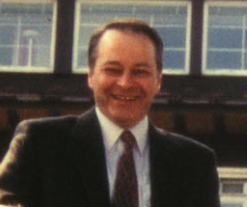
Sergey went back to Moscow that night, and I’ve never seen him again either although we exchange Christmas greetings each year
If anyone is interested in seeing this work, contact me and I will send you a download link.