

This category brings together media, supplements and reagents for growing cells and organisms. It includes plant tissue culture media such as Murashige and Skoog (MS) in several versions, with vitamins, Gamborg's B5 vitamins, Nitsch's vitamins or MES buffer, and McCown's Woody Plant Medium, sold as powder that makes 10 or 25 liters. For yeast there is yeast nitrogen base with or without amino acids and ammonium sulfate. You will also find Nest fetal bovine serum, standard and heat-inactivated, a basement membrane matrix, vitamins and cofactors such as riboflavin and thiamine, plant growth regulators such as gibberellic acid, and X-Gal and IPTG for screening.
Start with the organism and protocol: the exact formulation name matters, because MS medium with and without vitamins, or yeast nitrogen base with and without amino acids, give different results. Check whether the powder already contains sucrose, a gelling agent or a buffer, how many liters each pack makes, and the storage conditions. For serum, check the source and whether it is heat-inactivated.
Cell Culture Media: common questions
What is Murashige and Skoog (MS) medium?
MS medium is a plant tissue culture medium published by Toshio Murashige and Folke Skoog in 1962. It supplies the mineral salts plant cells need and is widely used for callus culture, micropropagation and plant regeneration. Versions differ in what they add, such as vitamins, MES buffer or sucrose, so check the label to see what you still need to add before adjusting the pH and sterilizing.
What is yeast nitrogen base used for?
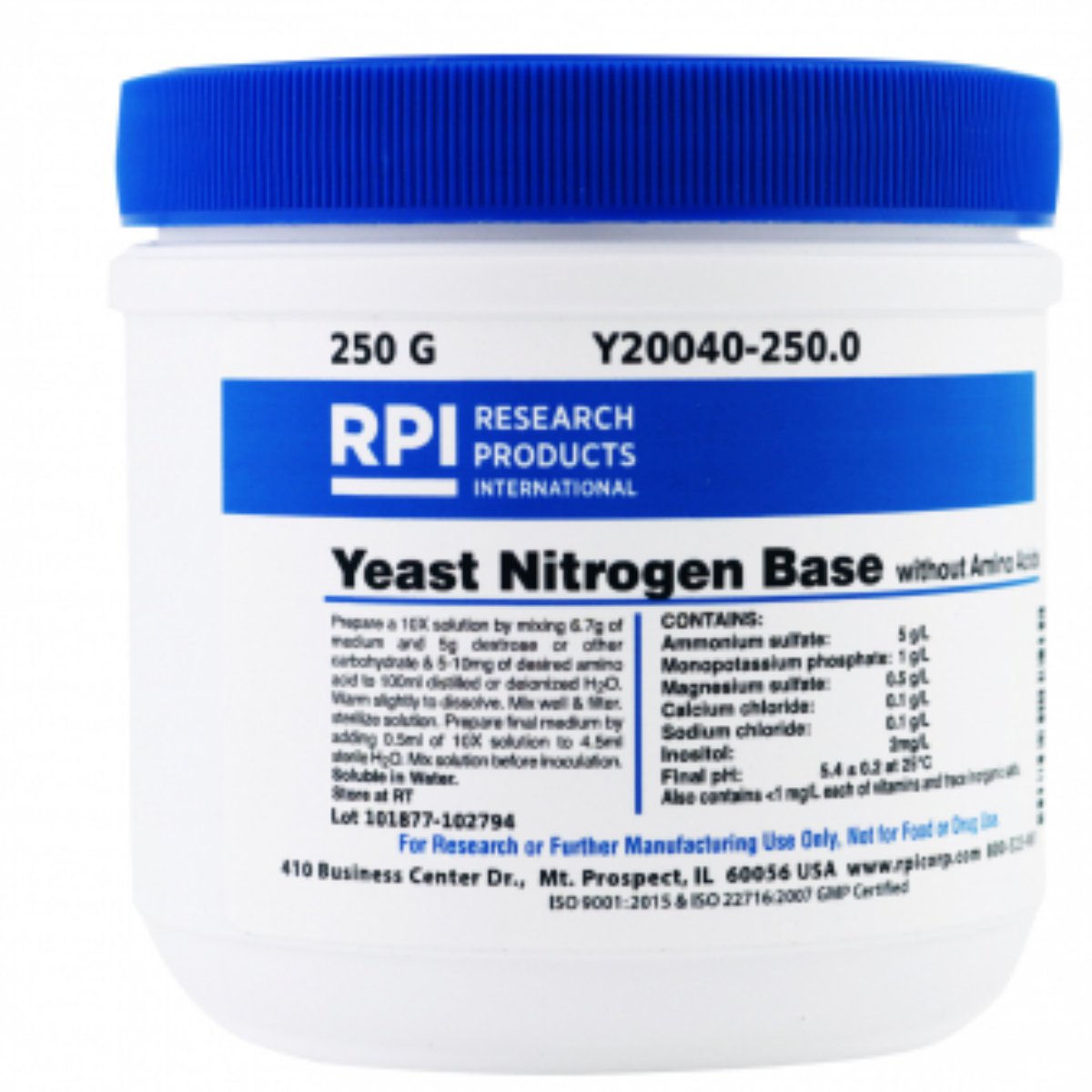
Yeast nitrogen base supplies the nitrogen, vitamins, trace elements and salts yeast needs, but no carbon source, so you add a sugar such as glucose. The version without amino acids is used to make defined media, where you add only selected amino acids to select or test strains. The version without amino acids and ammonium sulfate lets you supply your own nitrogen source.
What does heat-inactivated fetal bovine serum mean?
Heat-inactivated serum has been heated, typically to 56 °C for about 30 minutes, to inactivate complement proteins that can interfere with some cell culture and immunological work. Many cell lines grow well in serum that has not been heat-inactivated, so follow the conditions your protocol or cell line supplier specifies.
What are X-Gal and IPTG used for?
X-Gal and IPTG are used together in blue-white screening of bacterial colonies. IPTG induces expression of the lacZ gene, and the beta-galactosidase it produces cleaves X-Gal to form a blue product. Colonies whose plasmid carries an insert that disrupts lacZ stay white, while colonies without an insert turn blue.
Related categories: Molecular Biology Reagents · Tissue Culture · PCR Supplies · Dyes and Stains · Antibiotics · Electrophoresis · DNA Reagents · Cell Spreaders, Strainers · All Life Science
Top brands: Research Products International · Spectrum Chemical · Nest Scientific
Popular Cell Culture Media:
Cell Culture Media
-
 Yeast Nitrogen Base without Amino Acids, 250 GramsSKU: Y20040-250.0-EAManufacturer: Research Products InternationalDimensions: 3.50 x 3.75 x 3.50 Weight: 0.64 - Research or further manufacturing use only, not for food or drug use. (1 per EA)Learn More$189.85
-
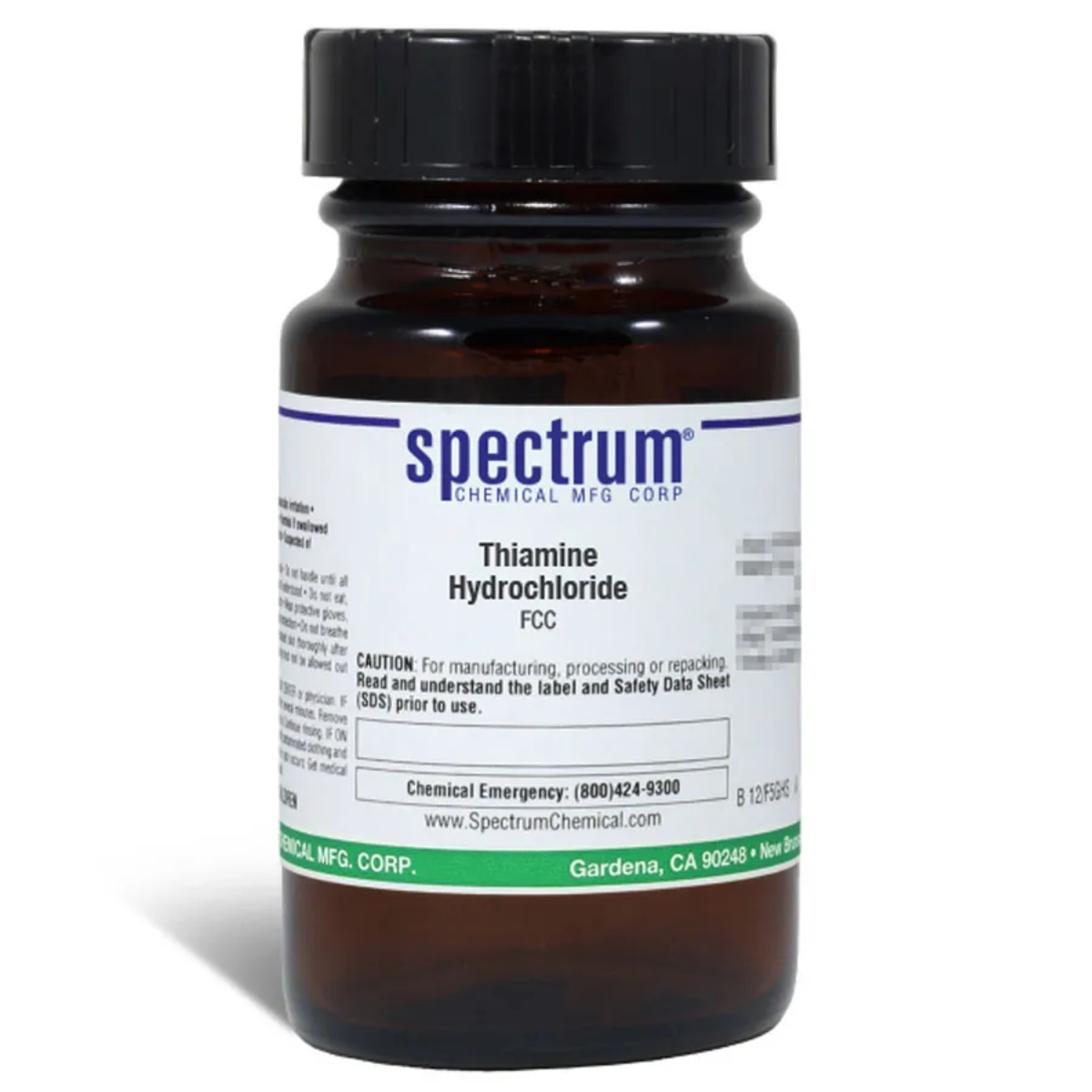
 Thiamine Hydrochloride, FCC, 25g, CAS# 67-03-8SKU: T1053-25GM-EAManufacturer: Spectrum ChemicalThiamine Hydrochloride, FCC is the hydrochloride salt of vitamin B1 and used to treat or prevent vitamin B1 deficiency. The FCC grade meets the requirements of the Food Chemical Codex indicates and is suitable for all food, beverage and nutritional supplement applications. Spectrum Chemical offers over 300 Food grade chemical ingredients packaged in laboratory size bottles to production drum quantities and are manufactured, packaged and stored under current Good Manufacturing Practices (cGMP) per 21CFR part 211 in FDA registered and inspected facilities. (1 per EA )Learn Morewas $124.90 Special Price $89.83
-
 Yeast Nitrogen Base without Amino Acids, 100 GramsSKU: Y20040-100.0-EAManufacturer: Research Products InternationalDimensions: 3.50 x 3.75 x 3.50 Weight: 0.32 - Research or further manufacturing use only, not for food or drug use. (1 per EA)Learn More$92.25
-
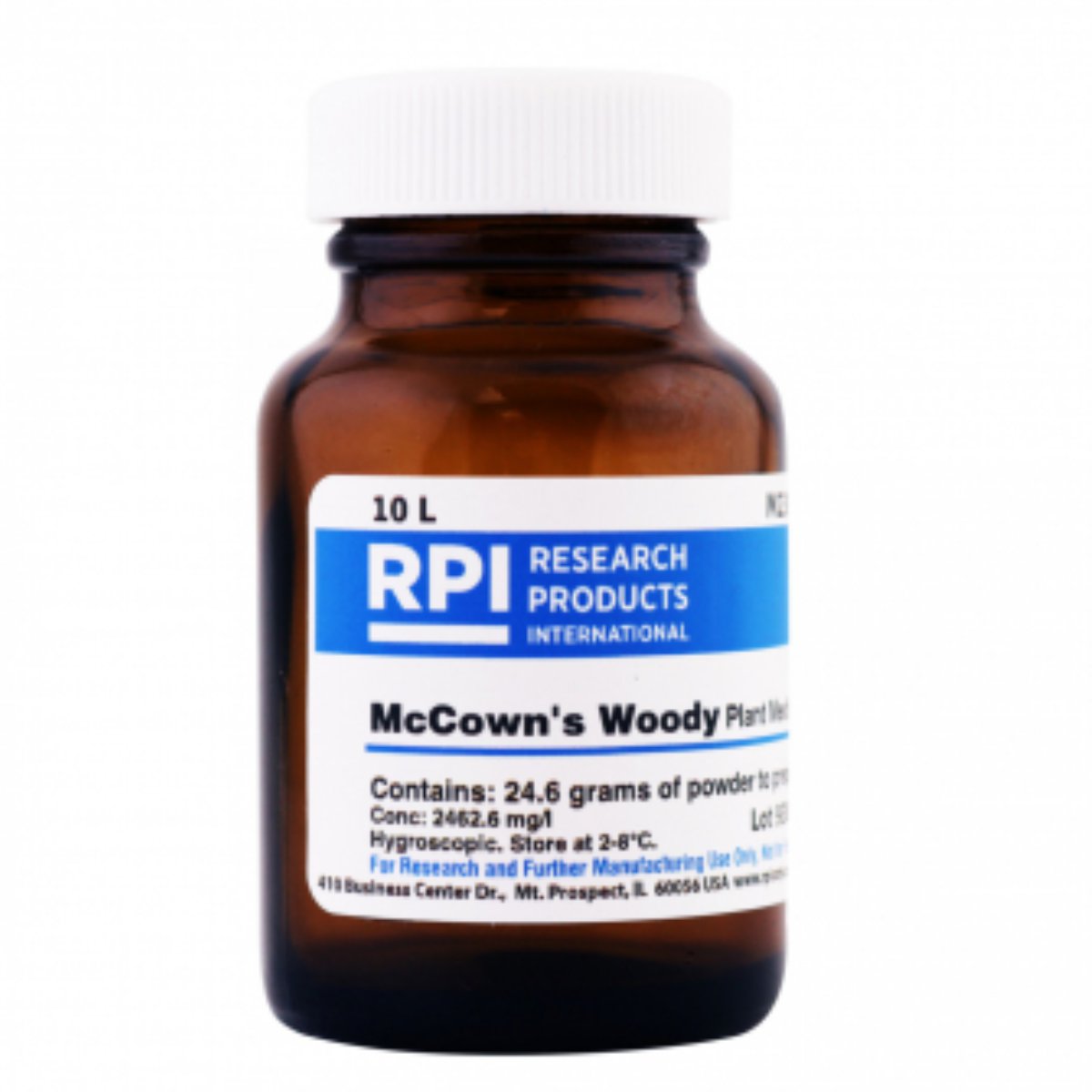
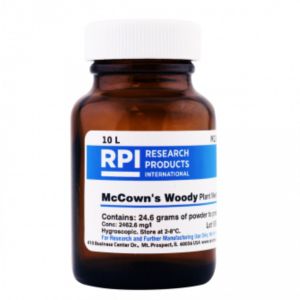 McCown's Woody Plant Medium with Vitamins, Powder, Makes 10 LitersSKU: M23000-10.0-EAManufacturer: Research Products InternationalDimensions: 1.63 x 3.00 x 1.63 Weight: 0.22 - Research or further manufacturing use only, not for food or drug use. (1 per EA)Learn More$30.65
-
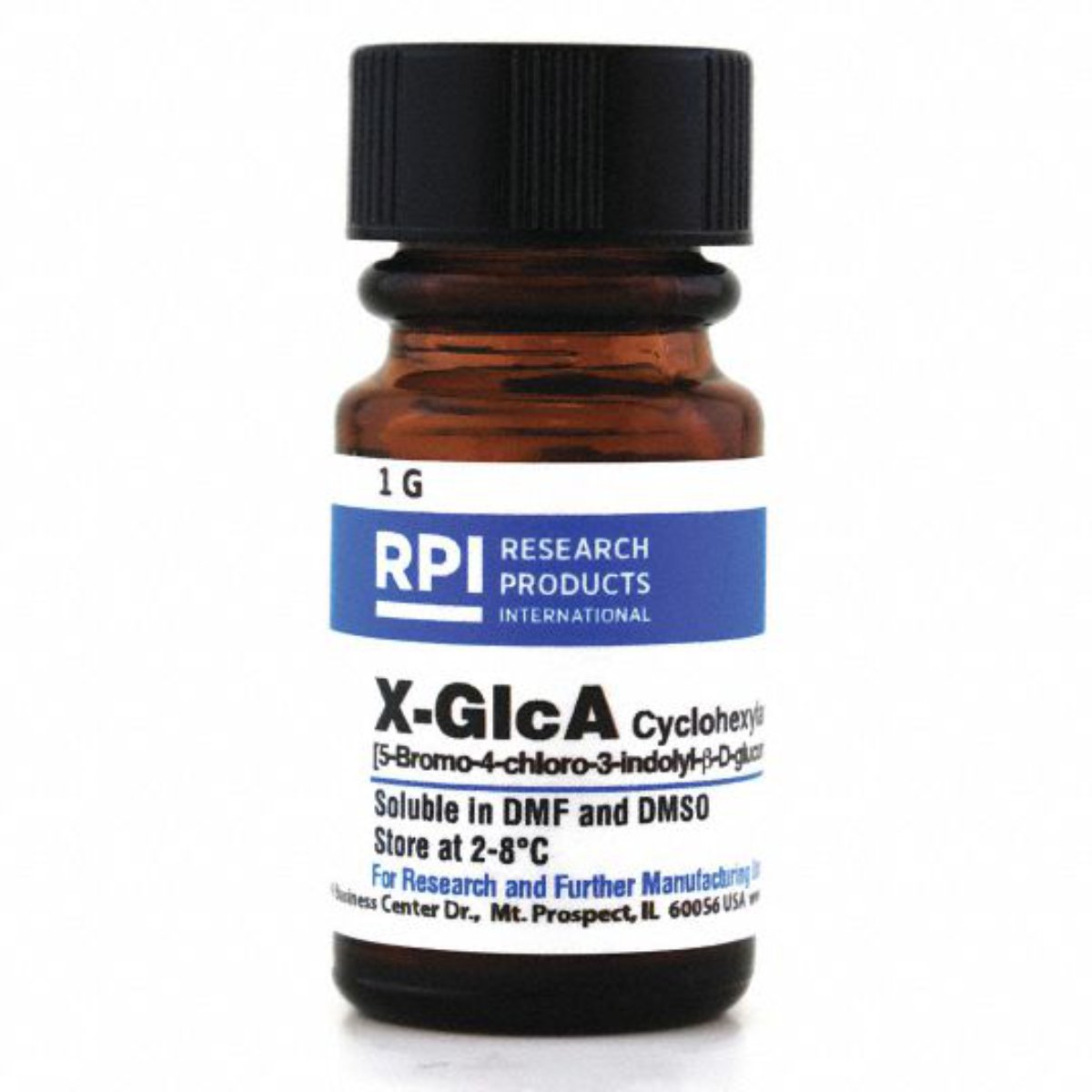
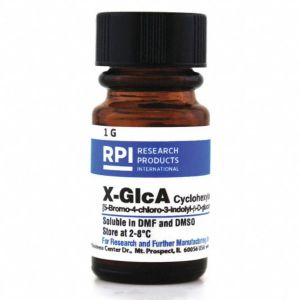 X-GlcA Cyclohexylammonium Salt, 5-Bromo-4-chloro-3-indolyl-B-D-glucuronic acid, cyclohexylammonium salt, 1 Gram CAS# 114162-64-0SKU: B72200-1.0-EAManufacturer: Research Products InternationalMol. Wt:521.8 Common Name: 5-Bromo-4-chloro-3-indolyl-β-D-glucuronic acid, cyclohexylammonium salt Formula: C20H26BrClN2O7 Dimensions: 1.25 x 1.75 x 1.25, Weight: 0.03, Cas#: 114162-64-0 Research or further manufacturing use only, not for food or d (1 per EA)Learn More$771.25
-
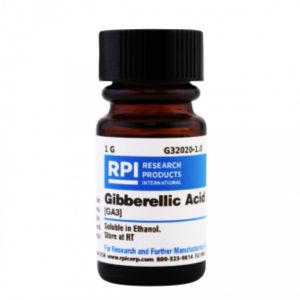 Gibberellic Acid A3, GA3, 1 Gram CAS# 77-06-5SKU: G32020-1.0-EAManufacturer: Research Products InternationalMol. Wt:346.4 Common Name: GA3 Formula: C19H22O6 Dimensions: 3.38 x 4.63 x 3.38, Weight: 0.11, Cas#: 77-06-5 Research or further manufacturing use only, not for food or drug use. (1 per EA)Learn More$46.00
-
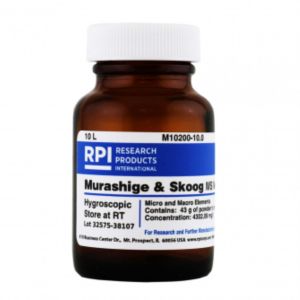 Murashige & Skoog MS Medium, 43 Grams of Powder, Makes 10 Liters of SolutionSKU: M10200-10.0-EAManufacturer: Research Products InternationalDimensions: 1.63 x 3.00 x 1.63 Weight: 0.19 - Research or further manufacturing use only, not for food or drug use. (1 per EA)Learn More$30.65
-
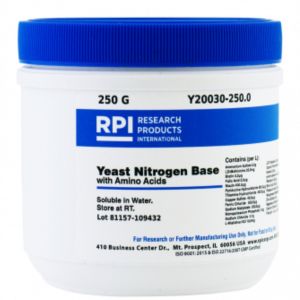 Yeast Nitrogen Base with Amino Acids, 250 GramsSKU: Y20030-250.0-EAManufacturer: Research Products InternationalDimensions: 3.50 x 3.75 x 3.50 Weight: 0.64 - Research or further manufacturing use only, not for food or drug use. (1 per EA)Learn More$169.70
-
 Yeast Nitrogen Base without Amino Acids and Ammonium Sulfate, 250 GramsSKU: Y20060-250.0-EAManufacturer: Research Products InternationalDimensions: 3.50 x 3.75 x 3.50 Weight: 0.64 - Research or further manufacturing use only, not for food or drug use. (1 per EA)Learn More$189.85
-
 Murashige & Skoog MS Medium with Vitamins, 44 Grams of Powder, Makes 10 Liters of SolutionSKU: M10400-10.0-EAManufacturer: Research Products InternationalDimensions: 1.63 x 3.00 x 1.63 Weight: 0.19 - Research or further manufacturing use only, not for food or drug use. (1 per EA)Learn More$30.65
-
 Yeast Nitrogen Base without Amino Acids and Ammonium Sulfate, 500 GramsSKU: Y20060-500.0-EAManufacturer: Research Products InternationalDimensions: 3.50 x 7.00 x 3.50 Weight: 1.23 - Research or further manufacturing use only, not for food or drug use. (1 per EA)Learn More$324.05
-
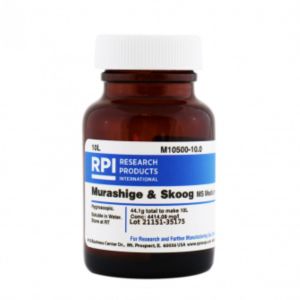 Murashige & Skoog MS Medium with Gamborg's B5 Vitamins, 44 Grams of Powder, Makes 10 Liters of SolutionSKU: M10500-10.0-EAManufacturer: Research Products InternationalDimensions: 1.63 x 3.00 x 1.63 Weight: 0.19 - Research or further manufacturing use only, not for food or drug use. (1 per EA)Learn More$30.65
-
 Nest Fetal Bovine Serum (FBS), USDA source, 500ml/bottleSKU: 209111-EAManufacturer: Nest ScientificNest Fetal Bovine Serum (FBS), USDA source, 500ml/bottle (1 per EA )Learn Morewas $462.00 Special Price $412.34
- Nest Fetal Bovine Serum (FBS), USDA source, sample size, 50ml/bottleSKU: 209112-EAManufacturer: Nest ScientificNest Fetal Bovine Serum (FBS), USDA source, sample size, 50ml/bottle (1 per EA )Learn Morewas $110.00 Special Price $98.18
-
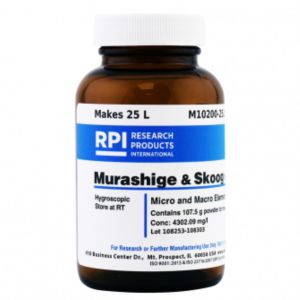 Murashige & Skoog MS Medium, 107.5 Grams of Powder, Makes 25 Liters of SolutionSKU: M10200-25.0-EAManufacturer: Research Products InternationalDimensions: 2.00 x 3.88 x 2.00 Weight: 0.52 - Research or further manufacturing use only, not for food or drug use. (1 per EA)Learn More$46.00
-
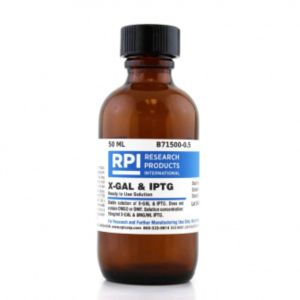 X-GAL & IPTG, Ready to Use, Non-Toxic Solution, 50 ML CAS# 7240-90-6; 367-93-1; 872-50-4; 7732-18-5SKU: B71500-0.5-EAManufacturer: Research Products InternationalDimensions: 2.00 x 4.50 x 2.00, Weight: 0.33, Cas#: 7240-90-6; 367-93-1; 872-50-4; 7732-18-5 Research or further manufacturing use only, not for food or drug use. (1 per EA)Learn More$268.45
-
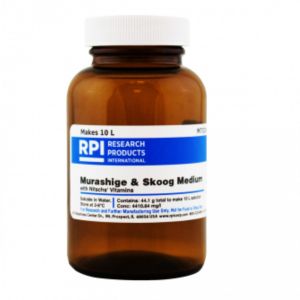 Murashige & Skoog Medium with Nitschs' Vitamins, 44 Grams of Powder, Makes 10 Liters of SolutionSKU: M70200-10.0-EAManufacturer: Research Products InternationalDimensions: 1.63 x 3.00 x 1.63 Weight: 0.19 - Research or further manufacturing use only, not for food or drug use. (1 per EA)Learn More$30.65
-
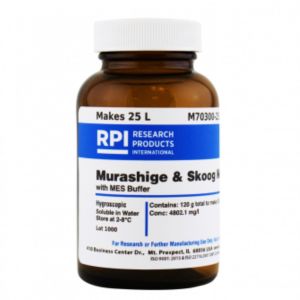 Murashige & Skoog Medium with MES Buffer, 120 Grams of Powder, Makes 25 Liters of SolutionSKU: M70300-25.0-EAManufacturer: Research Products InternationalDimensions: 2.00 X 3.88 X 2.00 Weight: 0.33 - Research or further manufacturing use only, not for food or drug use. (1 per EA)Learn More$50.80
-
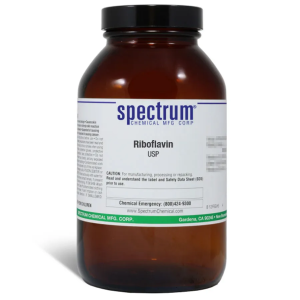 Riboflavin, USP, 100g, CAS# 83-88-5SKU: RI103-100GM-EAManufacturer: Spectrum ChemicalRiboflavin, USP. All Spectrum Chemical USP grade products are manufactured, packaged and stored under current Good Manufacturing Practices (cGMP). (1 per EA)Learn More$195.85
-
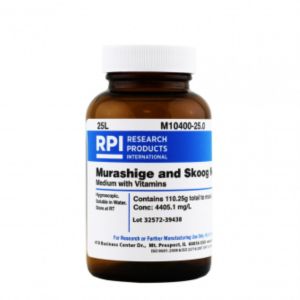 Murashige & Skoog MS Medium with Vitamins, 110 Grams of Powder, Makes 25 Liters of SolutionSKU: M10400-25.0-EAManufacturer: Research Products InternationalDimensions: 2.00 x 3.88 x 2.00 Weight: 0.33 - Research or further manufacturing use only, not for food or drug use. (1 per EA)Learn More$46.00
-
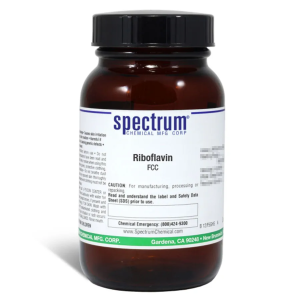 Riboflavin, FCC, 25g, CAS# 83-88-5SKU: R1032-25GMGL-EAManufacturer: Spectrum ChemicalRiboflavin, FCC is also referred to as vitamin B2 and used as a dietary supplement. The FCC grade meets the requirements of the Food Chemical Codex indicates and is suitable for all food, beverage and nutritional supplement applications. Spectrum Chemical offers over 300 Food grade chemical ingredients packaged in laboratory size bottles to production drum quantities and are manufactured, packaged and stored under current Good Manufacturing Practices (cGMP) per 21CFR part 211 in FDA registered and inspected facilities. (1 per EA)Learn More$99.20
-
 Cobamamide, 1g, CAS# 13870-90-1SKU: CO104-1GM-EAManufacturer: Spectrum ChemicalCobamamide, also known as adenosylcobalamin, is an active form of vitamin B12 and used as a nutritional supplement. Ungraded products supplied by Spectrum are indicative of a grade suitable for general industrial use or research purposes and typically are not suitable for human consumption or therapeutic use. (1 per EA )Learn Morewas $385.40 Special Price $277.17
-
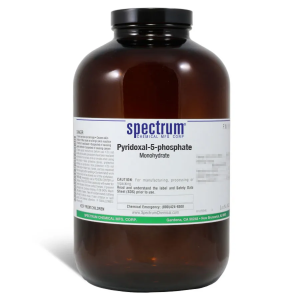 Pyridoxal-5-phosphate, Monohydrate, 1kg, CAS# 41468-25-1SKU: PY101-1KG-EAManufacturer: Spectrum ChemicalPyridoxal-5-phosphate, Monohydrate (1 per EA )Learn More$4,740.65
-
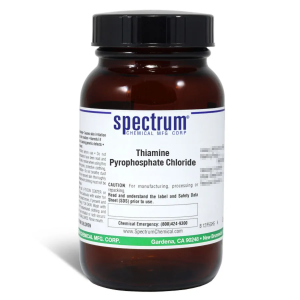 Thiamine Pyrophosphate Chloride, 25g, CAS# 154-87-0SKU: T1586-25GM-EAManufacturer: Spectrum ChemicalThiamine Pyrophosphate Chloride, also known as Thiamine diphosphate, works as a coenzyme in many enzymatic reactions. Ungraded products supplied by Spectrum are indicative of a grade suitable for general industrial use or research purposes and typically are not suitable for human consumption or therapeutic use. (1 per EA )Learn More$723.40


How Can We Help?
This is a custom sub-title.
LPS provides procurement services:
Strategic and customized product sourcing services to find the best vendorsUnparalleled customer service from dedicated procurement managers
Custom web portal where you can order items from any vendor on one site
Consolidate orders and invoices
Wholesale “club” pricing for members
Procure-to-Pay software solutions and process consulting
Enterprise procurement solutions designed for small and mid-sized labs