Celebrating 55 Years in the Lab Supplies & Equipment Industry
It's my Emerald Anniversary!

After earning my BS Degree in Medical Technology at the Indiana University Medical Center in 1971 and passing my registration exams, allowing me to display MT (ASCP) after my title (which I have seldom done), I knew my destiny was to spend the next four years in the U.S. armed forces in Vietnam. But through a complete fluke, the medical folks at the draft board learned that I had had tuberculosis when I was 6 years old, and that I had been taking Isoniazide since I began my medical technology training. Those two facts meant I was unfit for military service, and turned the plans for my future 180 degrees.
I had met sales people who came to our labs, and thought to myself how much better life would be if I could wear suits and ties like they did, and go from lab to lab buying lunches with my expense account instead of spending all day doing manual chemistries. The Scientific Products (S/P) sales rep’s name was Jim Allen. He and I had discussed a career in lab sales, but I had ruled that out because my draft lottery number was 33 out of 365.
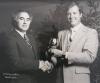
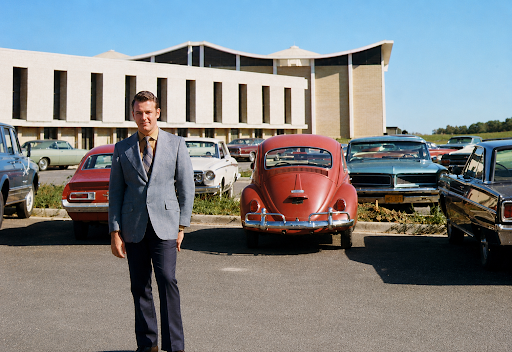
The next day, I saw him at our lab, and told him of my good fortune. He said he would get an interview arranged the next week in McGaw Park, IL. Three weeks after my graduation I started work at S/P. That day is memorialized in the photo at left:
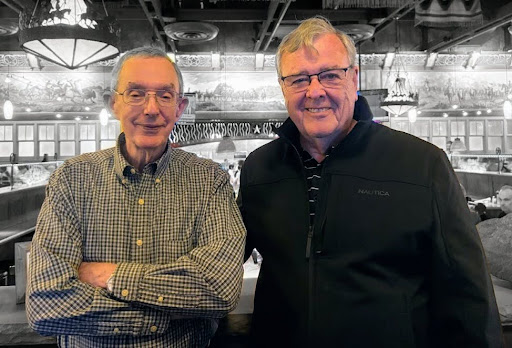
The photo on the right was taken recently. On the left is Col. Gary Morgan, who was my best high-school friend, best man at our wedding in 1969, and who had an incredible career in the U.S. Army.
What Are the Major Changes to the Lab Supplies Distribution Business Since 1970?
Laboratory supply distribution has changed dramatically since 1970 across technology, logistics, regulation, and business structure. In 1970, the industry was still highly regional, catalog-driven, and centered on basic glassware and chemicals. Today it’s global, digital, automated, and deeply integrated with biotech, pharma, healthcare, and advanced research.
Here are the biggest shifts:
1. From Paper Catalogs to Digital Procurement
In 1970:
- Orders were placed by phone, mail, or with sales reps
- Thick printed catalogs were essential tools in every lab
- Lead times were often weeks
Today:
- Labs use e-commerce platforms, ERP integration, punchout catalogs, and automated procurement systems.
- Inventory visibility is real-time
- Same-day or next-day delivery is common in major markets
Major distributors evolved into sophisticated logistics and software organizations, not just warehouse businesses.
2. Massive Expansion of Product Complexity
1970 labs mostly bought:
- Glassware
- Basic reagents
- Solvents
- Centrifuges
- Balances
- Simple analytical tools
Today’s supply ecosystem includes:
- Genomics kits
- Cell culture systems
- CRISPR reagents
- Robotics
- High-throughput screening systems
- AI-enabled instruments
- Cloud-connected lab devices
- Single-use bioprocessing equipment
The catalog size of major distributors grew from thousands of SKUs to millions.
3. Consolidation of Distributors
In the 1970s:
- Many local and regional distributors existed
- Manufacturers often sold directly
Since then:
- The market consolidated heavily through mergers and acquisitions
- Large national/global distributors dominate institutional purchasing
Companies like Thermo Fisher Scientific, VWR (now part of Avantor), and Fisher Scientific became massive integrated suppliers.
4. Rise of Biotechnology and Life Sciences
In 1970:
- Academic chemistry and industrial QC labs dominated
After the biotech revolution:
- Molecular biology exploded
- Pharmaceutical R&D expanded enormously
- Clinical diagnostics became more sophisticated
- Demand for sterile consumables and precision reagents surged
Distributors had to support:
- Cold-chain logistics
- Controlled storage
- Regulatory documentation
- Batch traceability
5. Regulatory and Compliance Explosion
1970 compliance requirements were much lighter.
Today distributors must manage:
- OSHA
- EPA
- FDA
- GMP/GLP standards
- Hazardous materials transport
- International shipping restrictions
- Chemical tracking and SDS databases
Documentation has become a major part of distribution operations.
6. Automation and Warehouse Technology
Distribution centers in 1970 used mostly manual picking and paper inventory systems.
Modern operations use:
- Robotics
- Barcode/RFID tracking
- Automated storage systems
- Predictive inventory software
- AI forecasting
- Temperature-monitored shipping
Warehouse efficiency and accuracy improved enormously.
7. Globalization of Supply Chains
In 1970, much manufacturing was domestic or regional.
Today:
- Components and consumables come from worldwide networks
- Labs depend on international sourcing for plastics, chemicals, electronics, and specialty reagents
The Covid pandemic exposed vulnerabilities:
- Shortages highlighted dependence on global supply chains
- Labs experienced stockouts of pipette tips, gloves, reagents, and filters
8. Shift from Durable Equipment to Consumables
Older labs invested heavily in durable instruments.
Modern lab economics increasingly revolve around:
- Disposable plastics
- Proprietary reagent kits
- Subscription software
- Service contracts
- Recurring consumable revenue
Suppliers enjoyed more predictable recurring revenue.
9. Sustainability Pressures
1970 labs generated substantial waste with little oversight.
Today suppliers are pressed to provide:
- Greener packaging
- Solvent recycling
- Reduced plastic waste
- Energy-efficient equipment
- Sustainable sourcing
though laboratories still remain highly consumable-intensive.
10. Data and Service Became Core Products
Distributors no longer just “ship boxes.”
Now they provide:
- Technical consulting
- Instrument validation
- Calibration
- Inventory management
- Vendor-managed inventory
- Data integration
- Digital marketplaces
Many major distributors operate almost like technology-enabled infrastructure companies for science.
The overall transformation mirrors broader industrial changes since 1970:
Latest laboratory equipment innovations in 2026 focus on AI-driven automation, miniaturization, and enhanced sustainability. Key advancements include robotic liquid handlers for high-throughput screening, smart, cloud-connected freezers, portable mass spectrometers, AI-integrated digital microscopes, and AR/VR systems for training. These tools improve accuracy, reduce human error, and enhance efficiency.
Key Innovations in Lab Equipment
- Robotic & Automated Systems: Automated liquid handling systems are now standard, providing 24/7, high-precision, multi-step protocols that reduce reagent waste and human error.
- AI & Digital Integration: AI algorithms are integrated into diagnostics and imaging to analyze complex datasets, such as in pathology, allowing for faster, more accurate results.
- Smart & Connected Devices: IoT-enabled equipment (e.g., smart freezers, centrifuges) features remote monitoring, automatic data logging, and, in some cases, automated calibration to maintain compliance and prevent sample loss.
- Miniaturization: Compact, portable devices such as mini-mass spectrometers and handheld decappers allow for in-field chemical analysis and more efficient, space-saving lab setups.
- Sustainability & Safety: New equipment, including autoclaves and fume hoods, focus on energy efficiency, green refrigerants, and, in some cases, automated safety locking mechanisms.
- AR/VR Training: Augmented and virtual reality are increasingly used for training staff on complex machinery in a safe, simulated environment.
Emerging Trends in 2026
-
- Self-learning instruments: Equipment that can independently optimize and recalibrate itself.
- Cloud-integrated labs: Real-time data synchronization across all devices for centralized, smart analysis.
- High-throughput screening: Increased reliance on rapid, automated, and modular equipment to manage high sample volumes, especially for personalized medicine.
The better question may be to ask: “What hasn’t changed in the last 55 years?” Relationships. My relationship with Jim Allen, who visited our lab 55 years ago is what got me started in this business. My relationship with my customers, many of whom became my very best friends, and provided the success I needed to survive in a highly competitive field. My relationships with our vendors, bankers, customers and employees is what a CEO must have to succeed today.
Thanks to everyone who helped me get this far and who powered LPS’ growth.