The High Cost of Winning a Sales Contest
While selling at the University of Louisville Health Sciences Center, I took an early lead in a sales competition by loading up carts with Contrad 70 and going from lab to lab. Almost every person I approached ended up buying a bottle! The competition was scheduled to run for three months, with updated scoreboards sent out every two weeks to show everyone's progress in selling this popular labware cleaner. When the first scoreboard was published, I was already way ahead of the rest of the field. Instead of slowing down, I kept pressing forward and continued selling.
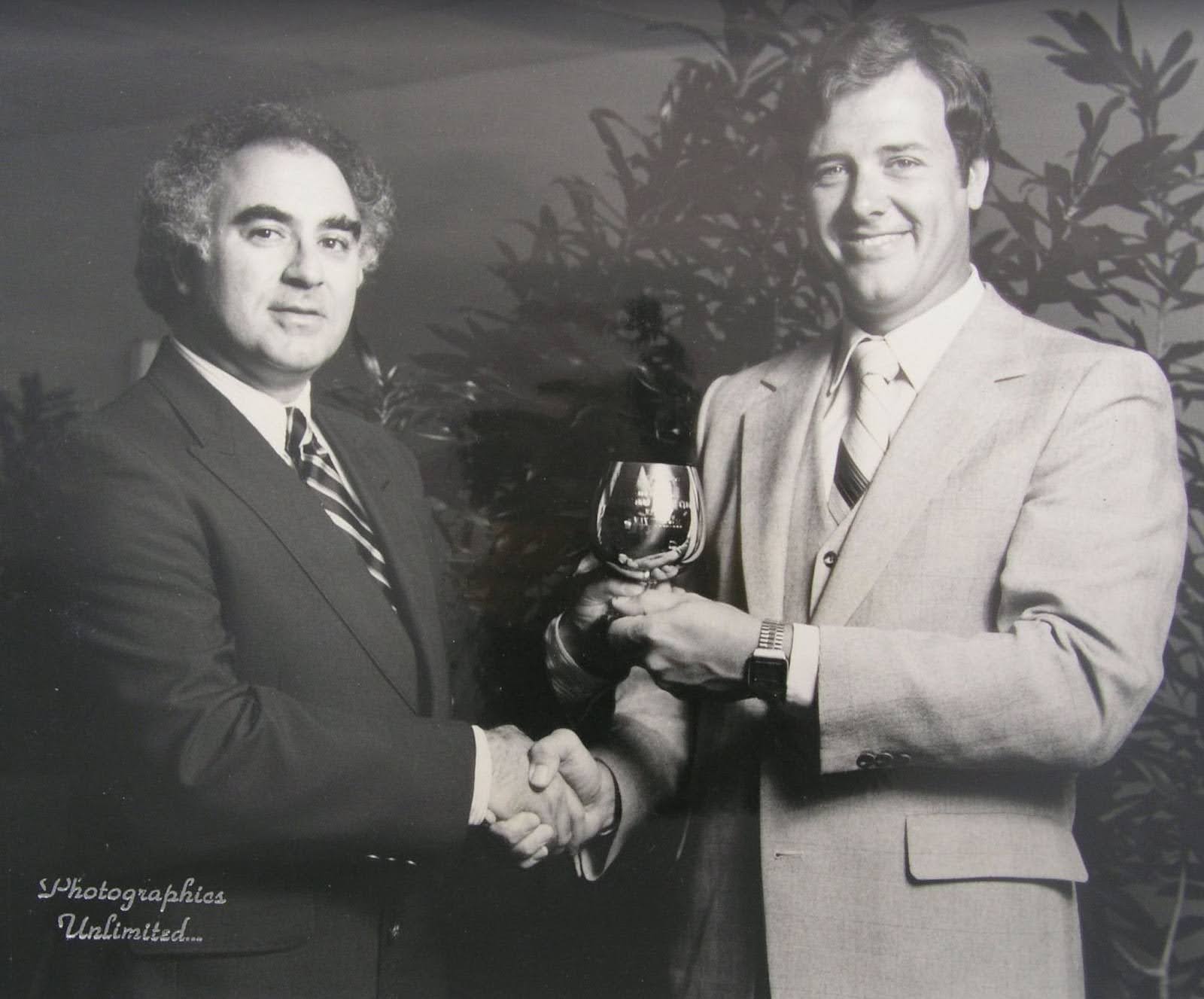
However, my commanding lead created an unexpected issue: the other sales representatives simply gave up, figuring they could never hope to catch up. When the contest concluded, I emerged as the winner, earning a trip for two to any destination in North America or the Caribbean. The prize was entirely funded by the manufacturer Harleco, with my employer, distributor Scientific Products, contributing absolutely nothing.
I was instructed to handle my own travel and lodging arrangements, so I selected Eleuthera in the Bahamas, charged the expenses to my personal credit card, and submitted the receipts for reimbursement.
While the reimbursement was delayed, my credit card bill arrived promptly. Growing anxious, I reached out to the Harleco representative to find out why I hadn't been paid. He informed me that my boss, Ron Basham, had objected to the prize and told me to discuss it with him. When I confronted Ron, he told me, “This contest was a failure. You sold so much that everyone else stopped trying, and I just can't justify an award this large based on the total sales it generated.” I pointed out that he had no financial stake in the matter since Harleco was covering the entire tab, so why did he care? He ultimately offered a “compromise” by agreeing to reimburse only 50% of the trip.
I had never budgeted to pay for half of the vacation out of pocket, and I never would have booked such an expensive trip had I known this would happen - not to mention the unexpected cost of repairing my car's damaged wheel well.
This frustrating experience was one of the primary reasons I chose to leave Scientific Products in 1978.
The Job That Changed My Life—By Disappearing
As my son Aaron and daughter Amanda prepared to leave for college, Brenda and I had already been talking for a couple of years about moving back to Indiana from Connecticut once we became empty nesters. Both of our families were there, and it seemed like the right time to come home.
Then an opportunity appeared.
A recruiter contacted me about a Marketing Manager position with Boehringer Mannheim Corporation in Indianapolis. Since the job was close to home, I expressed interest and soon found myself flying to Indianapolis for my first interview.
The interview went well, and before long I was invited back for a second round.
During that visit I met the company's CEO, a German executive who happened to be good friends with one of my former bosses in Wildbad, Germany. After talking for a while, he surprised me by saying I was aiming too low in the organization.
He picked up the phone, called the Vice President of Sales, and—in front of me—said, "I have found your Midwest Area Sales Director. Come meet him."
When the VP walked into the office, I could see the surprise on his face. That unexpected introduction led to three more interviews, making five in all, and eventually a written offer for the Area Sales Director position, complete with a company-paid relocation to Indianapolis.
I accepted immediately.
I resigned from Packard Bioscience, we began preparing for the move, and I flew to Indianapolis for what I thought would be the start of an exciting new chapter.
On my first morning, I was sent to Human Resources to complete my employment paperwork. I had barely begun filling out the forms when someone stopped me and said the Vice President of Sales wanted to see me.
I walked into his office expecting a welcome.
Instead, he delivered news that changed everything.
The position I had accepted had originally been offered to a long-time Boehringer employee, who had declined it in favor of leading the company's United Kingdom operation. That very morning, however, he arrived at work and announced that his wife had decided she would not move to England after all. He wanted his old job back.
The VP approved his request.
Just like that, the job I'd accepted—in writing—was gone.
I was offered a consolation prize: a field sales representative position. I could choose from fifty-three different cities across the United States. The only assurance I received was that it would probably last about a year until Boehringer's newly announced merger with Roche was complete.
In less than two hours, I had gone from Midwest Area Sales Director to sales representative in Knoxville, Tennessee.
Twelve months later, when the merger was finalized, I was laid off.
At the time, it felt like one of the greatest professional disappointments of my career.
Looking back nearly thirty years later, it may have been one of the best things that ever happened to me.
Brenda and I fell in love with Knoxville. It became our home. The generous sixteen-month severance package gave Aaron and me the opportunity to start our first business together, something that likely never would have happened had everything gone according to plan.
Life has a way of taking us down roads we never intended to travel. Sometimes what feels like a devastating setback is actually a door opening to a future we couldn't have imagined.
If someone had asked me that morning in Indianapolis whether I wanted my life to unfold exactly as it has, I would have said yes—without hesitation. The job I lost ultimately led me to a life I wouldn't trade for anything.
Learning Another Lesson the Hard Way
In 1997, my son Aaron had just graduated from Georgia Tech with a degree in Computer Science. His goal was to start his own software development company, and with the 16 months of severance I had received after leaving Boehringer Mannheim - now Roche - we decided to take the plunge.
Together, we founded DocuMax, a company focused on document capture and imaging solutions. I went back to school myself and earned certification as a Certified Document Imaging Architect. It was an exciting time. Aaron had the technical expertise, I had years of business experience, and we believed we had found an opportunity we could build together.
Not long after we started, my auto insurance agent, an African American businessman I had known for a little over a year, learned about our new venture. He also owned a printing business and proposed that we become partners. He explained that, as a minority-owned business, the company could potentially qualify for government contracting opportunities, particularly at nearby Oak Ridge.
There was one significant condition: to qualify as minority-owned, he would need to own and control at least 51 percent of the company.
I hesitated. Giving someone else majority ownership of a business Aaron and I had just started was a major decision. What ultimately gave me confidence was the trust I had developed in him. He presented himself as a committed Christian, as I was. There was a Bible on his desk, crosses in his office, and always a large cross around his neck. I took those outward signs of faith as evidence that we shared the same values.
So, we became partners.
It did not take long to discover that I had made a serious mistake.
We soon learned that our partner had filed for bankruptcy several times, making it extremely difficult for the company to borrow money. After about six months in business, we discovered that not a single sales tax payment had been made. Problems with the IRS followed because of his previous history with unpaid income taxes. Vendors were not being paid, and calls from collection agencies became routine.
The situation was unsustainable. Because my partner controlled the finances, I confronted him and asked how he intended to resolve the growing list of problems. The conversations became heated, and we had them more than once.
Then, about a week later, my partner arrived at the business with his attorney.
Aaron and I were told to clear out and leave.
Everything we had contributed to the business stayed behind. The company we had helped create, the equipment and resources we had put into it, and months of work were suddenly gone. Aaron and I were, quite literally, out on the street.
So, we started over.
From that experience, ScanStore.com was born. Aaron and I rebuilt from scratch, carrying with us some hard-earned lessons about partnerships, financial control, and the difference between appearances and character.
But rebuilding a business takes time, and I still had a mortgage to pay. After my brief adventure as a software entrepreneur, reality intervened.
It was time for me to go back to what I knew best.
I started looking for a job in the laboratory supply business.
Losing to the Wrong Candidate
After the DocuMax debacle I found myself searching for full-time employment. One morning I saw an advertisement in the local newspaper from VWR. They were looking for a Senior Sales Representative to cover Eastern Tennessee and Western North Carolina.
The position was especially attractive because VWR was competing for a major laboratory supply contract with Eastman Chemical Company in Kingsport, Tennessee. The successful candidate would manage the sales territory and, if VWR won the Eastman contract, would likely become the on-site account manager. It sounded like the perfect opportunity.
There was one other finalist for the position. We'll call him Jim.
The Area Vice President interviewed both of us and ultimately chose Jim. I was told the reasons were straightforward:
- Jim had been a center on the University of Tennessee football team in the mid-1980s.
- He had served as a regional manager for The Coleman Company.
- While he knew nothing about the laboratory industry, they were hiring him for his "executive skills."
I won't pretend the rejection didn't hurt. I had invested years in the laboratory business and believed I was an excellent fit. Losing the job left me discouraged.
About six months later I noticed another VWR advertisement for...the exact same territory.
I applied again.
This time there was a different Regional Manager making the hiring recommendation, although the same Area Vice President remained. The AVP still wasn't enthusiastic about hiring me, but the Regional Manager prevailed, and I finally received the opportunity.
By then VWR had won the Eastman Chemical contract. Jim managed only the Eastman account, while I inherited the rest of the territory.
Our first meeting should have been my warning.
Jim chose Hooters in Johnson City as the place to transfer his account files. During lunch it became obvious that almost nothing he said could be taken at face value. It was the first time I had ever encountered someone who appeared to be a genuine pathological liar.
The customers quickly confirmed my impression.
Nearly every customer who had met Jim repeated the same story. He would tell them:
"I don't know a beaker from a beach ball. I don't have to. I'm an executive, not a sales rep. I'm just here temporarily until I become the Eastman account manager."
In only six months he had managed to damage VWR's reputation with many customers. Repairing those relationships became my first priority.
Over the next several years, even more astonishing stories emerged from Eastman.
I learned that Jim had apparently never played football for the University of Tennessee.
Rumors circulated that he had become involved in affairs with two married employees in Eastman's procurement department.
The most serious allegation was that Eastman security caught him attempting to leave the facility with a competitor's confidential bid before it had been opened. According to the stories circulating at the time, Eastman security detained him until VWR's Area Vice President arrived to negotiate his release.
Whether because of loyalty, denial, or an unwillingness to admit a hiring mistake, the AVP continued supporting Jim despite the mounting evidence that he was the wrong person for the job.
When Jim eventually lost the Eastman assignment, VWR transferred me into the position while I continued managing the rest of my territory.
In one sense, Jim had made my job easier. Expectations had become so low that simply showing up, knowing the products, being honest with customers, and following through on commitments dramatically changed their opinion of VWR.
I remained with VWR for fifteen years, spending most of that time serving Eastman Chemical. Those years became some of the most rewarding of my career and taught me lessons that shaped the rest of my professional life.
Years later I happened to meet the owner of a liquor store in my hometown where Jim had worked after leaving VWR. The owner told me he had watched Jim closely because money had disappeared from the cash register. He also mentioned that Jim was then in jail in North Carolina on charges of check forgery.
For years I remembered only one thing about this story:
"I lost to this guy."
Looking back, I realize that's the wrong lesson.
Hiring managers are human. They sometimes choose charisma over competence, image over integrity, and potential over proven experience. Sometimes they get it wrong.
The more important lesson is that careers are marathons, not sprints.
Jim won the interview.
I got the career.