

This category holds paper disks used in microbiology for antimicrobial susceptibility testing and organism identification. The antibiotic disks are impregnated with a set amount of drug, such as ceftazidime/avibactam, ceftolozane/tazobactam, meropenem/vaborbactam, imipenem/relebactam, ceftaroline, eravacycline, erythromycin, kanamycin or sulfamethoxazole/trimethoprim, and are used in disk diffusion (Kirby-Bauer) testing. The category also includes X, V and XV factor disks, which are used to identify Haemophilus species by their growth factor requirements. The HardyDisk products from Hardy Diagnostics come as cartridges of 50 disks, sold singly or in packs of five.
When choosing disks, confirm the drug and the disk content (for example 30 µg/10 µg) against the interpretive standard your lab follows, since zone breakpoints are set for a specific disk strength. Check that the cartridge format works with your disk dispenser, if you use one, and compare the package size with how many tests you run before the expiration date. Disks need cold storage, so plan to refrigerate or freeze them on arrival as the labeling directs.
Antibiotics and Selection Disks: common questions
What is the Kirby-Bauer disk diffusion test?
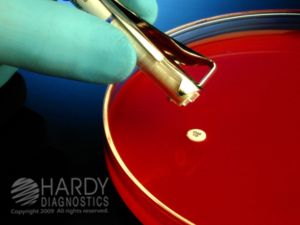
Kirby-Bauer is a standardized method for testing how susceptible a bacterial isolate is to antibiotics. A standardized inoculum is spread over a Mueller-Hinton agar plate, antibiotic disks are placed on the surface, and the plate is incubated. The drug diffuses outward and creates a zone where growth is inhibited. The zone diameter is measured and interpreted as susceptible, intermediate or resistant using published breakpoints, such as those from CLSI.
What are X, V and XV factor disks used for?
X and V factor disks help identify Haemophilus species. X factor is hemin and V factor is NAD. The disks are placed on a medium that lacks both factors, and the pattern of growth around the X, V or combined XV disk shows which factors the organism needs. For example, Haemophilus influenzae typically needs both X and V factors.
How should antibiotic disks be stored?
Store unopened cartridges at the temperature on the product label, usually refrigerated or frozen, in a container with desiccant. Let the container come to room temperature before opening it so that moisture does not condense on the disks, which can reduce potency. Return unused disks to cold storage after use and discard them after the expiration date.
Do I need an antibiotic disk dispenser?
A disk dispenser places several disks on a plate at once with consistent spacing, which saves time and helps keep zones from overlapping when a lab runs many tests. Labs running only a few plates can place disks individually with sterile forceps. If you use a dispenser, make sure the disk cartridges you order fit that dispenser.
Related categories: Organisms · Prepared Media · Prepared Plated Media · Dehydrated Media · Inoculation Loops and Needles · Tubes, Swabs, Test Kits, Panels · Microbial Growth Media, Reagents · Anaerobic Products · All Microbiology
Top brands: Hardy Diagnostics
Popular Antibiotics and Selection Disks:
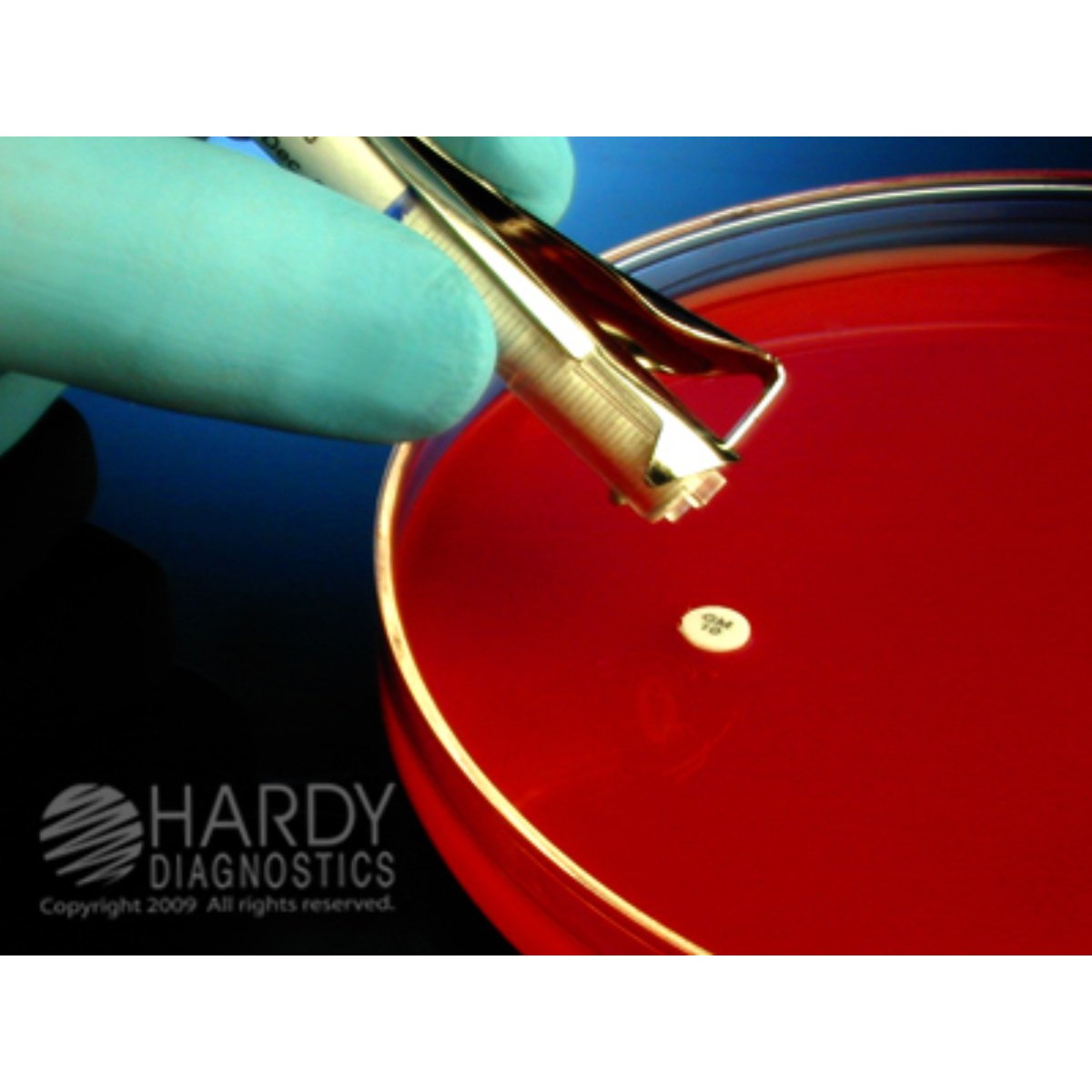
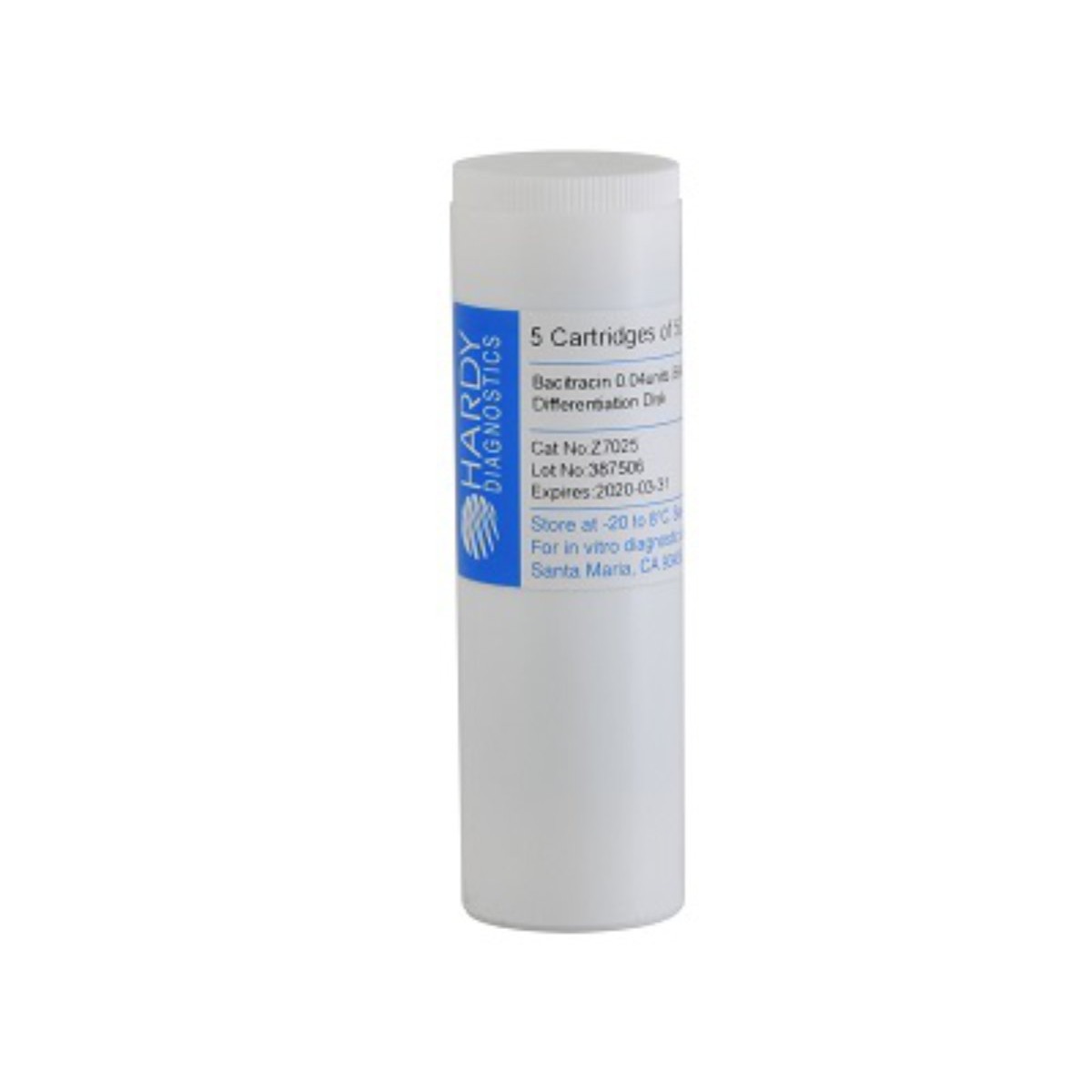
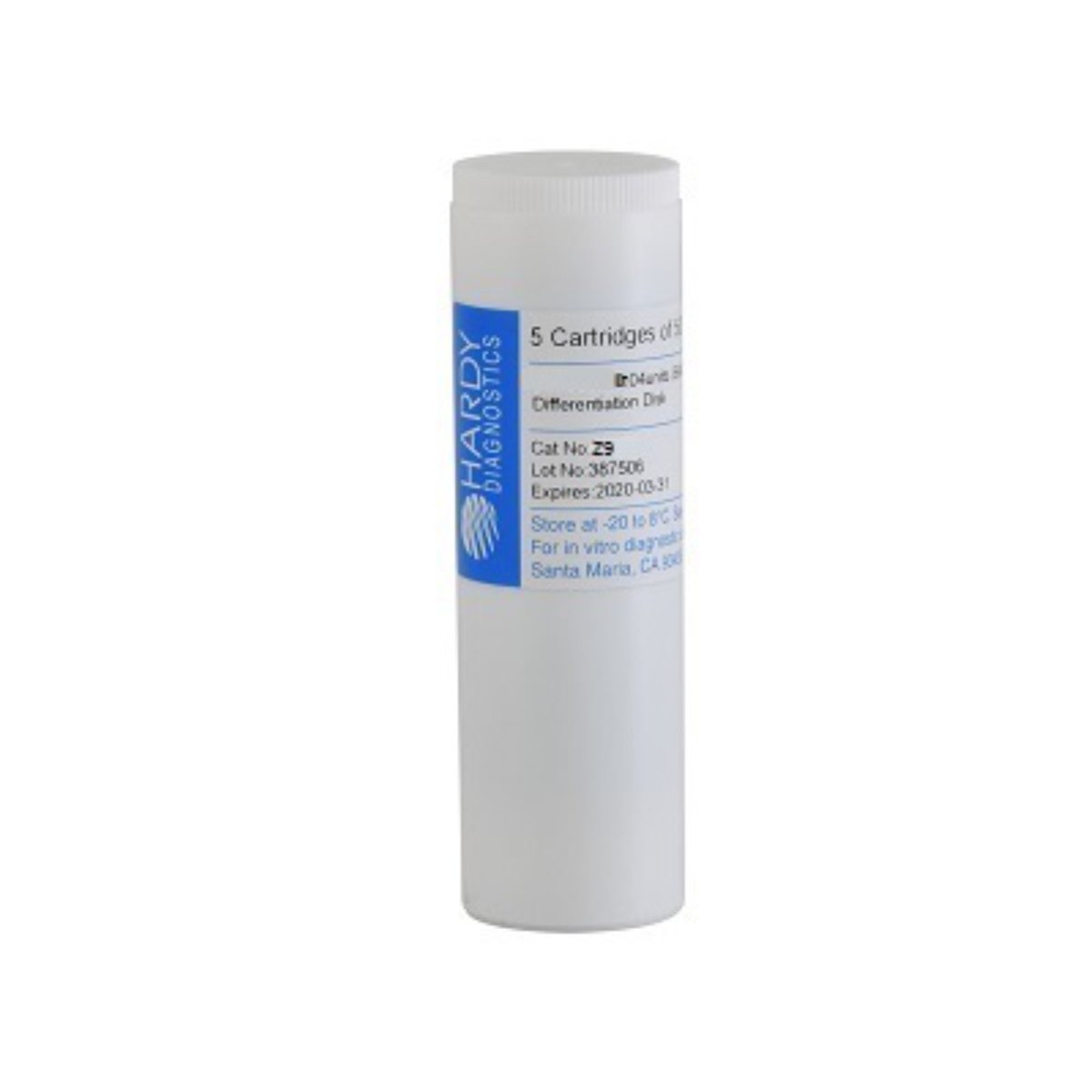
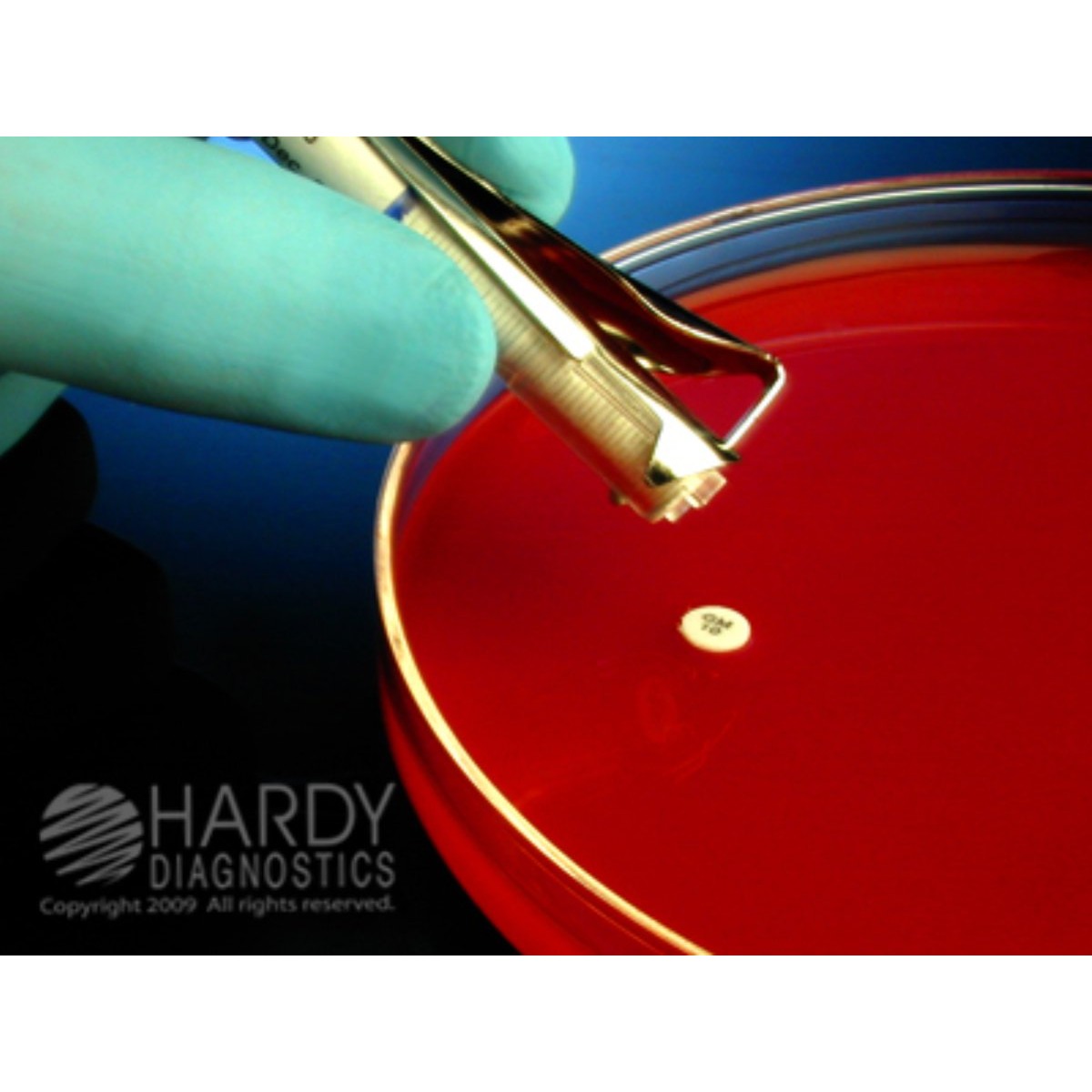
Antibiotics and Selection Disks
-
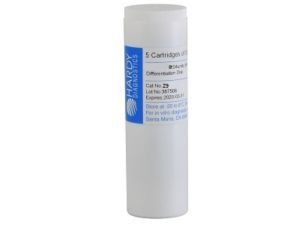
 Ceftazidime / Avibactam HDx,HardyDisk, PK/5x50disksSKU: Z9355-PKManufacturer: Hardy DiagnosticsHardyDisk™ AST Ceftazidime/Avibactam, 50ug (CZA50), Avycaz, 5 x 50 disks, by Hardy Diagnostics To better meet our customer's needs, Hardy Diagnostics will be introducing new HardyDisk AST products, starting February 2016. Ceftazidime/Avibactam has been shown be active against Enterobacteriaceae and Pseudomonas aeruginosa. HardyDisk™ AST's are impregnated paper disks used for Antimicrobial Susceptibility Testing (AST) also known as disk diffusion or Kirby-Bauer testing. Each cartridge contains 50 disks that are spring loaded for smooth and reliable dispensing. Hardy Diagnostics offers a complete line of all commonly used antibiotics. Available in single cartridges (Z9351) or packs of five (Z9355). Compatible with the BBL dispensers. Improved cartridge design prevents jamming and tearing. HardyDisk™ AST cartridges are packaged in an all new canister that features a desiccant built into the lid. Kirby-Bauer accessories available: Mueller Hinton Agar, McFarland Standard, calipers, and much more! Spring loaded in cartridges of 50 disks for smooth and reliable dispensing The last disk in each cartridge is clearly marked with dark lines around its edge to signify the need for refill For use with dispenser catalog number 260457 (not included) or 12 place dispenser catalog number 260640 (not included). FDA cleared. (250 per PK)Learn Morewas $54.83 Special Price $49.56
-
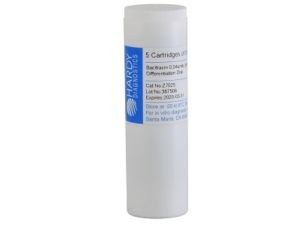 Ceftolozane/Tazobactam C/T40, Zerbaxa, 30ug/10ug, EA/5x50 disksSKU: Z9345-EAManufacturer: Hardy DiagnosticsHardyDisk™ Ceftolozane/Tazobactam, 40µg (C/T40), Zerbaxa, 5 x 50 disks, by Hardy Diagnostics HardyDisk™ AST's are impregnated paper disks used for Antimicrobial Susceptibility Testing (AST) also known as disk diffusion or Kirby-Bauer testing. Each cartridge contains 50 disks that are spring loaded for smooth and reliable dispensing. Hardy Diagnostics offers a complete line of all commonly used antibiotics. Available in single cartridges (Z9341) or packs of five (Z9345). Compatible with the BBL dispensers. Improved cartridge design helps to prevent jamming and tearing. HardyDisk™ AST cartridges are packaged in an all new canister that features a desiccant built into the lid. Kirby-Bauer accessories available: Mueller Hinton Agar, McFarland Standard, calipers, and much more! Spring loaded in cartridges of 50 disks for smooth and reliable dispensing The last disk in each cartridge is clearly marked with dark lines around its edge to signify the need for refill For use with with single dispenser catalog number 260457 (not included) or 12 place dispenser catalog number 260640 (not included). FDA cleared. (1 per EA)Learn Morewas $87.55 Special Price $70.22
-
 Meropenem/Vaborbactam HDx,HardyDisk, PK/5x50disksSKU: Z9325-PKManufacturer: Hardy DiagnosticsHardyDisks™ AST, Meropenem/Vaborbactam, 30µg (MEV30), Vabomere, 5 x 50 disks, by Hardy Diagnostics HardyDisk™ AST’s are impregnated paper disks used for Antimicrobial Susceptibility Testing (AST); also known as disk diffusion or Kirby-Bauer testing. Each cartridge contains 50 disks that are spring loaded for smooth and reliable dispensing. Features and Benefits: HardyDisk™ AST's are impregnated paper disks used for Antimicrobial Susceptibility Testing (AST) also known as disk diffusion or Kirby-Bauer testing. Each cartridge contains 50 disks that are spring loaded for smooth and reliable dispensing. Hardy Diagnostics offers a complete line of all commonly used antibiotics. Available in single a cartridge (Z9321) or packs of five (Z9325). Compatible with the BBL dispensers. Improved cartridge design helps to prevent jamming and tearing. HardyDisk™ AST cartridges are packaged in an all new canister that features a desiccant built into the lid. Kirby-Bauer accessories available: Mueller Hinton Agar, McFarland Standard, calipers, and much more! Spring loaded in cartridges of 50 disks for smooth and reliable dispensing The last disk in each cartridge is clearly marked with dark lines around its edge to signify the need for refill (250 per PK)Learn Morewas $54.83 Special Price $48.10
-
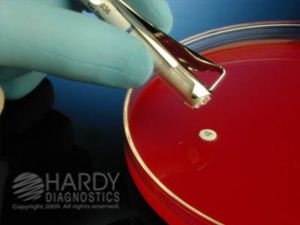 Ceftazidime / Avibactam HDx,HardyDisk,1x50disks EA 1SKU: Z9351-EAManufacturer: Hardy DiagnosticsHardyDisk™ AST Ceftazidime/Avibactam, 50ug (CZA50), Avycaz, 1 x 50 disks, by Hardy Diagnostics To better meet our customer's needs, Hardy Diagnostics will be introducing new HardyDisk AST products, starting February 2016. Ceftazidime/Avibactam has been shown be active against Enterobacteriaceae and Pseudomonas aeruginosa. HardyDisk™ AST's are impregnated paper disks used for Antimicrobial Susceptibility Testing (AST) also known as disk diffusion or Kirby-Bauer testing. Each cartridge contains 50 disks that are spring loaded for smooth and reliable dispensing. Hardy Diagnostics offers a complete line of all commonly used antibiotics. Disks are available in single cartridges (Z9351) or packs of five (Z9355). Compatible with the BBL dispensers. Improved cartridge design prevents jamming and tearing. HardyDisk™ AST cartridges are packaged in an all new canister that features a desiccant built into the lid. Kirby-Bauer accessories are available: Mueller Hinton Agar, McFarland Standard, calipers, and much more! Spring loaded in cartridges of 50 disks for smooth and reliable dispensing The last disk in each cartridge is clearly marked with dark lines around its edge to signify the need for refill. For use with with single dispenser catalog number 260457 (not included)or 12 place dispenser catalog number 260640 (not included). FDA cleared. (1 per EA)Learn Morewas $19.69 Special Price $15.79
-
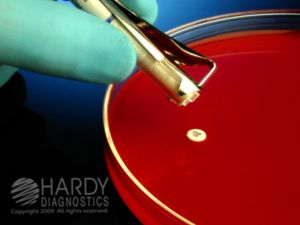 Ceftolozane/Tazo, HDx,HardyDisk,1x50disks EA 1SKU: Z9341-EAManufacturer: Hardy DiagnosticsHardyDisk™ Ceftolozane/Tazobactam, 40µg (C/T40), Zerbaxa, 1 X 50 disks, by Hardy Diagnostics HardyDisk™ AST's are impregnated paper disks used for Antimicrobial Susceptibility Testing (AST) also known as disk diffusion or Kirby-Bauer testing. Each cartridge contains 50 disks that are spring loaded for smooth and reliable dispensing. Hardy Diagnostics offers a complete line of all commonly used antibiotics. Available in single cartridges(Z9341) or packs of five. (Z9345) Compatible with the BBL dispensers. Improved cartridge design helps to prevent jamming and tearing. HardyDisk™ AST cartridges are packaged in an all new canister that features a desiccant built into the lid. Kirby-Bauer accessories available; Mueller Hinton Agar, McFarland Standard, calipers, and much more! Spring loaded in cartridges of 50 disks for smooth and reliable dispensing. The last disk in each cartridge is clearly marked with dark lines around its edge to signify the need for refill. For use with with dispenser number 260457 (not included) or 12 place dispenser catalog number 260640 (not included). FDA cleared (1 per EA)Learn Morewas $16.40 Special Price $13.16
-
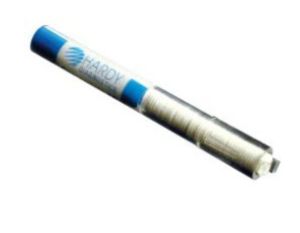 V Factor Disks HDx,HardyDisk,1x50disks EA 1SKU: Z7041-EAManufacturer: Hardy DiagnosticsV Factor Disk, HardyDisks™, NAD disk to aid in the identification of Haemophilus spp., 50 disks per cartridge, 1 each, use with dispenser number 260457, by Hardy Diagnostics Contains NAD (V factor) for the speciation of Haemophilus. Each cartridge contains 50 disks that are spring loaded for smooth and reliable dispensing from the single metal disk dispenser by BD BioSciences, product # 260457. The Hardy Diagnostics manufacturing facility and quality management system comply with the FDA's Good Manufacturing Practices (GMP) and have achieved ISO 13485 certification as a medical device manufacturer. Quality is a science...Service is an art. At Hardy Diagnostics, we believe in excellence in patient care...just like you do! Comparable to: BD 231727 (1 per EA)Learn Morewas $21.62 Special Price $17.34
-
 Eravacycline, 20µg NYA, HDx,HardyDisk,1x50disks F EA 1SKU: Z9401-EAManufacturer: Hardy DiagnosticsHardyDisks™ AST Eravacycline, 20µg (ERV20), Xerava, 1 x 50 disks, by Hardy Diagnostics HardyDisk™ AST’s are impregnated paper disks used for Antimicrobial Susceptibility Testing (AST); also known as disk diffusion or Kirby-Bauer testing. Each cartridge contains 50 disks that are spring loaded for smooth and reliable dispensing. Features and Benefits: HardyDisk™ AST's are impregnated paper disks used for Antimicrobial Susceptibility Testing (AST) also known as disk diffusion or Kirby-Bauer testing. Each cartridge contains 50 disks that are spring loaded for smooth and reliable dispensing. Hardy Diagnostics offers a complete line of all commonly used antibiotics. Compatible with the BBL dispensers. Improved cartridge design helps to prevent jamming and tearing. HardyDisk™ AST cartridges are packaged in an all new canister that features a desiccant built into the lid. Kirby-Bauer accessories available: Mueller Hinton Agar, McFarland Standard, calipers, and much more! Spring loaded in cartridges of 50 disks for smooth and reliable dispensing The last disk in each cartridge is clearly marked with dark lines around its edge to signify the need for refill (1 per EA)Learn Morewas $19.02 Special Price $15.26
-
 Meropenem/Vaborbactam HDx,HardyDisk,1x50disks F PK 50SKU: Z9321-PKManufacturer: Hardy DiagnosticsHardyDisks™ AST Meropenem/Vaborbactam, 30µg (MEV30), Vabomere, 1 x 50 disks, by Hardy Diagnostics HardyDisk™ AST’s are impregnated paper disks used for Antimicrobial Susceptibility Testing (AST); also known as disk diffusion or Kirby-Bauer testing. Each cartridge contains 50 disks that are spring loaded for smooth and reliable dispensing. Features and Benefits: HardyDisk™ AST's are impregnated paper disks used for Antimicrobial Susceptibility Testing (AST) also known as disk diffusion or Kirby-Bauer testing. Each cartridge contains 50 disks that are spring loaded for smooth and reliable dispensing. Hardy Diagnostics offers a complete line of all commonly used antibiotics. Available in single a cartridge (Z9321) or packs of five (Z9325). Compatible with the BBL dispensers. Improved cartridge design helps to prevent jamming and tearing. HardyDisk™ AST cartridges are packaged in an all new canister that features a desiccant built into the lid. Kirby-Bauer accessories available: Mueller Hinton Agar, McFarland Standard, calipers, and much more! Spring loaded in cartridges of 50 disks for smooth and reliable dispensing The last disk in each cartridge is clearly marked with dark lines around its edge to signify the need for refill (50 per PK)Learn Morewas $15.23 Special Price $13.41
-
 Ceftaroline, CPT-30 HDx,HardyDisk,1x50disks F EA 1SKU: Z9391-EAManufacturer: Hardy DiagnosticsCeftaroline, CPT-30 HDx,HardyDisk,1x50disks F EA 1 (1 per EA)Learn Morewas $19.69 Special Price $15.79
-
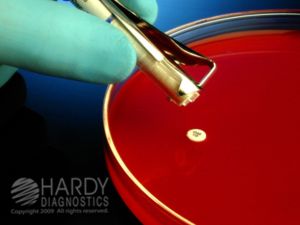 Sulfa/Trimeth,SXT25 HDx,HardyDisk,5x50disks EA 1SKU: Z9015-EAManufacturer: Hardy DiagnosticsHardyDisks™ AST Sulfamethoxazole/Trimethoprim, (SXT), Bactrim, 5 x 50 disks, by Hardy Diagnostics Freeze on arrival HardyDisk™ AST’s are impregnated paper disks used for Antimicrobial Susceptibility Testing (AST); also known as disk diffusion or Kirby-Bauer testing. Each cartridge contains 50 disks that are spring loaded for smooth and reliable dispensing. The HardyDisk™ AST cartridges are designed to be fully compatible with the BBL single or multiple disk dispensers as listed below. DISK DISPENSERS Dispenser, single disk, metal, #260457 Dispenser, 6-place, self-tamping, #260661 Dispenser, 8-place, self-tamping, #260660 Dispenser, 12-place, self-tamping, #260640 MEDIA FOR AST HTM Agar Plate, 100mm, #G33 HTM Agar Plate, 150mm, #H07 Mueller Hinton Agar Plate, 100mm plate, #G45 Mueller Hinton Agar Plate, 150mm plate, #H11 Mueller Hinton Agar with Blood Plate, 100mm plate, #A59 Mueller Hinton Agar with Blood Plate, 150mm plate, #H21 Mueller Hinton Broth, 5ml, 16x100mm tube, #K91 OTHER SUPPLIES FOR AST Calipers for measuring zones, digital readout, comes with battery and NIST traceable certificate, #62379531 Container, holds HardyDisk™ packages for refrigerator storage, 14.1"x7.9"x4.9" tall, with lid, #1922 DesiView, desiccant for dispensers and refrigerator boxes with color indicator crystals, 5gm, 10 packets per box, #DV10 McFarland, #0.5 equivalent, turbidity standard, in a 16x100mm glass tube, latex, #ML05 Swabs, sterile, individually wrapped, dacron, 100 per pkg, #HD25806 Vortex II Mixer, Super, Labline, #M37615 Wickerham Card for turbidity reading, 2x3 inches, black stripes, #Z08 Zone size interpreter, clear template with decals, #260639 Comparable to: Remel CT0052B (1 per EA)Learn Morewas $63.68 Special Price $51.08
-
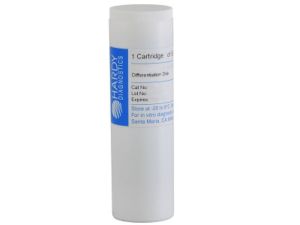 Imipenem/Relebactam 10/25 HDx,HardyDisk,1x50disksSKU: Z9441-EAManufacturer: Hardy DiagnosticsHardyDisks™ AST Imipenem/Relebactam, 35µg (IMR35), 1 x 50 disks, by Hardy Diagnostics HardyDisk™ AST’s are impregnated paper disks used for Antimicrobial Susceptibility Testing (AST); also known as disk diffusion or Kirby-Bauer testing. Each cartridge contains 50 disks that are spring loaded for smooth and reliable dispensing. Features and Benefits: HardyDisk™ AST's are impregnated paper disks used for Antimicrobial Susceptibility Testing (AST) also known as disk diffusion or Kirby-Bauer testing. Each cartridge contains 50 disks that are spring loaded for smooth and reliable dispensing. Hardy Diagnostics offers a complete line of all commonly used antibiotics. Compatible with the BBL dispensers. Improved cartridge design helps to prevent jamming and tearing. HardyDisk™ AST cartridges are packaged in an all new canister that features a desiccant built into the lid. Kirby-Bauer accessories available: Mueller Hinton Agar, McFarland Standard, calipers, and much more! Spring loaded in cartridges of 50 disks for smooth and reliable dispensing The last disk in each cartridge is clearly marked with dark lines around its edge to signify the need for refill (1 per EA)Learn Morewas $18.49 Special Price $14.84
-
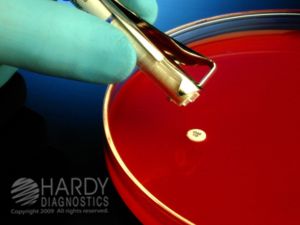 Erythromycin,E-15 HDx,HardyDisk,1x50disks FSKU: Z8475-EAManufacturer: Hardy DiagnosticsHardyDisks™ AST Erythromycin, 15µg (E-15), Eryc, 5 x 50 disks, by Hardy Diagnostics Freeze on arrival HardyDisk™ AST’s are impregnated paper disks used for Antimicrobial Susceptibility Testing (AST); also known as disk diffusion or Kirby-Bauer testing. Each cartridge contains 50 disks that are spring loaded for smooth and reliable dispensing. The HardyDisk™ AST cartridges are designed to be fully compatible with the BBL single or multiple disk dispensers as listed below. DISK DISPENSERS Dispenser, single disk, metal, #260457 Dispenser, 6-place, self-tamping, #260661 Dispenser, 8-place, self-tamping, #260660 Dispenser, 12-place, self-tamping, #260640 MEDIA FOR AST HTM Agar Plate, 100mm, #G33 HTM Agar Plate, 150mm, #H07 Mueller Hinton Agar Plate, 100mm plate, #G45 Mueller Hinton Agar Plate, 150mm plate, #H11 Mueller Hinton Agar with Blood Plate, 100mm plate, #A59 Mueller Hinton Agar with Blood Plate, 150mm plate, #H21 Mueller Hinton Broth, 5ml, 16x100mm tube, #K91 OTHER SUPPLIES FOR AST Calipers for measuring zones, digital readout, comes with battery and NIST traceable certificate, #62379531 Container, holds HardyDisk™ packages for refrigerator storage, 14.1"x7.9"x4.9" tall, with lid, #1922 DesiView, desiccant for dispensers and refrigerator boxes with color indicator crystals, 5gm, 10 packets per box, #DV10 McFarland, #0.5 equivalent, turbidity standard, in a 16x100mm glass tube, latex, #ML05 Swabs, sterile, individually wrapped, dacron, 100 per pkg, #HD25806 Vortex II Mixer, Super, Labline, #M37615 Wickerham Card for turbidity reading, 2x3 inches, black stripes, #Z08 Zone size interpreter, clear template with decals, #260639 Comparable to: Remel CT0020B (1 per EA)Learn Morewas $87.55 Special Price $70.22
-
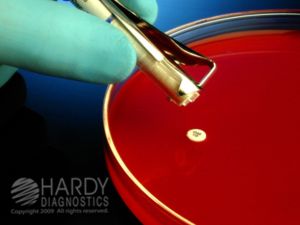 XVactor Disks HDx,HardyDisk,1x50disksSKU: Z7051-EAManufacturer: Hardy DiagnosticsV Factor, HardyDisks™, Hemin and NAD disk to aid in the identification of Haemophilus spp., 50 disks per cartridge, 1 each, use with dispenser number 260457, by Hardy Diagnostics Contains NAD and Hemin (X and V Factors) for the speciation of Haemophilus. Each cartridge contains 50 disks that are spring loaded for smooth and reliable dispensing from the single metal disk dispenser by BD BioSciences, product # 260457. The Hardy Diagnostics manufacturing facility and quality management system comply with the FDA's Good Manufacturing Practices (GMP) and have achieved ISO 13485 certification as a medical device manufacturer. Quality is a science...Service is an art. At Hardy Diagnostics, we believe in excellence in patient care...just like you do Comparable to: BD 231731 (1 per EA)Learn Morewas $16.70 Special Price $13.39
- Kanamycin, 1000mcg HDx,HardyDisk,1x50disksSKU: Z7191-EAManufacturer: Hardy DiagnosticsKanamycin, 1000mcg, KAN, for the differentiation of anaerobic bacteria based on susceptibility to Kanamycin, 1 x 50 disks, use with dispenser number 260457, by Hardy Diagnostics, freeze on arrival Differentiates anaerobic bacteria on the basis of susceptibility to Kanamycin. Each cartridge contains 50 disks that are spring loaded for smooth and reliable dispensing from the single metal disk dispenser by BD BioSciences, product # 260457 Comparable to: Remel R21126 (1 per EA)Learn Morewas $23.14 Special Price $18.56



How Can We Help?
This is a custom sub-title.
LPS provides procurement services:
Strategic and customized product sourcing services to find the best vendorsUnparalleled customer service from dedicated procurement managers
Custom web portal where you can order items from any vendor on one site
Consolidate orders and invoices
Wholesale “club” pricing for members
Procure-to-Pay software solutions and process consulting
Enterprise procurement solutions designed for small and mid-sized labs