


One of the most frequent mistakes centrifuge buyers make is purchasing the wrong rotor and/or sample carrier. LPS can help you avoid this costly error, and help you save money by finding the best rotor / carrier combination to spin your samples.
Schedule a consultation with us today. We can help you put together the perfect centrifuge package to meet the requirements of your application at a price you can afford.
A rotor must be listed for your exact centrifuge model; check the model or series named in the product title, such as the GCM, GCH-24 or GCC-MP Series, MC-24 Touch, Sprout or Z216. Choose between a fixed-angle rotor, which pellets quickly and suits microtubes and high-speed work, and a swing-out rotor with buckets, which gives flat pellets and handles larger tubes, bottles and microplates. Check the number of places and tube sizes, the rotor's maximum speed and RCF compared with what your protocol needs, and whether you need a sealable or hermetically sealed lid to contain aerosols from hazardous samples.
Centrifuge Rotors: common questions
What is the difference between a fixed-angle and a swing-bucket rotor?
A fixed-angle rotor holds tubes at a set angle, so particles travel a short distance and pellet quickly against the side of the tube. It is common for microtubes and high-speed work. A swing-bucket (swing-out) rotor lets buckets swing out horizontally as it spins, giving a flat pellet at the bottom of the tube. It suits larger volumes, density gradients and microplates, but usually runs at lower top speeds.
Why does centrifuge rotor radius matter?
The force on a sample depends on both speed and radius. Relative centrifugal force is calculated as RCF = 1.118 x 10^-5 x r x rpm², with r the radius in centimeters. Two rotors spinning at the same rpm can apply different g-forces if their radii differ, so protocols written in x g are easier to transfer between centrifuges. The rotor's documentation lists its maximum radius.
What are centrifuge buckets and carriers?
Buckets and carriers hold the samples in a swing-out rotor. Buckets usually take tubes, bottles or tube adapters, while carriers are flat holders for microplates or deep-well plates. They must be the type listed for your rotor, and they should be loaded in opposite pairs with matching weights so the rotor stays balanced.
Can I get help choosing a rotor or pricing a centrifuge package?
Yes. You can request volume or quote pricing, including pricing for a centrifuge with rotors and adapters, through the Contact Us page. Approved business accounts can pay by purchase order, and many items ship directly from the manufacturer, so lead times vary by item.
Related categories: Centrifuge Parts · Micro Centrifuges · Universal Centrifuges · Clinical · Refrigerated Centrifuges · Centrifuges · Compact Centrifuges · High Speed Centrifuges · All Centrifugation
Top brands: Ohaus Corporation · Benchmark Scientific · Globe Scientific
Popular Centrifuge Rotors:



Centrifuge Rotors
-
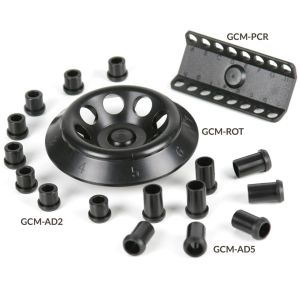 Rotor for GCM Series Mini Centrifuges 7000rpm, 8-Place for 1.5 & 2.0mL tubesSKU: GCM-ROT-EAManufacturer: Globe ScientificGlobe's GCM Series was designed with your lab in mind... whether you spin-down microcentrifuge tubes, PCR tubes or PCR Strips, the GCM will provide you with reliable performance use after use. Operating the GCM is quick and easy; close the lid to accelera (1 per EA)Learn Morewas $73.20 Special Price $58.72
-
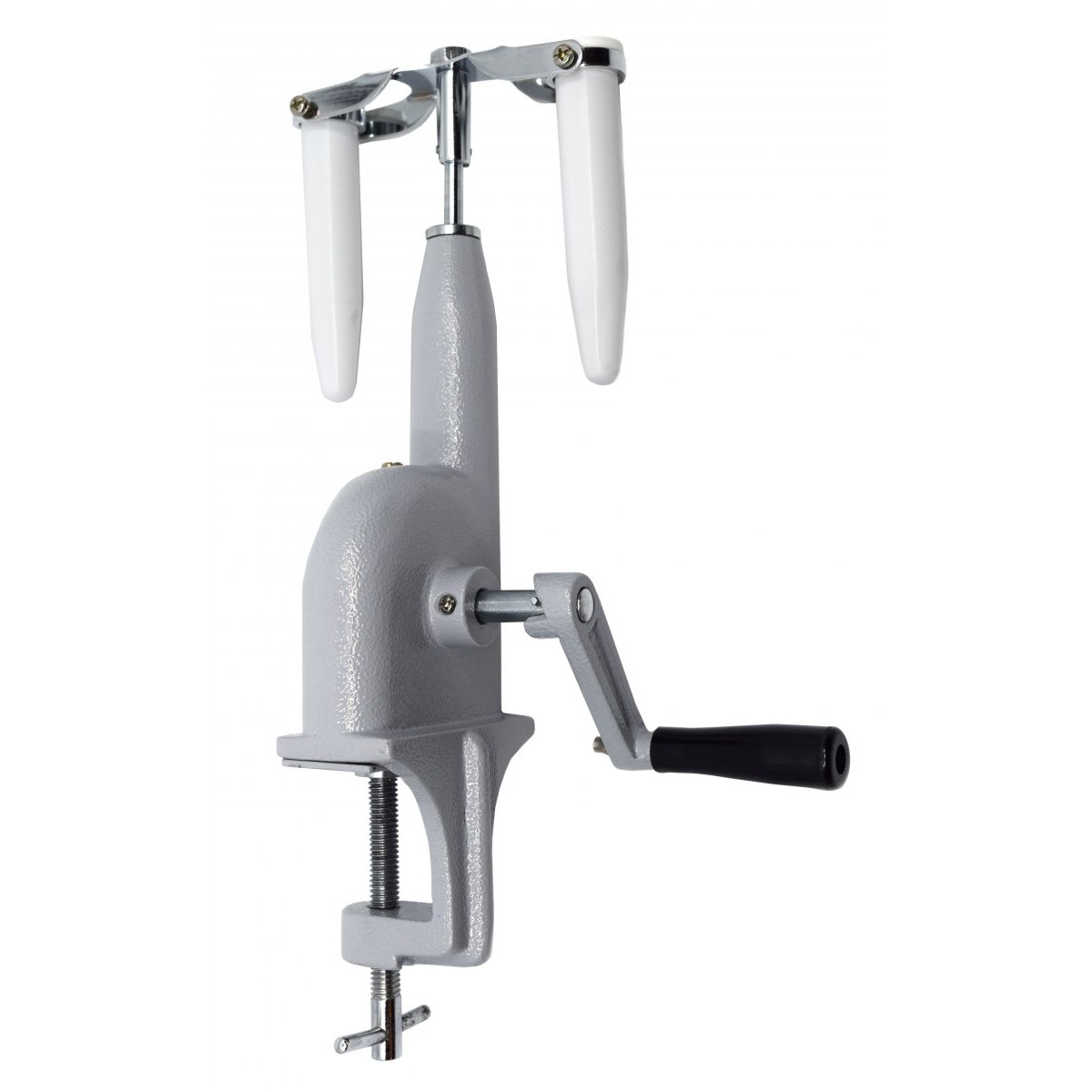
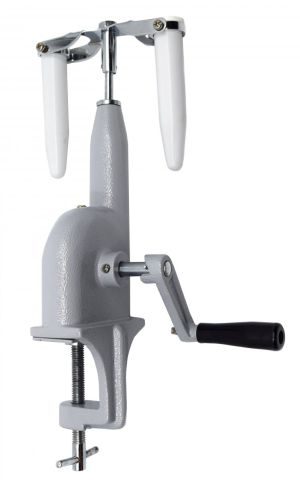 Centrifuge Hand, 2 buckets, 2x15ml tubesSKU: CH0266A-EAManufacturer: Eisco Scientific LLCCentrifuge Hand, 2 buckets, 2x15ml tubes (1 per EA )Learn Morewas $159.53 Special Price $129.76
-
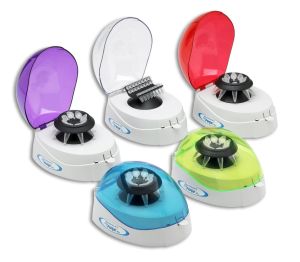 Round Rotor, 8 position, EA /1SKU: C1008-ROT-EAManufacturer: Benchmark ScientificRound Rotor, 8 position, EA /1 (1 per EA)Learn Morewas $56.40 Special Price $49.86
-
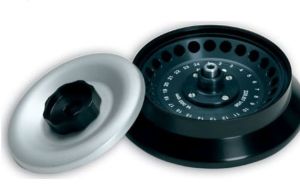 24 x 1.5/2.0ml Hermetically sealed rotor metal lidSKU: Z326-2420H-EAManufacturer: Benchmark Scientific24 x 1.5/2.0ml rotor, hermetically sealed, EA /1 (1 per EA)Learn Morewas $1,773.55 Special Price $1,623.16
-
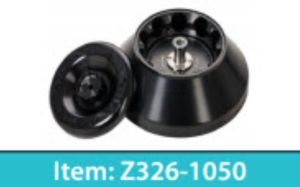 10 x 50ml Conical RotorSKU: Z326-1050-EAManufacturer: Benchmark Scientific10 x 50ml Conical Rotor, EA /1 (1 per EA)Learn Morewas $2,526.08 Special Price $2,311.87
-
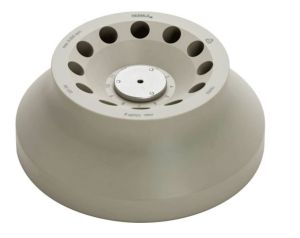 12 x 15ml rotorSKU: Z326-1215-EAManufacturer: Benchmark Scientific12 x 15ml rotor, EA /1 (1 per EA)Learn Morewas $1,375.22 Special Price $1,258.60
-
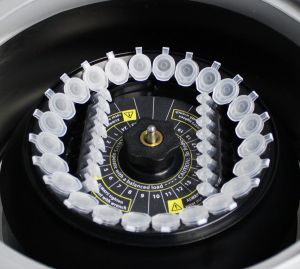 5-7ml adapter for 15ml rotor, 8/pkSKU: C3100-ADP-PKManufacturer: Benchmark ScientificAdapter pack, for 5ml and 7ml 12-13mm tubes in 15ml rotors, 8/pk. (8 per PK)Learn Morewas $124.39 Special Price $119.53
-
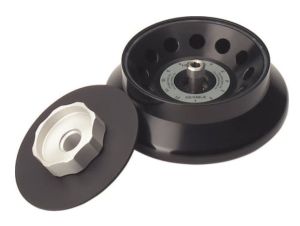 12 x 1.5/2.0ml rotorSKU: Z326-1220H-EAManufacturer: Benchmark Scientific12 x 1.5/2.0ml rotor, Hermetically Sealed, EA /1 (1 per EA)Learn Morewas $1,825.00 Special Price $1,670.24
- Optional rotor with carriers for deep well plates up to 35mm tall (speed: 1500rpm)SKU: C2000-DWMP-EAManufacturer: Benchmark ScientificOptional rotor with carriers for deep well plates up to 35mm tall , speed: 1500rpm , EA /1 (1 per EA)Learn Morewas $245.40 Special Price $219.02
-
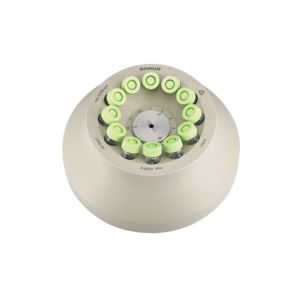 Rotor, Angle,12x15ml RBSKU: 30130877-EAManufacturer: Ohaus CorporationOffering Flexibility to Maximize Sample Preparation. Choose from a range of rotors to be used with Frontier centrifuges to match capacities and flexibility required for your basic to high-performance sample preparation needs. Designed with usability in mind, the Frontier rotors can be effortlessly installed or removed in a few quick and simple steps, and users have easy access to the samples. The sturdy rotors are constructed of high-quality materials, built to last through demanding workflows from autoclave sterilization to sub-zero temperature. (1 per EA)Learn Morewas $807.95 Special Price $543.85
-
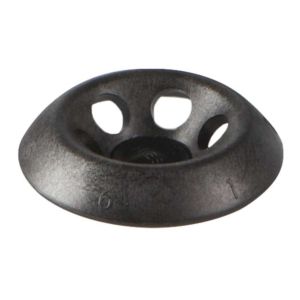 Sprout® Mini-Centrifuge Rotor SnapSpin 6 x 1.5/2mL Tube, BlackSKU: HS100011-EAManufacturer: Heathrow ScientificSprout® Mini-Centrifuge Rotor SnapSpin 6 x 1.5/2mL Tube, Black (1 per EA )Learn More$55.00
-
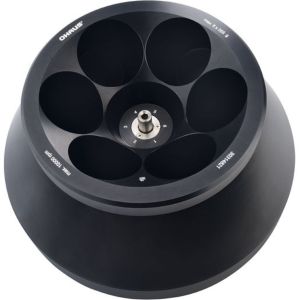 Rotor, Angle, 6x250ml FB, IDSKU: 30314821-EAManufacturer: Ohaus CorporationOffering Flexibility to Maximize Sample Preparation. Choose from a range of rotors to be used with Frontier centrifuges to match capacities and flexibility required for your basic to high-performance sample preparation needs. Designed with usability in mind, the Frontier rotors can be effortlessly installed or removed in a few quick and simple steps, and users have easy access to the samples. The sturdy rotors are constructed of high-quality materials, built to last through demanding workflows from autoclave sterilization to sub-zero temperature. (1 per EA)Learn Morewas $5,433.95 Special Price $3,657.50
-
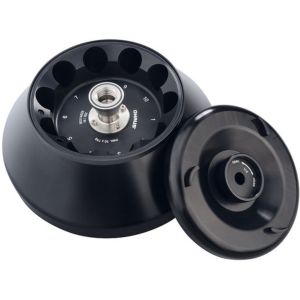 Rotor, Angle, 10x50ml FA, IDSKU: 30314829-EAManufacturer: Ohaus CorporationOffering Flexibility to Maximize Sample Preparation. Choose from a range of rotors to be used with Frontier centrifuges to match capacities and flexibility required for your basic to high-performance sample preparation needs. Designed with usability in mind, the Frontier rotors can be effortlessly installed or removed in a few quick and simple steps, and users have easy access to the samples. The sturdy rotors are constructed of high-quality materials, built to last through demanding workflows from autoclave sterilization to sub-zero temperature. (1 per EA)Learn Morewas $3,889.95 Special Price $2,618.27
-
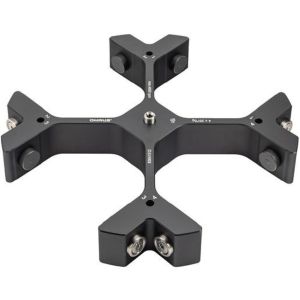 Rotor Swing out 4x1000ml ID SealableSKU: 83041512-EAManufacturer: Ohaus CorporationOffering Flexibility to Maximize Sample Preparation (1 per EA)Learn Morewas $2,717.95 Special Price $1,829.43
-
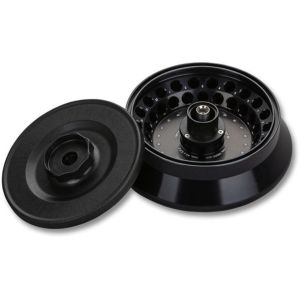 Rotor, Angle, 44x1.5/2.0ml, ID, v2SKU: 30372718-EAManufacturer: Ohaus CorporationOffering Flexibility to Maximize Sample Preparation. Choose from a range of rotors to be used with Frontier centrifuges to match capacities and flexibility required for your basic to high-performance sample preparation needs. Designed with usability in mind, the Frontier rotors can be effortlessly installed or removed in a few quick and simple steps, and users have easy access to the samples. The sturdy rotors are constructed of high-quality materials, built to last through demanding workflows from autoclave sterilization to sub-zero temperature. (1 per EA)Learn Morewas $1,694.95 Special Price $1,140.87
- Rotor for GCM Series Mini Centrifuges 7000rpm, 2x8 for 0.2mL PCR Tubes/StripsSKU: GCM-PCR-EAManufacturer: Globe ScientificGlobe's GCM Series was designed with your lab in mind... whether you spin-down microcentrifuge tubes, PCR tubes or PCR Strips, the GCM will provide you with reliable performance use after use. Operating the GCM is quick and easy; close the lid to accelera (1 per EA)Learn Morewas $50.60 Special Price $45.13
-
 Rotor, Angle, 24x1.5/2.0ml, ID, SealableSKU: 30304361-EAManufacturer: Ohaus CorporationOffering Flexibility to Maximize Sample Preparation (1 per EA)Learn Morewas $1,439.95 Special Price $969.23
-
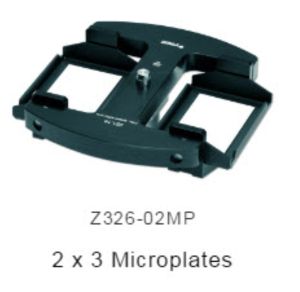 2 place swing out microplate rotorSKU: Z326-02MP-EAManufacturer: Benchmark Scientific2 x microplate rotor, EA /1 (1 per EA)Learn Morewas $2,882.72 Special Price $2,638.27
-
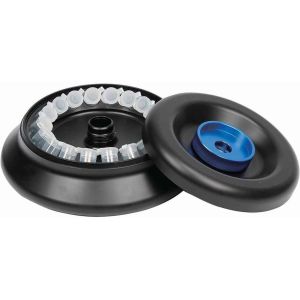 Rotor with Lid, for use with GCC-MP Series Multi-Purpose Clinical Centrifuges, Aluminum Alloy, Fixing Clips and O-Ring, 15000rpm max, 18-Place for 5mL Conical Bottom TubesSKU: GCC-MP-5ML-EAManufacturer: Globe ScientificFor separations and spin downs from 0.2mL to 100mL and microplates, choose the GCC-MP! The Globe Scientific GCC-MP Multi-Purpose Clinical Centrifuge is a large capacity centrifuge that can be used in a variety of clinical lab applications. With a wide se (1 per EA)Learn Morewas $1,068.90 Special Price $935.29
-
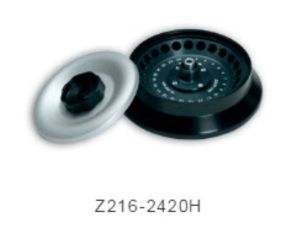 24 x 1.5/2.0ml rotor, hermetically sealed metal lid (for Z216 series only)SKU: Z216-2420H-EAManufacturer: Benchmark Scientific24 x 1.5/2.0ml rotor, hermetically sealed , for Z216 series only , EA /1 (1 per EA)Learn Morewas $1,465.92 Special Price $1,341.61
-
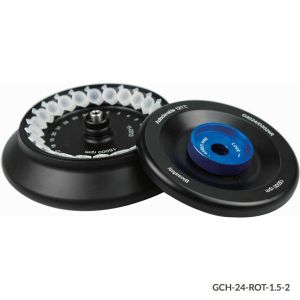 Rotor for GCH-24 Series Centrifuges 24-Place for 1.5mL/2.0mL, 14000rpm maxSKU: GCH-24-ROT-1.5-2-EAManufacturer: Globe ScientificThe GCH-24 Hematocrit Centrifuge allows your lab to determine erythrocyte fractions in blood as well as micro solution separations using the included twenty-four (24) place capillary rotor. The included rotor lids enhance user safety and are easy to remov (1 per EA)Learn Morewas $352.70 Special Price $308.62
-
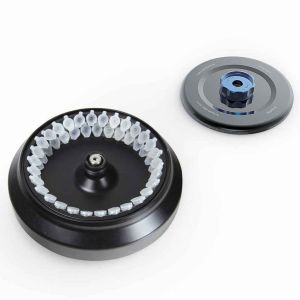 Rotor with Lid, for use with GCC-MP Series Multi-Purpose Clinical Centrifuges, Aluminum Alloy, Fixing Clips and O-Ring, 15000rpm max, 30-Place for 1.5mL and 2.0mL Microcentrifuge TubesSKU: GCC-MP-2ML30-EAManufacturer: Globe ScientificFor separations and spin downs from 0.2mL to 100mL and microplates, choose the GCC-MP! The Globe Scientific GCC-MP Multi-Purpose Clinical Centrifuge is a large capacity centrifuge that can be used in a variety of clinical lab applications. With a wide se (1 per EA)Learn Morewas $1,068.90 Special Price $935.29
-
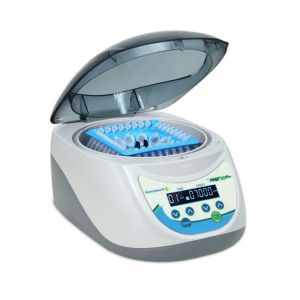 Optional 8 x 5ml rotor for MC-24™ TouchSKU: C2417-R5-EAManufacturer: Benchmark ScientificOptional 8 x 5ml rotor for MC-24™ Touch (1 per EA)Learn Morewas $1,196.86 Special Price $1,068.20
-
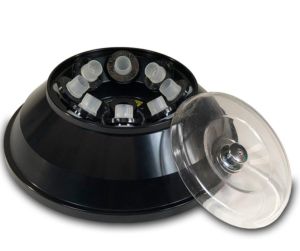 5-7ml adapter for 15ml rotorSKU: C3100-ADP-EAManufacturer: Benchmark Scientific5-7ml adapter for 15ml rotor (1 per EA)Learn Morewas $132.27 Special Price $118.05


How Can We Help?
This is a custom sub-title.
LPS provides procurement services:
Strategic and customized product sourcing services to find the best vendorsUnparalleled customer service from dedicated procurement managers
Custom web portal where you can order items from any vendor on one site
Consolidate orders and invoices
Wholesale “club” pricing for members
Procure-to-Pay software solutions and process consulting
Enterprise procurement solutions designed for small and mid-sized labs