The Good and Bad of Pipettors & Tips
I am exploring two questions in this blog post:
- How can you tell whether pipettor A is better than pipettor B?
- What makes pipet tip A better than pipet tip B? (assuming they both fit on your pipettor.)
Pipettors
Let’s first take a look at pipettors. We will confine this discussion to manual, not electronic, pipettors.
Here is a list of things my customers have told me they look for in a quality pipettor:
- Price “Cheap pipettes can’t be any good.” “You get what you pay for.”
- Accuracy “The more expensive the pipette, the more accurate it is.”
- Ergonomics “Avoid repetitive stress, weight, low force ejection / loading”
- Ease of Calibration “Must be easy to calibrate/service”
- Reputation “Made in Germany or Switzerland” “..not made in China”
- Trustworthiness “The brand I’ve always used.”
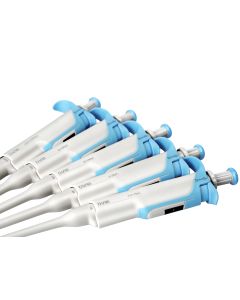
The Uline pipettor is manufactured by DLAB (China). This pipettor wholesales in the U.S. for under $25 per unit. Note that it is marked up to $190 by Uline, so you feel that you aren’t buying a “cheap” pipettor (and to boost Uline’s profit margin).
So what are the accuracy specifications for the DLAB pipettor? Pictured below is their catalog number 7030511014, Single-Channel 100-1000ul (adjustable in 1uL increments).
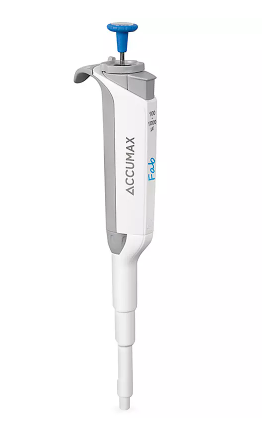
DLAB (ULine AccuMax) Specifications
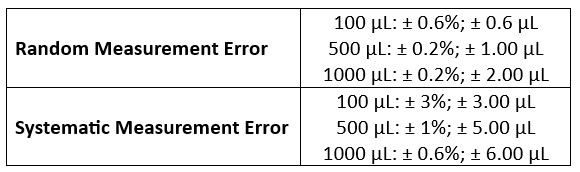
The Research Plus, by Eppendorf, retails for $590.
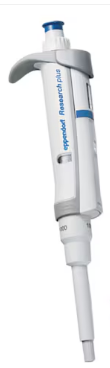
Eppendorf Research Plus Specifications
The specifications on these two pipettors are identical. Yet most people would say that Eppendorf makes a “far more accurate pipettor.” The facts just don’t support that conclusion.
So if it’s not precision and accuracy, it falls on ergonomics, calibration and trust. High-end pipettors like the Eppendorf Research Plus do “feel better” in your hand. If you have used one of these your entire career, you probably have no interest in changing.
If you pipette all day long, day in and day out, investing in an expensive, brand-name pipettor may make sense. If you pipette every now and then, for less than 30 minutes at a time, do you really need to pay five to ten times the price of a low-end unit on one pipettor? If you can purchase a pipettor for under $100, when it stops working, throw it away and get a new one!
If you spend a whole lot of money on an Eppendorf pipettor, are you really going to question its accuracy or ergonomics or calibration characteristics? Of course not. It really boils down to your trust in a brand.
Pipet Tips
When trying to figure out what makes one pipet tip worse than another, it is really hard to get an unbiased opinion. Nearly every article you can find online is written by companies such as ThermoFisher, Mettler-Toledo (Rainin) and Eppendorf, all of whom sell tips at premium prices and have, for decades, tried to convince buyers that the ONLY tips that will give reliable (or best) results are the tips they make for their brand of pipettors. No other brand can work as well.
This tried-and-true argument has a lot of scientists convinced. While it seems to make sense, then why do they say their tips are just as good when used on their competitors' pipettors? As scientists, it would seem logical that someone would test this theory…
What does Google Gemini say makes a poor quality pipet tip?
“Poor quality pipette tips are characterized by inconsistent manufacturing, poor fit, and improper materials that cause inaccurate, non-reproducible, and contaminated samples. Key issues include poor sealing leading to air leaks, tip deformation, low-quality resin causing high liquid retention, and presence of contaminants like DNase, RNase, or heavy metals.”
- Poor Seal and Fit: Tips that do not fit the pipette cone properly prevent an airtight seal, resulting in air gaps and incorrect, usually low, volume delivery.
- Molding Defects: Inconsistent, low-quality, or damaged plastic (e.g., flash, thin walls, or warping) causes variations in volume between tips.
- Surface Tension and Retention: Poor quality plastic can be highly hydrophobic, leading to high sample retention inside the tip, reducing accuracy, especially for low-volume or viscous liquids.
- Contamination: Nonsterile, poorly manufactured tips may contain lubricants, particulates, or biological contaminants (DNA, RNA, DNase, RNase).
- Batch Inconsistency: Significant variation in tip shape, length, or diameter between different lots, which compromises the reliability of experimental data.
- Improper Design: Tips that are not uniform can cause inconsistent aspiration when using multi-channel pipettes.
So where did AI come up with this information? From ThermoFisher. All of these issues were concerns back in 1975. But if you are a company with ANY of these issues today, how long would you stay in business? All of these problems from yesteryear have been solved by anyone manufacturing injection molded tips today.
So what are legitimate problems that people experience today?
It doesn’t fit on my pipettor. Tips that won’t go on your pipettor or can’t be ejected from your pipettor aren’t necessarily “bad” tips, but they are unusable for your purposes.
This issue is particularly problematic on -8, -12, -16 and -24-channel pipettors, when the collar diameter may be too large to allow the tips to go on side-by-side. Different styles of tip ejectors may not work with certain types of tip collars.
Packaging issues. Most racked tips come in racks of 96. But some tips, especially the 1000uL or 1250uL sizes, come in racks of 100. The tips in these racks are staggered, which renders them useless if you are using a multi-channel pipettor, or if you just don’t link them lined up that way. Lids can be removable or hinged. Sometimes, the user just doesn’t like the color scheme! Wherever possible, you should be using reloadable tips just to cut down on the plastic waste.
Sterility. Does anyone buy non-sterile pipet tips? The price difference is marginal, but why waste the money if you don’t need sterile tips? Why do I list this as a problem? The problem is that most anything that is sterile has an expiration date, and I have yet to meet anyone who will even keep anything in their lab, much less use it, beyond the expiration date. The product gets tossed. That’s a problem, an expensive problem.
Manufacturers can only put expiration dates that they have been proven valid through testing. This requirement leads to short expiration dates from some manufacturers, and frustrated customers who get cases of tips with less than six month dating. Distributors universally do not take back sterile products. The end user is left holding the bag (a bag full of perfectly good tips.)
The irony here is that most customers don’t need sterile tips for their application. That being the case, does a pipet tip, in boxes, individually wrapped, suddenly become “contaminated” because the expiration date came and went? You have two options:
- Buy very small quantities of sterile tips often, which is more expensive than buying by the case, and requires many more purchase orders.
- Or, just buy non-sterile tips by the case, keep them as long as you wish, pocket the savings and stop worrying about your inventory expiring.
Conclusion
More psychology is involved in the marketing and sale of pipettors and tips than perhaps any other product used in the lab.
Don’t be fooled by scare tactics! For most people these are wasted words. Hopefully that will resonate with a few people. Don’t think that spending a lot more money on a pipettor is going to necessarily get you a better product. By the same token, if you do a lot of pipetting, don’t buy the cheapest pipettor either. Remember that the price of the pipettor is not an indicator of its pedigree.
Don’t waste money on sterile tips if sterility isn’t a requirement. You are going to have to look hard to find a pipet tip that is truly as bad as ThermoFisher or Eppendorf or any of the big name pipettor makers would have you believe are prevalent in the market. Don’t be afraid to experiment! Finally, don’t throw away expired sterile tips unless you absolutely positively must.