

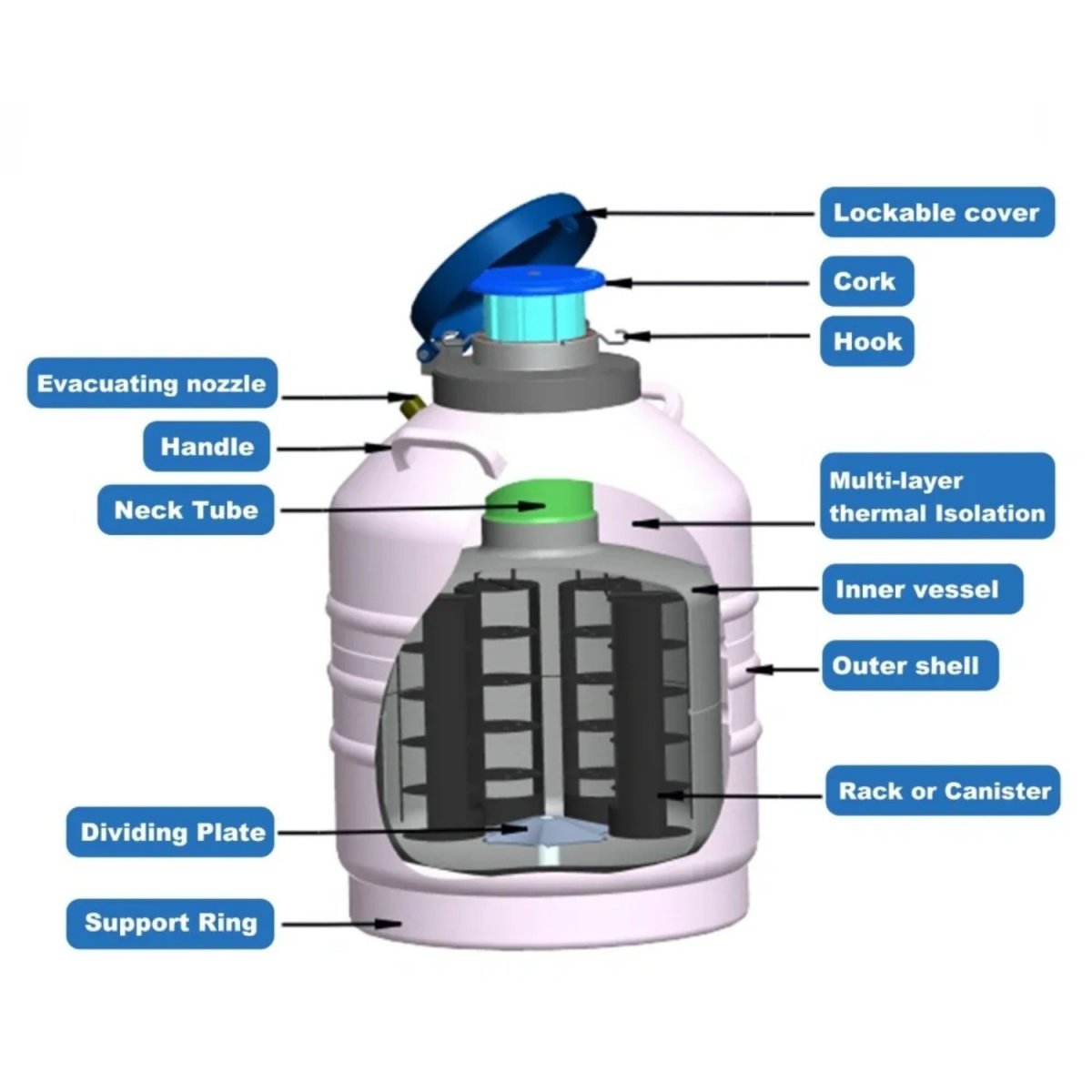
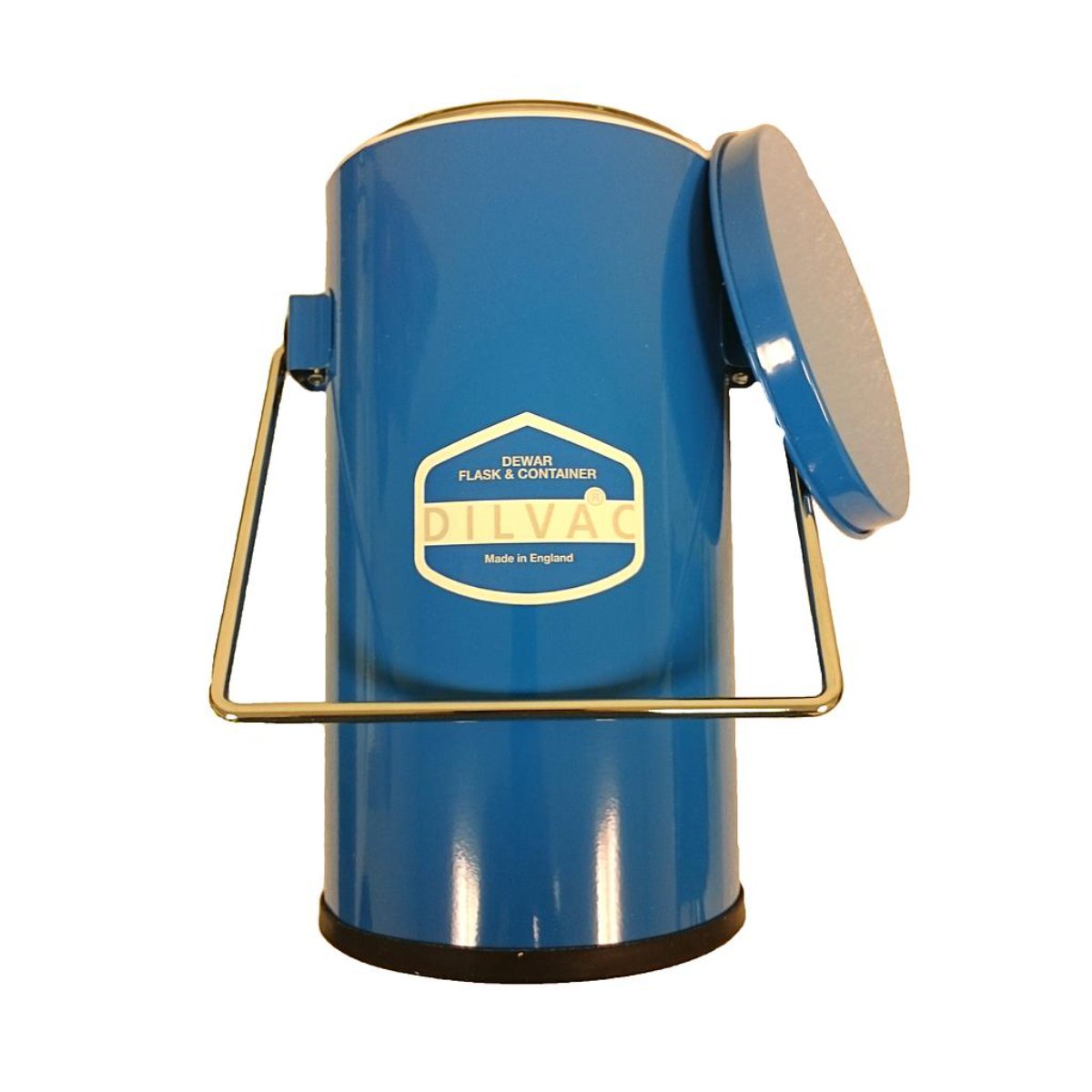
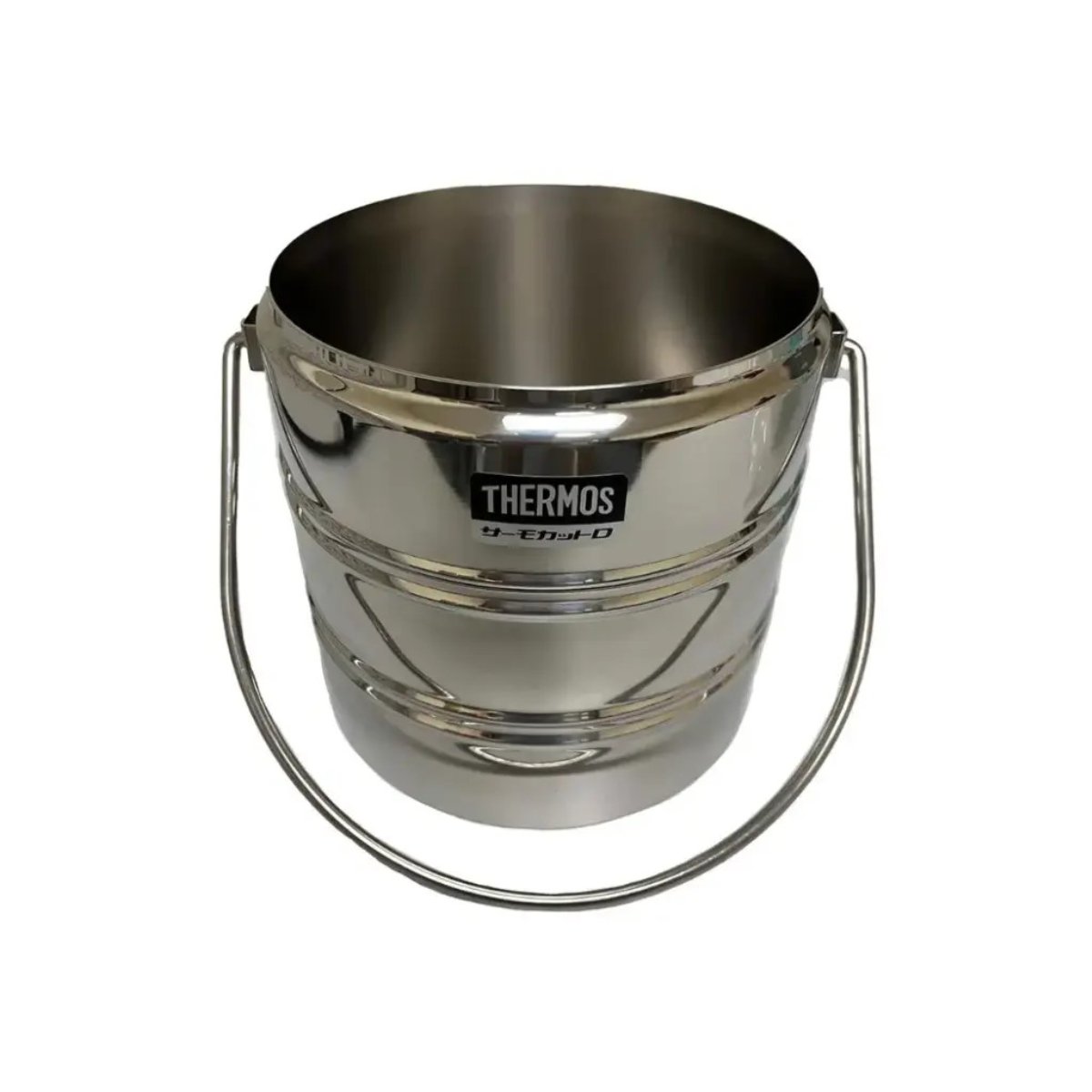
This category covers containers for holding and storing liquid nitrogen. Dewar flasks from about 0.17 to 6 liters, with stainless steel, all-stainless or blue enameled cases, are used at the bench for cold traps, small transfers and sample work, and a condenser Dewar is also listed. Portable Dewars of 2 to 10 liters come with canisters for transporting or holding vials. Storage tanks of 31.5 to 35.5 liters hold canisters or up to 750 vials, and cryogenic storage systems from 47 to 176 liters include fiberboard or polycarbonate boxes.
Choose first by use: short-term bench work, transport, or long-term sample storage. For storage, compare vial capacity, the canister or box system, and the static holding time and evaporation rate on the specification sheet, which tell you how often the tank needs refilling. Neck diameter matters too: a wider neck makes loading easier but generally loses nitrogen faster. For bench flasks, check the capacity, mouth width, and whether a handle or lid is included.
Liquid Nitrogen Containers: common questions
What kind of container is used for liquid nitrogen?
Liquid nitrogen is held in vacuum-insulated containers called Dewars, from small bench flasks to large storage tanks. These containers are designed to vent the nitrogen gas as it boils off and are never sealed airtight, because a sealed container can build up dangerous pressure. Ordinary bottles, thermoses and tightly capped vessels are not suitable for liquid nitrogen.
What is the difference between a Dewar flask and a liquid nitrogen storage tank?
A Dewar flask is an open-mouth vessel, usually a few liters or less, used at the bench for cold traps, short-term cooling and small transfers. A storage tank has a narrow neck, a larger capacity, and a canister or rack system for vials, so it keeps samples at cryogenic temperature for long periods with less frequent refilling. Portable Dewars fall between the two and are often used for transport.
How long does liquid nitrogen last in a container?
It depends on the container. Manufacturers state a static holding time and a daily evaporation rate, measured with the container undisturbed. Real holding time is shorter when the lid is opened often, samples are added or removed, or the container is moved. Larger tanks with narrow necks generally hold nitrogen longest, while open bench flasks lose it fastest.
What safety precautions apply when handling liquid nitrogen?
Wear cryogenic gloves, a face shield or safety goggles, and a lab coat with closed shoes. Use and store liquid nitrogen only in well-ventilated areas, because the evaporating gas displaces oxygen and can cause asphyxiation in enclosed spaces; oxygen monitors are common where large volumes are kept. Follow your institution's safety procedures and the container manufacturer's instructions.
Related categories: Bottles and Jars, Plastic · Flasks · Caps and Closures · Beakers · Graduated Cylinders · Bottles and Jars, Glass · Funnels · Carboys · All Containers
Top brands: Scilogex · SoLo Environmental · Biologix
Popular Liquid Nitrogen Containers:

Liquid Nitrogen Containers
- Manufacturer So-Lo Environmental Remove This Item


How Can We Help?
This is a custom sub-title.
LPS provides procurement services:
Strategic and customized product sourcing services to find the best vendorsUnparalleled customer service from dedicated procurement managers
Custom web portal where you can order items from any vendor on one site
Consolidate orders and invoices
Wholesale “club” pricing for members
Procure-to-Pay software solutions and process consulting
Enterprise procurement solutions designed for small and mid-sized labs