

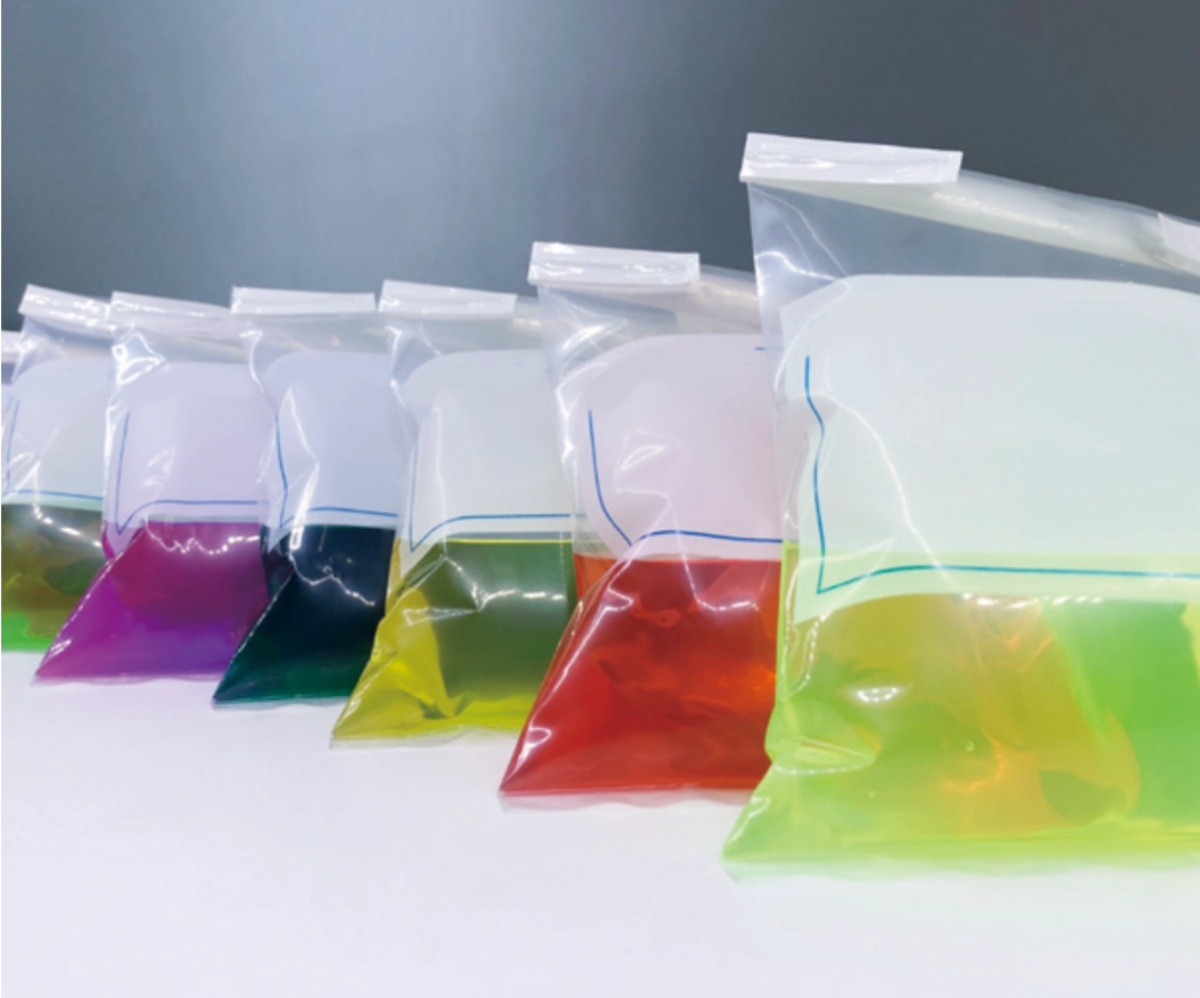
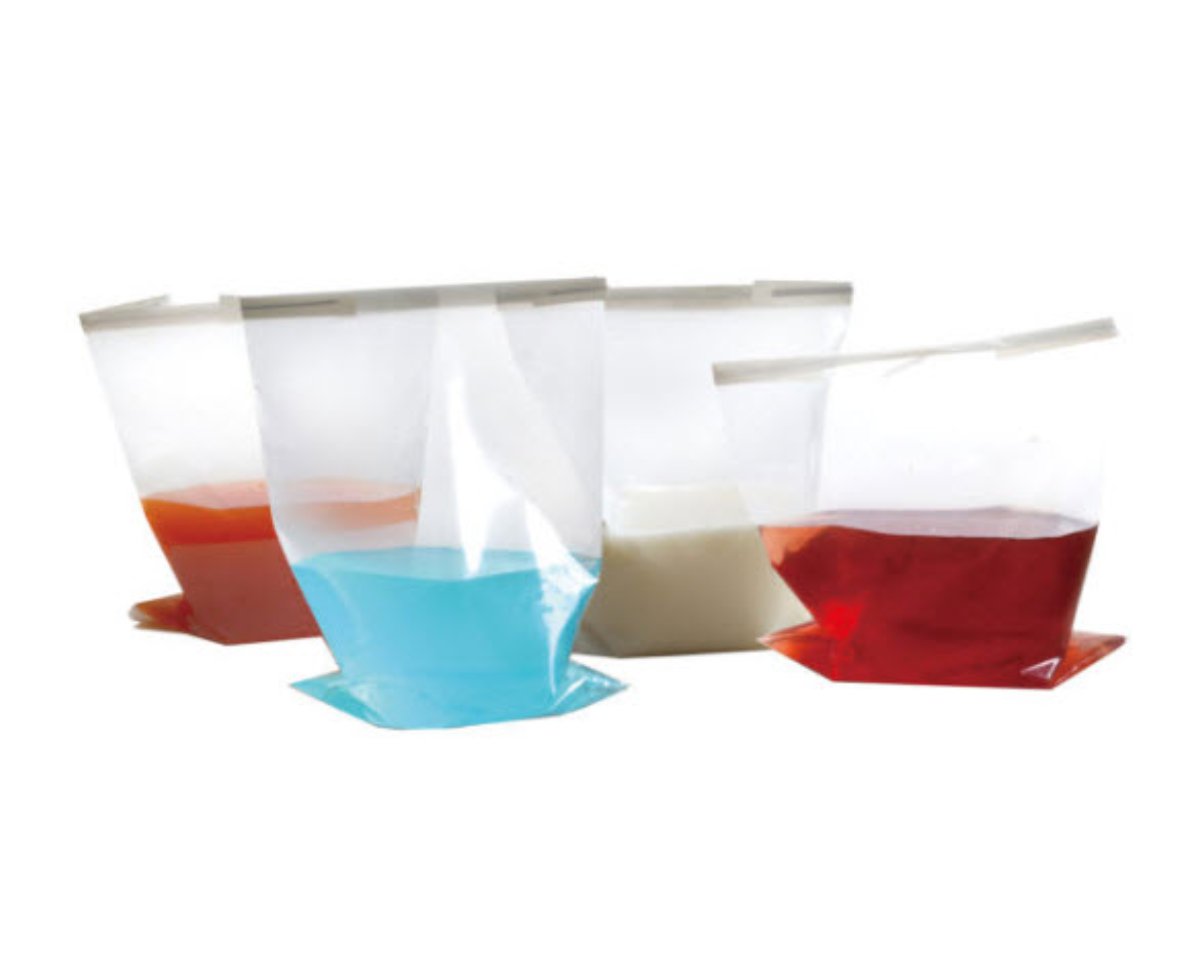
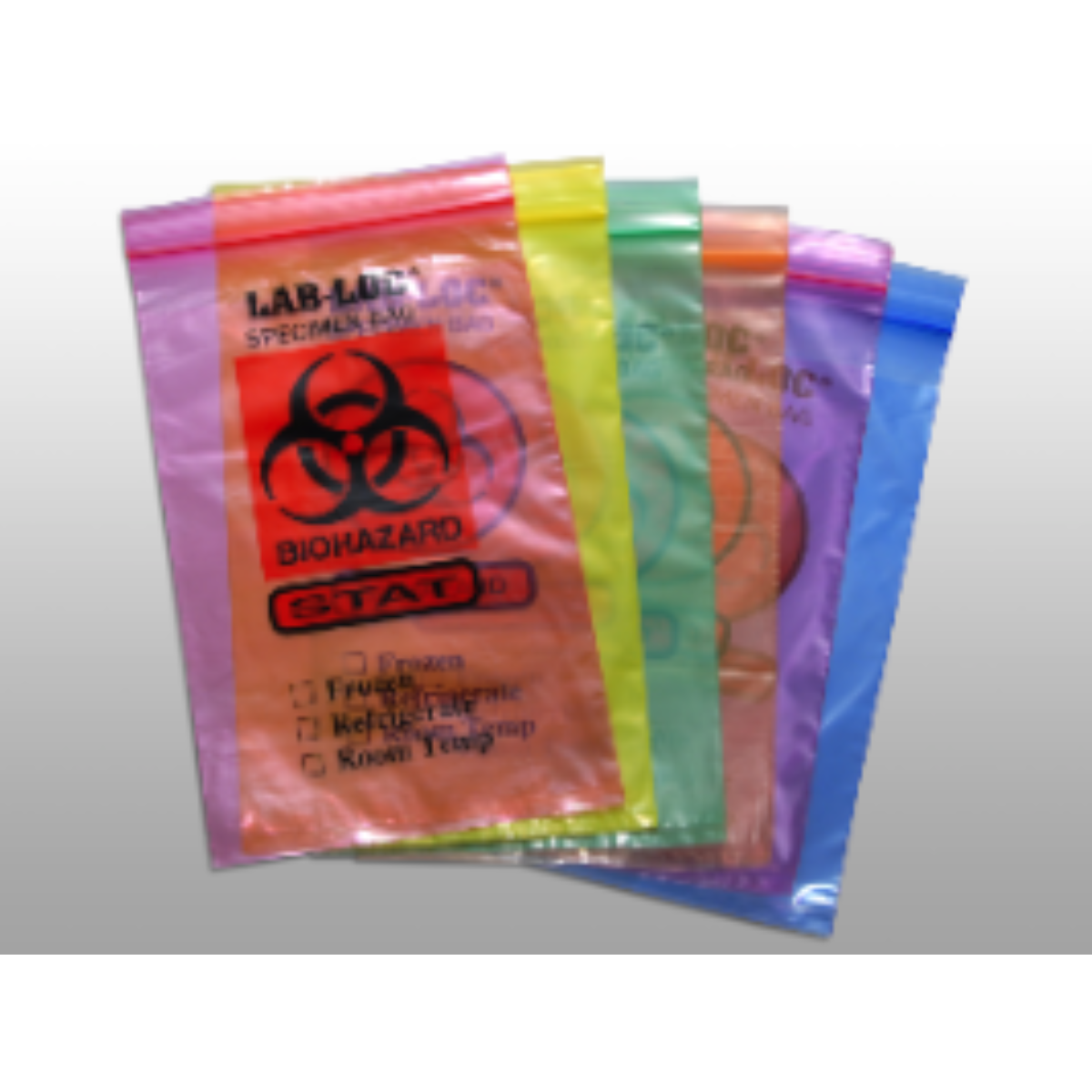
Plastic sample bags hold, transport and process samples in food, water, environmental and clinical labs. This category includes sterile sampling bags with wire closures and safety tabs (TWIRL'EM and Flip 'n Fold styles from about 4 oz to 55 oz, plus large-format bags up to 81 L), stand-up zipper bags, and blender bags for homogenizing samples, with or without a filter. For specimens there are biohazard transport and transfer bags with zip, glue or tamper-evident seals, outside document pouches, absorbent pads and tinted color options.
First decide what the bag has to do: collect a sterile sample, go into a blender, or carry a specimen with its paperwork. Then check capacity and dimensions, film thickness in mil (thicker film resists punctures from sharp samples), sterility, closure type, and whether a printed write-on area helps you track samples. For blender bags, confirm the bag suits your blender model and whether you need a filter. Pack and case quantities vary, so compare unit counts.
Plastic Sample Bags: common questions
What are lab sample bags used for?
Sample bags are used to collect and hold solid, liquid or swab samples, such as food, water, soil or surface samples, and keep them closed and identifiable on the way to the lab. Sterile sampling bags keep microbiological samples from being contaminated before testing. Blender bags hold a sample while it is homogenized with diluent, and specimen transport bags enclose clinical specimens with a separate pouch for the paperwork.
What does mil mean for bag thickness?
A mil is one thousandth of an inch (0.001 in, about 25 micrometers). A 2 mil bag is thinner and more flexible, while 3 or 4 mil film is stiffer and more resistant to punctures and tears from bones, shells, gravel or other sharp material. Large-format bags and bags meant for rough samples are usually made from thicker film.
Why do some blender bags have a filter?
A filter blender bag has a mesh panel inside the bag. After the sample is homogenized, solid particles are held back by the filter, so you can pipette liquid from the filtered side without debris blocking the pipette tip. Bags without a filter suit samples that do not leave large particles, or work where you want to keep the whole homogenate together.
What is a biohazard specimen transport bag?
It is a leak-resistant bag, usually printed with the biohazard symbol, used to carry clinical or biological specimens. Many have a separate outer pouch for the requisition form so the paperwork stays clean, and some include an absorbent pad to take up a leak. Packaging for specimens shipped by courier must also meet the carrier's and regulators' requirements, which a bag alone may not satisfy.
Related categories: Bottles and Jars, Plastic · Flasks · Caps and Closures · Beakers · Graduated Cylinders · Bottles and Jars, Glass · Funnels · Carboys · All Containers
Top brands: GVS North America · Labplas Inc · Elkay Plastics
Popular Plastic Sample Bags:
Plastic Sample Bags
-
 Bag Zipper Seal, LDPE 4x6in 2mmSKU: 628345-CSManufacturer: DynalonThese heavyweight (4 mil & 2 mil) polyethylene plastic zipper bags are ideal for collecting, storing and protecting laboratory specimens and samples easily and conveniently. Sealed zipper bags keep dust out. Not suggested for use with liquids. Many uses in the lab and industry. Bags lock easily and securely with the zipper locking feature. (1000 per CS)Learn Morewas $84.27 Special Price $56.90
- Bag Zipper Seal, LDPE 6x12in 4mmSKU: 628425-CSManufacturer: DynalonThese heavyweight (4 mil & 2 mil) polyethylene plastic zipper bags are ideal for collecting, storing and protecting laboratory specimens and samples easily and conveniently. Sealed zipper bags keep dust out. Not suggested for use with liquids. Many uses in the lab and industry. Bags lock easily and securely with the zipper locking feature. (250 per CS)Learn Morewas $215.60 Special Price $145.57
- Bag Zipper Seal, LDPE 2x3in 2mmSKU: 628325-CSManufacturer: DynalonBag Zipper Seal, LDPE 2x3" 2mm (1000 per CS)Learn Morewas $52.87 Special Price $35.70
-
 Bag General Use CS/100, PP 6x12x.0015inSKU: 628535-CSManufacturer: DynalonTransparent general use plastic bags are supplied in both low density polyethylene and polypropylene. Both LDPE and PP general use plastic bags are .0015" thick. (100 per CS)Learn Morewas $49.21 Special Price $33.23
- Bag General Use CS/100, PP 12x18x.0015inSKU: 628555-CSManufacturer: DynalonTransparent general use plastic bags are supplied in both low density polyethylene and polypropylene. Both LDPE and PP general use plastic bags are .0015" thick. (100 per CS)Learn Morewas $85.94 Special Price $58.02
-
 Bag Ties, LDPE 4000FtSKU: 626814-EAManufacturer: DynalonBag Ties, LDPE 4000Ft (1 per EA)Learn Morewas $230.24 Special Price $155.45
-
 Flask Erlenmeyer Sterile Baff, PC 125mLSKU: 641934-0125B-PKManufacturer: DynalonFlask Erlenmeyer Sterile Baff, PC 125mL (24 per PK)Learn Morewas $352.65 Special Price $309.53
- Bag Zipper Seal, LDPE 9x12in 4mmSKU: 628435-CSManufacturer: DynalonThese heavyweight (4 mil & 2 mil) polyethylene plastic zipper bags are ideal for collecting, storing and protecting laboratory specimens and samples easily and conveniently. Sealed zipper bags keep dust out. Not suggested for use with liquids. Many uses in the lab and industry. Bags lock easily and securely with the zipper locking feature. (250 per CS)Learn Morewas $255.94 Special Price $172.81
- Bag General Use CS/100, PP 22x30x.0015inSKU: 628595-CSManufacturer: DynalonTransparent general use plastic bags are supplied in both low density polyethylene and polypropylene. Both LDPE and PP general use plastic bags are .0015" thick. (100 per CS)Learn Morewas $196.51 Special Price $132.68
- Bag General Use CS/100, PP 16x18x.0015inSKU: 628575-CSManufacturer: DynalonTransparent general use plastic bags are supplied in both low density polyethylene and polypropylene. Both LDPE and PP general use plastic bags are .0015" thick. (100 per CS)Learn Morewas $101.08 Special Price $68.25
- Bag General Use CS/100, PP 10x16x.0015inSKU: 628545-CSManufacturer: DynalonTransparent general use plastic bags are supplied in both low density polyethylene and polypropylene. Both LDPE and PP general use plastic bags are .0015" thick. (100 per CS)Learn Morewas $64.91 Special Price $43.84
- Bag General Use CS/100, PP 18x23x.0015inSKU: 628585-CSManufacturer: DynalonTransparent general use plastic bags are supplied in both low density polyethylene and polypropylene. Both LDPE and PP general use plastic bags are .0015" thick. (100 per CS)Learn Morewas $135.82 Special Price $91.70
- Bag General Use CS/100, PP 4x10x.0015inSKU: 628515-CSManufacturer: DynalonBag General Use CS/100, PP 4x10x.0015" (100 per CS)Learn Morewas $38.68 Special Price $26.11
- Bag Zipper Seal, LDPE 3x5in 2mmSKU: 628335-CSManufacturer: DynalonThese heavyweight (4 mil & 2 mil) polyethylene plastic zipper bags are ideal for collecting, storing and protecting laboratory specimens and samples easily and conveniently. Sealed zipper bags keep dust out. Not suggested for use with liquids. Many uses in the lab and industry. Bags lock easily and securely with the zipper locking feature. (1000 per CS)Learn Morewas $67.42 Special Price $45.53
- Bag Zipper Seal, LDPE 5x8in 2mmSKU: 628355-CSManufacturer: DynalonThese heavyweight (4 mil & 2 mil) polyethylene plastic zipper bags are ideal for collecting, storing and protecting laboratory specimens and samples easily and conveniently. Sealed zipper bags keep dust out. Not suggested for use with liquids. Many uses in the lab and industry. Bags lock easily and securely with the zipper locking feature. (1000 per CS)Learn Morewas $144.72 Special Price $97.72
- Bag Zipper Seal, LDPE 9x12in 2mmSKU: 628365-CSManufacturer: DynalonThese heavyweight (4 mil & 2 mil) polyethylene plastic zipper bags are ideal for collecting, storing and protecting laboratory specimens and samples easily and conveniently. Sealed zipper bags keep dust out. Not suggested for use with liquids. Many uses in the lab and industry. Bags lock easily and securely with the zipper locking feature. (1000 per CS)Learn Morewas $312.93 Special Price $211.28
- Bag Zipper Seal, LDPE 5x8in 4mmSKU: 628415-CSManufacturer: DynalonThese heavyweight (4 mil & 2 mil) polyethylene plastic zipper bags are ideal for collecting, storing and protecting laboratory specimens and samples easily and conveniently. Sealed zipper bags keep dust out. Not suggested for use with liquids. Many uses in the lab and industry. Bags lock easily and securely with the zipper locking feature. (500 per CS)Learn Morewas $263.78 Special Price $178.09
- Bag Zipper Seal, LDPE 4x6in 4mmSKU: 628405-CSManufacturer: DynalonThese heavyweight (4 mil & 2 mil) polyethylene plastic zipper bags are ideal for collecting, storing and protecting laboratory specimens and samples easily and conveniently. Sealed zipper bags keep dust out. Not suggested for use with liquids. Many uses in the lab and industry. Bags lock easily and securely with the zipper locking feature. (500 per CS)Learn Morewas $216.36 Special Price $146.08
- Bag General Use CS/100, PP 6x10x.0015inSKU: 628525-CSManufacturer: DynalonTransparent general use plastic bags are supplied in both low density polyethylene and polypropylene. Both LDPE and PP general use plastic bags are .0015" thick. (100 per CS)Learn Morewas $46.93 Special Price $31.69
- Bag General Use CS/100, PP 12x24x.0015inSKU: 628565-CSManufacturer: DynalonTransparent general use plastic bags are supplied in both low density polyethylene and polypropylene. Both LDPE and PP general use plastic bags are .0015" thick. (100 per CS)Learn Morewas $95.27 Special Price $64.32
- Manufacturer Dynalon Remove This Item



How Can We Help?
This is a custom sub-title.
LPS provides procurement services:
Strategic and customized product sourcing services to find the best vendorsUnparalleled customer service from dedicated procurement managers
Custom web portal where you can order items from any vendor on one site
Consolidate orders and invoices
Wholesale “club” pricing for members
Procure-to-Pay software solutions and process consulting
Enterprise procurement solutions designed for small and mid-sized labs