

This category covers plastic bottles and jars for storing reagents, samples and solutions, from 2 mL sample cups and 8 mL Boston rounds to 5 L storage bottles and 4000 mL wide mouth jars. Materials include HDPE, LDPE, polypropylene, polystyrene and polycarbonate, in narrow mouth, wide mouth, Boston round, square and graduated styles, with natural and amber options. It also includes wash bottles pre-labeled for distilled or deionized water, acetone, ethanol, methanol and isopropanol, sterile polycarbonate storage bottles, samplers with graduated bottles, and precleaned jars with lined closures.
Match the plastic to the contents: HDPE and polypropylene resist most aqueous solutions, acids and bases, polypropylene can usually be autoclaved, and LDPE is soft enough for squeeze bottles. Choose narrow mouth bottles for pouring liquids and wide mouth jars for solids and easy filling. Use amber bottles for light-sensitive contents and sterile or precleaned containers where contamination matters, and check the closure size, liner and pack quantity before ordering.
Bottles and Jars, Plastic: common questions
How many ounces is a 1000 mL bottle?
1000 mL is one liter, or about 33.8 US fluid ounces, a little more than a quart (32 fl oz). Bottle capacities are usually nominal, meaning the bottle holds that amount with some headspace below the neck, so the brimful volume is somewhat larger. When a bottle is labeled in both units, the ounce figure may be rounded.
Which plastic should I choose for lab bottles?
It depends on the contents and how you will clean the bottle. HDPE is rigid and resists most acids, bases and aqueous solutions. Polypropylene has similar chemical resistance and can generally be autoclaved. LDPE is flexible, so it is used for wash and squeeze bottles. Polycarbonate is clear and strong but less resistant to some chemicals. For solvents, check a chemical compatibility chart.
Why are wash bottles labeled and color-coded?
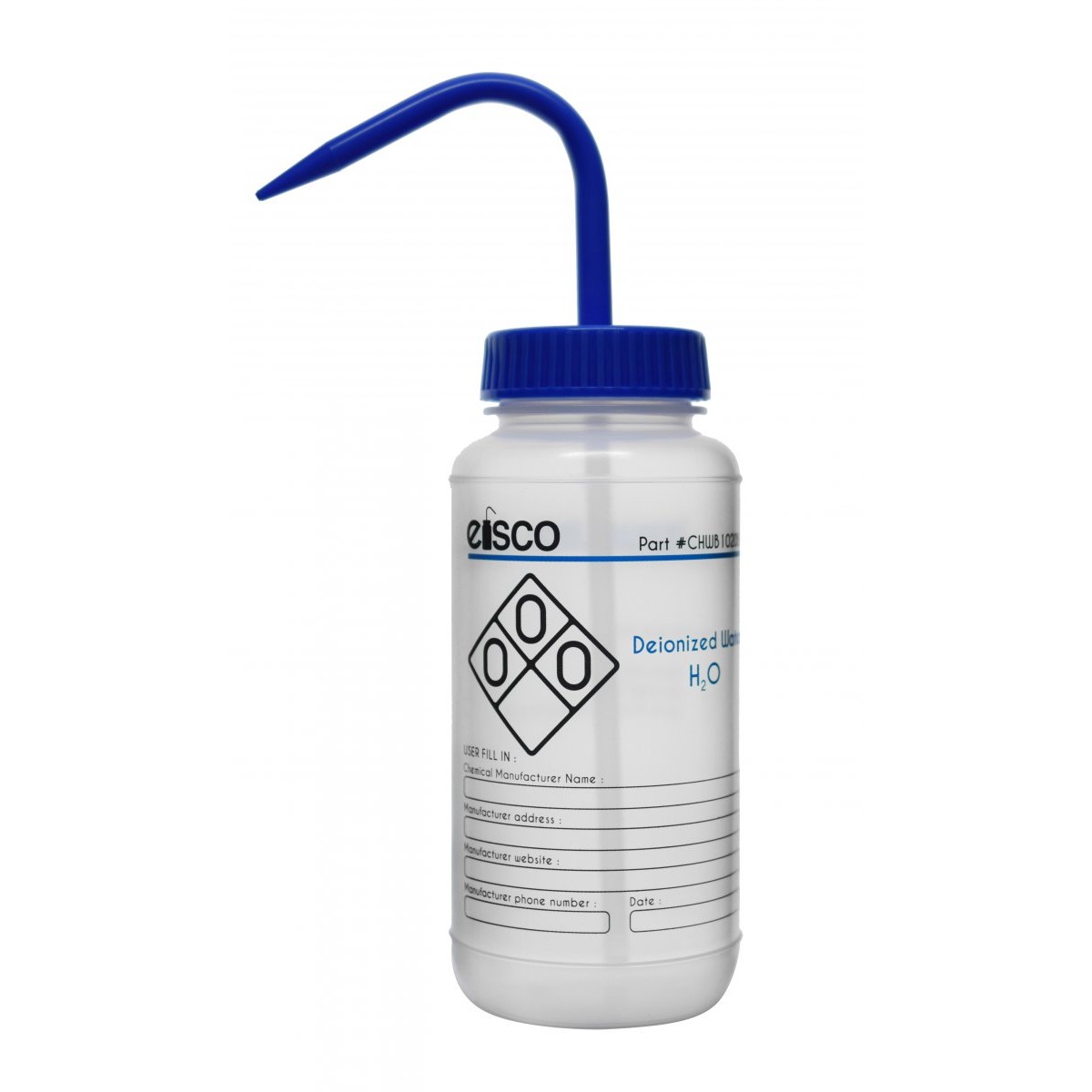
Labeled wash bottles show what they contain, such as acetone, ethanol, methanol, isopropanol or distilled water, with color coding so bottles are not mixed up at the bench. That reduces the chance of rinsing with the wrong liquid or refilling a bottle with an incompatible one. Keep each bottle for the liquid printed on it.
What does precleaned mean for a sample jar?
A precleaned jar has been washed and packaged by the manufacturer so it can be used for sample collection without cleaning it in the lab first, which matters when trace contaminants could affect results, as in environmental testing. Cleaning standards differ between products, so check the product information or certificate to see what the container was cleaned and tested for.
Related categories: Flasks · Caps and Closures · Beakers · Graduated Cylinders · Bottles and Jars, Glass · Funnels · Carboys · Cryogenic Vials · All Containers
Top brands: Globe Scientific · Dynalon · Eisco Scientific LLC
Popular Bottles and Jars, Plastic:

Bottles and Jars, Plastic
-
 Bottle, Narrow Mouth, Boston Round, Amber HDPE with Amber PP Closure, 15mL, Bulk Packed with Bottles and Caps Bagged Separately, 2000/CaseSKU: 7560015AMBKS-PKManufacturer: Globe ScientificBottle, Narrow Mouth, Boston Round, Amber HDPE with Amber PP Closure, 15mL, Bulk Packed with Bottles and Caps Bagged Separately, 2000/Case (2000 per PK)Learn Morewas $1,449.70 Special Price $1,057.08
 -
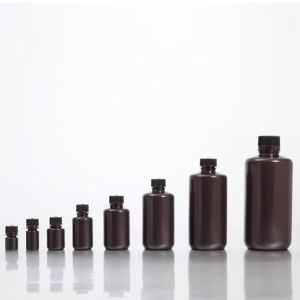 15ml hdpe bottles. PP cap,opaque brown design, CS1000SKU: 04-N3015U-CSManufacturer: Biologix15ml hdpe bottles. hdpemade bottle, pp cap. great chemical resistance for most acid, alkali and alcohol. without a liner. opaque brown design, which can reduce the uv transmission and protect photosensitive contents. 100/bag, 10 bags/case (1000 per CS )Learn Morewas $410.76 Special Price $328.94
 -
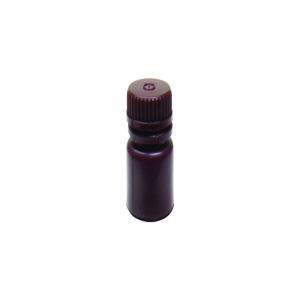 United Scientific™ Reagent Bottle (Narrow Mouth) 4 ml, Amber, HDPESKU: 33421-PKManufacturer: United Scientific SuppliesUnited Scientific™ Narrow Mouth, HDPE, reagent bottles are manufactured from USP Class VI resin that is FDA-21CFR compliant. The amber bottles are designed to reduce UV light transmission to protect light-sensitive contents, and conform to USP requirements for storage of light sensitive materials. Excellent chemical resistance to most acids, bases, and alcohols. Polypropylene caps are included. (72 per PK )Learn Morewas $33.10 Special Price $24.15
 -
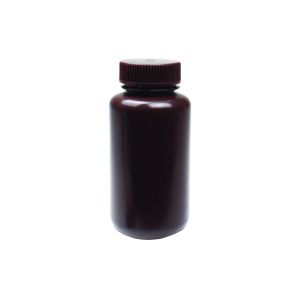 United Scientific™ Reagent Bottle (Wide Mouth) 250 ml, Amber, HDPESKU: 33464-PKManufacturer: United Scientific SuppliesUnited Scientific™ Wide Mouth, HDPE, reagent bottles are manufactured from USP Class VI resin that is FDA-21CFR compliant. The amber bottles are designed to reduce UV light transmission to protect light-sensitive contents, and conform to USP requirements for storage of light sensitive materials. Excellent chemical resistance to most acids, bases, and alcohols. Polypropylene caps are included. (12 per PK )Learn Morewas $34.80 Special Price $25.38
 -
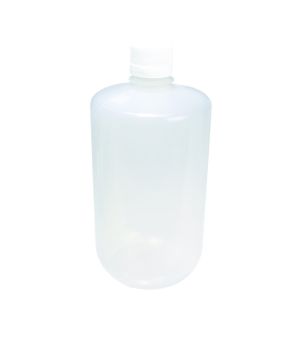 United Scientific™ Narrow Mouth PP Storage 2LSKU: BNMP2L-EAManufacturer: United Scientific SuppliesThese large capacity reagent bottles feature narrow mouths, integrated shoulder loops (except 2L) and include a lined HDPE cap for a tight seal. Constructed of polypropylene, the bottles are translucent, pliable, and have excellent strength for extended use. Ideal for packing, shipping, and storage purposes. Cap needs to be removed before autoclaving. (1 per EA )Learn Morewas $22.50 Special Price $16.41
 -
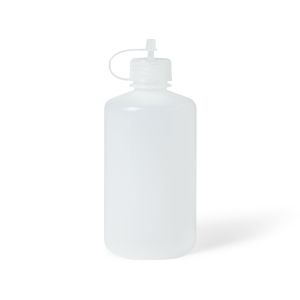 Dispenser Dropping Bottle, LDPE, 15mlSKU: UNDDB250-PKManufacturer: United Scientific SuppliesDispenser Dropping Bottle, LDPE, 15ml (12 per PK )Learn Morewas $22.10 Special Price $16.10
 -
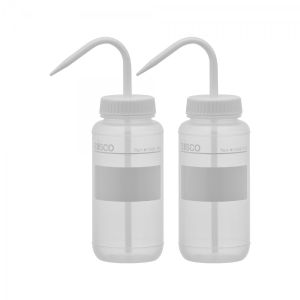 No Label PP Wash Bottle 500ml, Wide Mouth, 1 Color - Pack of 2SKU: CHWB1002PK2-PKManufacturer: Eisco Scientific LLCNo Label PP Wash Bottle 500ml, Wide Mouth, 1 Color - Pack of 2 (2 per PK )Learn Morewas $12.25 Special Price $9.96
 -
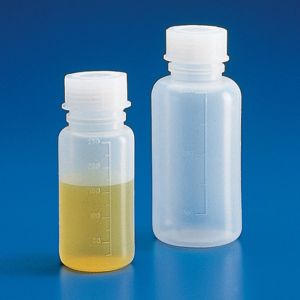 Bottle with Screwcap, Wide Mouth, LDPE, Graduated, 500mL, PK5SKU: 601614-5-PKManufacturer: Globe ScientificBottle with Screwcap, Wide Mouth, LDPE, Graduated, 500mL, PK5 (10 per PK)Learn Morewas $38.70 Special Price $33.86
 -
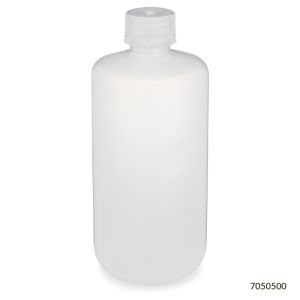 Bottle, Narrow Mouth Boston Round, PP with PP Closure, 500mL, 12/Pack, 48/CaseSKU: 7050500-CSManufacturer: Globe ScientificBottle, Narrow Mouth Boston Round, PP with PP Closure, 500mL, 12/Pack, 48/Case (48 per CS)Learn Morewas $306.70 Special Price $223.64
 -
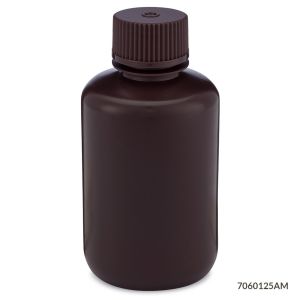 Bottle, Narrow Mouth Boston Round, Amber HDPE with Amber PP Closure, 125mL, 12/Pack, 72/CaseSKU: 7060125AM-PKManufacturer: Globe ScientificBottle, Narrow Mouth Boston Round, Amber HDPE with Amber PP Closure, 125mL, 12/Pack, 72/Case (12 per PK)Learn Morewas $53.90 Special Price $39.30
 -
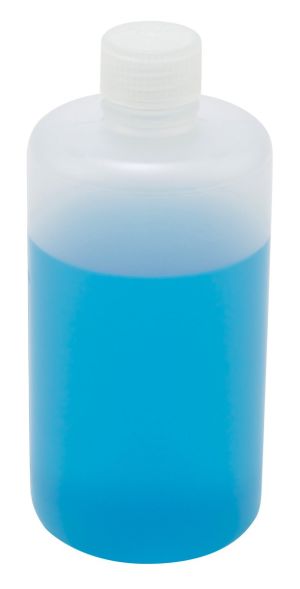 Bottle NM, PP 16ozSKU: 301725-0016-CSManufacturer: DynalonBottle NM, PP 16oz (48 per CS)Learn Morewas $288.69 Special Price $194.92
 -
 Bottle Graduated WM, PP 250mLSKU: 202445-0250-CSManufacturer: DynalonTranslucent, rigid polypropylene bottles are autoclavable and can withstand temperatures up to 135°C. Specially designed closure provides leakproof seal and has hole for tagging. FDA compliant for food and beverage. (100 per CS)Learn Morewas $735.59 Special Price $496.63
 -
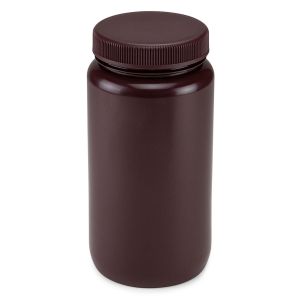 Bottle, Amber Narrow Mouth, Round, PP, 2 Liter, EA/1SKU: 7012000AM-EAManufacturer: Globe ScientificBottle, Narrow Mouth, Amber PP Bottle, PP Screw Cap, 2 Litres , 0.5 Gallons EA/1 (1 per EA)Learn Morewas $43.00 Special Price $31.35
 -
 Bottle Spouted, LDPE 250mLSKU: 524185-0250-CSManufacturer: DynalonThe white polyethylene screw cap on the 30 and 60mL Azlon Dropper Cap Bottles has a pivoting nozzle which can be raised to give a direct jet of liquid as the bottle is squeezed. When the nozzle is closed on the dropper caps the passage for liquid is shut off to give an airtight seal at normal pressure, although when the nozzle is partly open it makes an excellent dropping device. (10 per CS)Learn Morewas $49.05 Special Price $33.12
 -
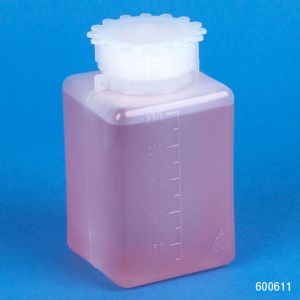 Bottle with Screwcap, Wide Mouth, Square, Graduated, PE , Cap: PP, 250mLSKU: 600611-10-PKManufacturer: Globe ScientificBottle with Screwcap, Wide Mouth, Square, Graduated, PE (Cap: PP), 250mL, PK10 (6 per PK)Learn Morewas $44.70 Special Price $39.11
 -
 Bottle Dropping, LDPE 1ozSKU: 605065-0010-CSManufacturer: DynalonDropper bottles supplied in a range of convenient capacities from 60mL to 500mL. LDPE dropper bottles feature a sturdy white dropping cap. (48 per CS)Learn Morewas $175.87 Special Price $118.74
 -
 Bottle Graduated WM, PP 1000mLSKU: 202445-1000-CSManufacturer: DynalonTranslucent, rigid polypropylene bottles are autoclavable and can withstand temperatures up to 135°C. Specially designed closure provides leakproof seal and has hole for tagging. FDA compliant for food and beverage. (25 per CS)Learn Morewas $425.49 Special Price $287.27
 -
 Bottle Square, HDPE/PP 50mLSKU: 226295-0050-CSManufacturer: DynalonConvenient square Polyethylene bottle design saves space. The integrity of the seal is insured by the additional internal Polypropylene plug. Hole in Polypropylene closure for attachment of tag. Maximum temperature for High Density Polyethylene is 110°C and Polypropylene is 121°C. (100 per CS)Learn Morewas $284.98 Special Price $192.41
 - Bottle, Narrow Mouth Boston Round, Amber HDPE with Amber PP Closure, 125mL, 12/Pack, 72/CaseSKU: 7060125AM-CSManufacturer: Globe ScientificBottle, Narrow Mouth Boston Round, Amber HDPE with Amber PP Closure, 125mL, 12/Pack, 72/Case (72 per CS)Learn Morewas $246.10 Special Price $179.45
-
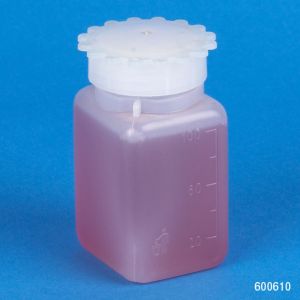 Bottle with Screwcap, Wide Mouth, Square, Graduated, PE , Cap: PP, 100mL, 100/Bag, 6 Bags/UnitSKU: 600610B-CSManufacturer: Globe ScientificBottle with Screwcap, Wide Mouth, Square, Graduated, PE (Cap: PP), 100mL, 100/Bag, 6 Bags/Unit, CS600 (600 per CS)Learn Morewas $1,909.80 Special Price $1,671.08
 -
 Bottle NM, HDPE 2ozSKU: 301705-0002-CSManufacturer: DynalonBottle NM, HDPE 2oz (72 per CS)Learn Morewas $147.96 Special Price $99.91
 -
 Reagent Bottle, PP, NS 29/32 stopper, 1000mL, pack of 10SKU: 100694-PKManufacturer: Brandtech ScientificReagent Bottle, PP, NS 29/32 stopper, 1000mL, pack of 10 (10 per PK)Learn Morewas $140.00 Special Price $130.89
 -
 Bottle, PFA, wide mouth, PFA cap, 500mL, eachSKU: 109597-EAManufacturer: Brandtech ScientificBottle, PFA, wide mouth, PFA cap, 500mL, each (1 per EA)Learn Morewas $399.00 Special Price $373.03
 -
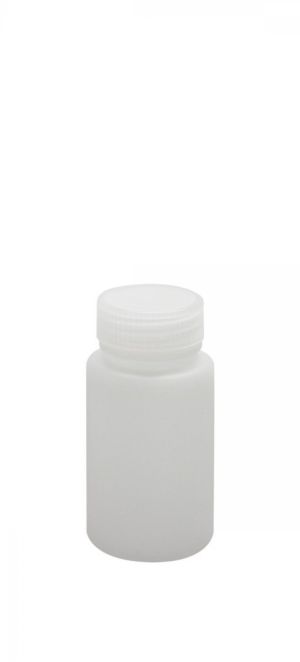 125mL Natural Wide Mouth Bottle, 50x99mm, 38mm Closure - Bulk PackSKU: D0433B-4-CSManufacturer: J G Finneran125mL Natural Wide Mouth Bottle, 33mm Closure - 350 Bulk Pack, CS350 (350 per CS)Learn More$747.74



How Can We Help?
This is a custom sub-title.
LPS provides procurement services:
Strategic and customized product sourcing services to find the best vendorsUnparalleled customer service from dedicated procurement managers
Custom web portal where you can order items from any vendor on one site
Consolidate orders and invoices
Wholesale “club” pricing for members
Procure-to-Pay software solutions and process consulting
Enterprise procurement solutions designed for small and mid-sized labs