

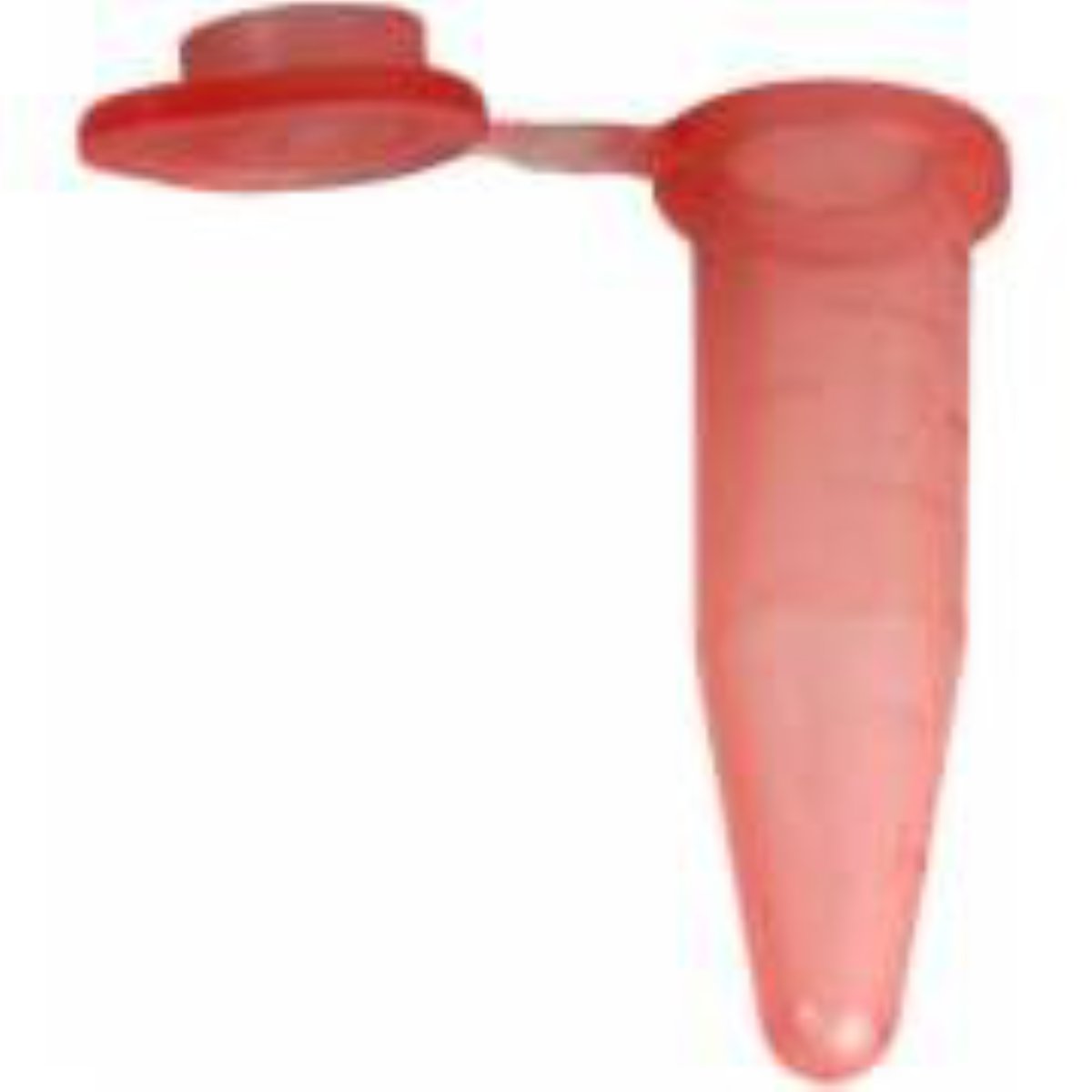
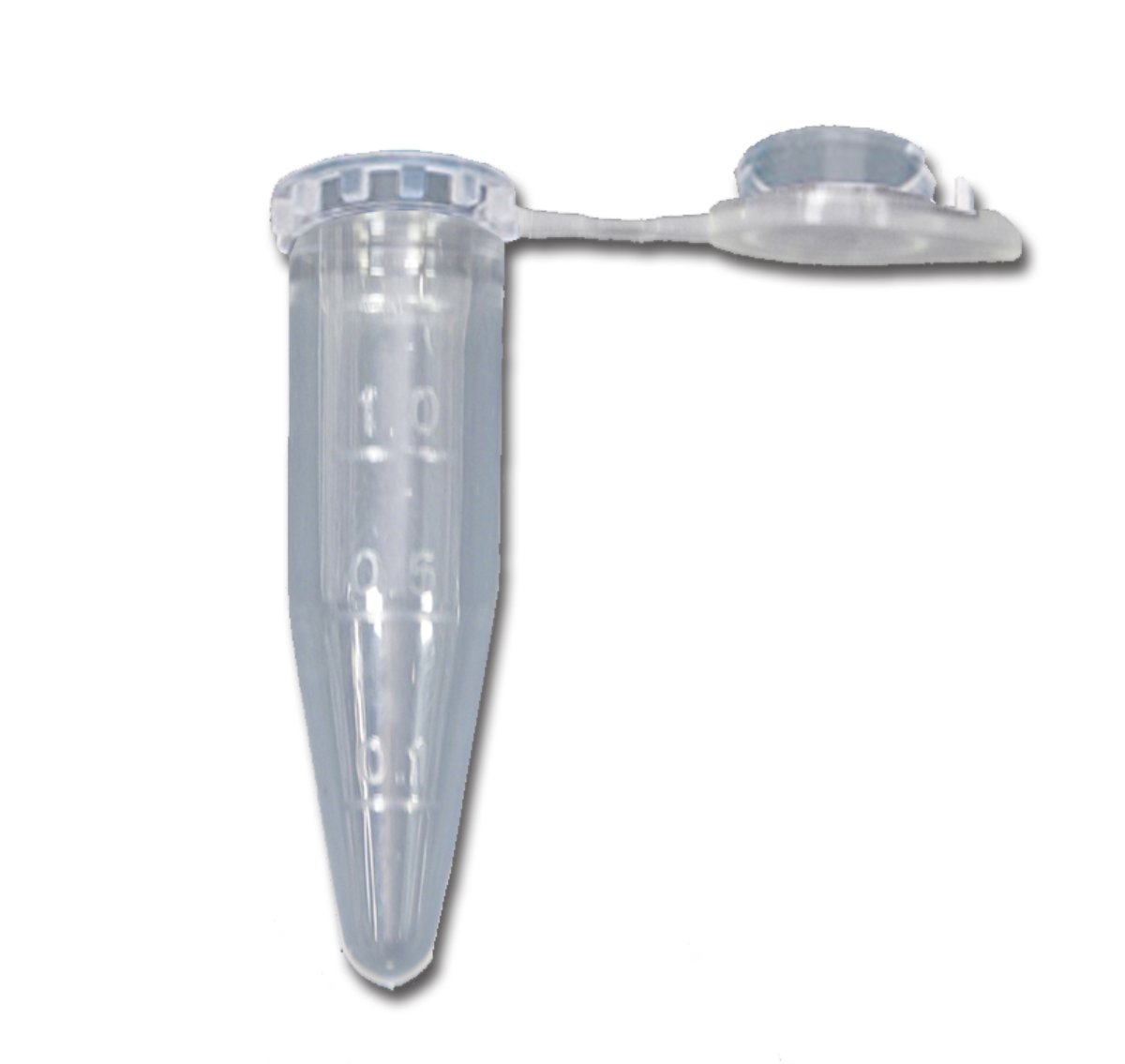
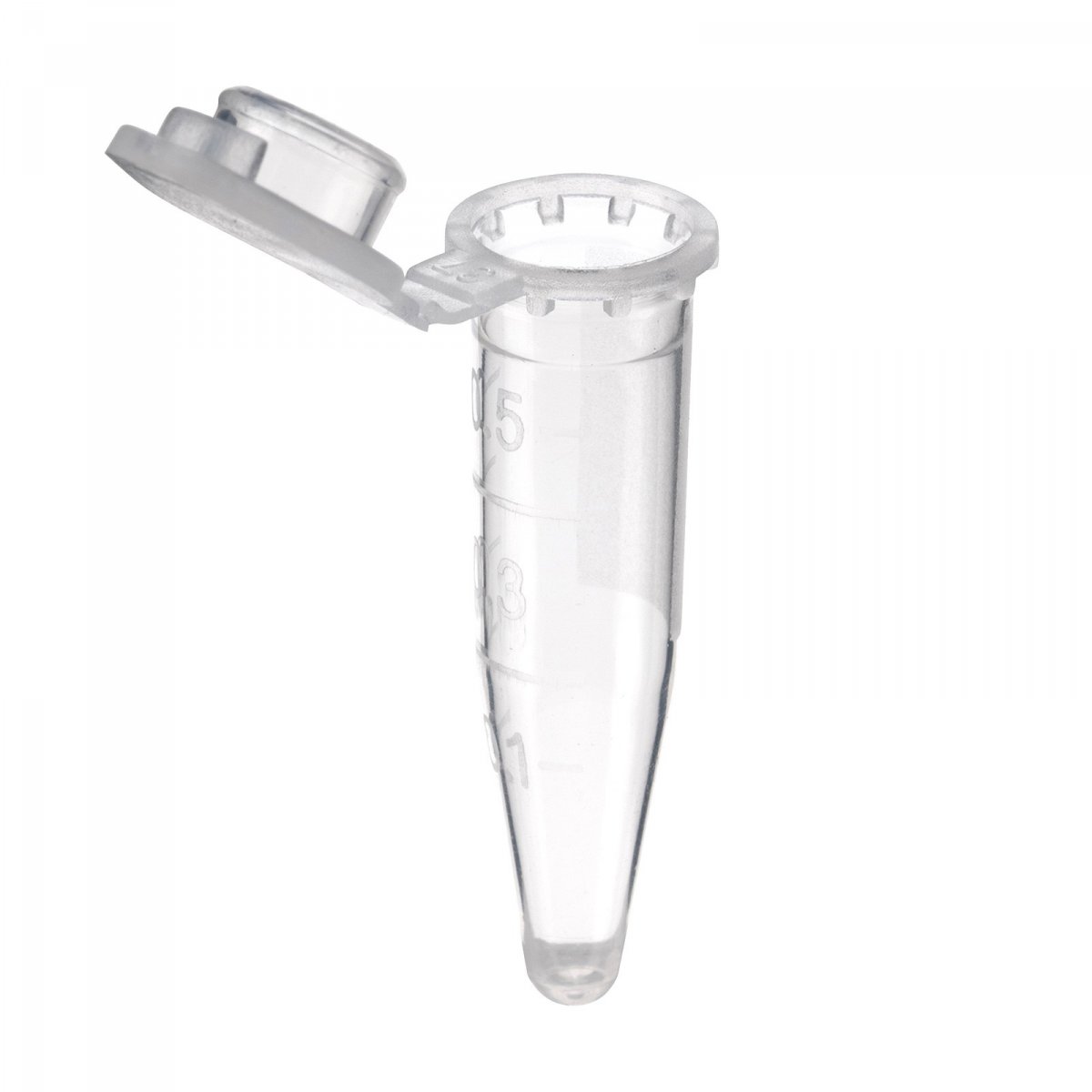
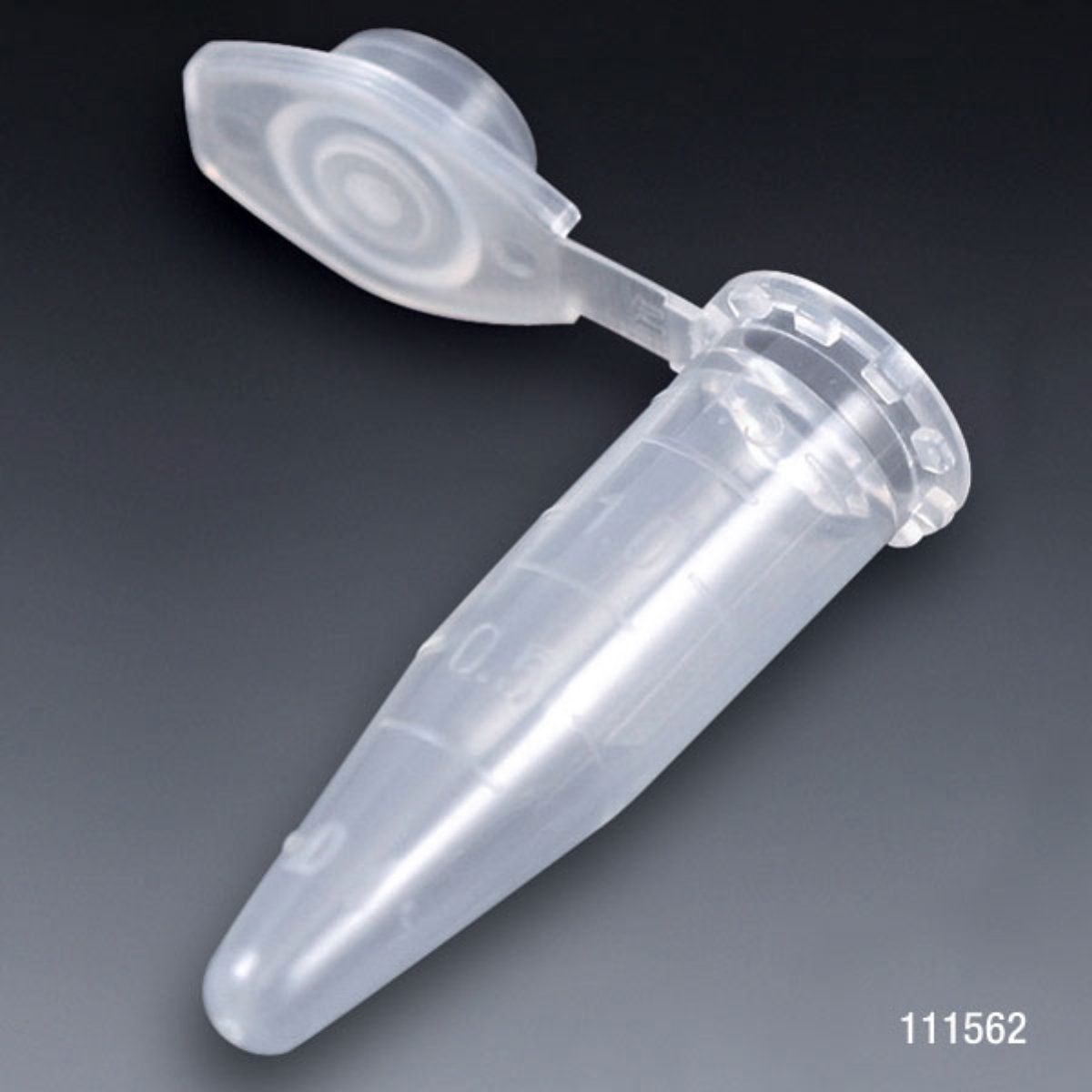
Microcentrifuge tubes are small, usually polypropylene tubes for spinning and storing samples in molecular biology, biochemistry and clinical work. This category covers sizes from 250 µL and 0.5 mL through 0.6, 1.5 and 2.0 mL to 5 mL macro tubes, with attached snap caps, flat tops, lock-top caps and screw caps with O-rings. Options include sterile or non-sterile, graduated or plain, natural, amber, black and colored tubes, self-standing and conical bottoms, low retention tubes and lots certified for the absence of RNase, DNase and pyrogens. Racks and tube-and-pestle sets are listed too.
Choose the volume first, then check that the tube fits your centrifuge rotor or the adapters you have. Pick a screw cap with an O-ring for heating, freezing or shipping, where a snap cap could open, and a snap cap for quick bench work. Use sterile tubes certified for the absence of nucleases for RNA and DNA work, amber or black tubes for light-sensitive samples, and low retention tubes when small volumes must not be lost on the tube wall. Check the maximum g-force rating against your protocol.
Microcentrifuge: common questions
Will 1.5 mL tubes fit any microcentrifuge?
Standard 1.5 mL and 2.0 mL tubes fit the rotors of most microcentrifuges. Smaller 0.5 mL and 0.2 mL tubes usually need adapters or a rotor with matching holes, and 5 mL tubes need a rotor made for them. Screw-cap and self-standing tubes can have a different outer shape, so check the tube dimensions against your rotor before ordering a large quantity.
Should I use snap-cap or screw-cap microtubes?
Snap caps are quick to open and close and suit routine pipetting and short spins. Screw caps with an O-ring seal more securely, so they are a better choice for heating or boiling samples, freezing and thawing, long-term storage and shipping, where pressure or temperature changes could open a snap cap. Screw-cap tubes generally cost more per tube.
What are low retention microcentrifuge tubes?
Low retention tubes have an inner surface made or treated so that less liquid, protein or nucleic acid sticks to the tube wall. They help when you work with small volumes, dilute samples or costly reagents, because more of the sample can be recovered. For ordinary buffers and larger volumes, standard tubes are usually adequate.
Related categories: 15 and 50 ML Centrifuge Tubes · Centrifuge Bottles · All Centrifuge Tubes
Top brands: Bio Plas · Globe Scientific · MTC Bio
Popular Microcentrifuge:
Microcentrifuge
-
 Microtb 0.5 Rnase-Fr Pk100SKU: 749510-0590-CSManufacturer: Kimble ChaseMicrotube RNase DNase and pyrogen free for grinding soft tissues and resuspension of protein and DNA pellets. Eliminate need for pretreatment of microtubes. 0.5mL.Learn Morewas $72.63 Special Price $72.04
-
 Tube,Cent,Disp,S/T Finish,5mlSKU: 73785-5-EAManufacturer: Kimble ChaseTube,Cent,Disp,S/T Finish,5ml (1 per EA )Learn Morewas $248.46 Special Price $176.54
- Manufacturer Kimble Chase Remove This Item


How Can We Help?
This is a custom sub-title.
LPS provides procurement services:
Strategic and customized product sourcing services to find the best vendorsUnparalleled customer service from dedicated procurement managers
Custom web portal where you can order items from any vendor on one site
Consolidate orders and invoices
Wholesale “club” pricing for members
Procure-to-Pay software solutions and process consulting
Enterprise procurement solutions designed for small and mid-sized labs