



HardyCHROM CRE HDx, 15x100mm plt PK10
was $33.96 Special Price $27.24
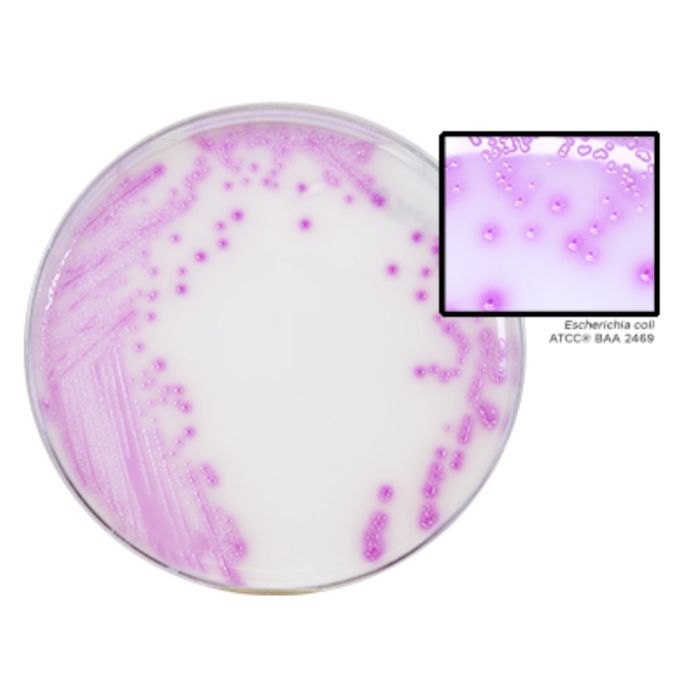
Carbapenem resistance screening! HardyCHROM™ CRE (Carbapenem Resistant Enterobacteriaceae) is a selective and differential chromogenic agar medium intended for the qualitative and presumptive detection from stool specimens of Escherichia coli that are non-susceptible to carbapenems as pink colonies and KES (Klebsiella aerogenes, Klebsiella oxytoca, Klebsiella pneumoniae, Enterobacter cloacae complex, and Serratia marcescens) that are non-susceptible to carbapenems as blue colonies. HardyCHROM CRE is intended as an aid in the detection, identification of colonization and control of these bacteria in a healthcare setting. HardyCHROM™ CRE is not intended to diagnose infection or guide therapy. Results can be interpreted after incubation for 18-24 hours. Subculture to non-selective medium is required for confirming identification, antimicrobial susceptibility testing and epidemiological typing. Features and Benefits: Non-susceptible E. coli produces colonies that are rose to magenta in color with darker pink centers. Klebsiella, Enterobacter, and Serratia spp. produce large, dark (10 per PK)
Manufacturer: Hardy Diagnostics
SKU
G323-PK
HardyCHROM CRE HDx, 15x100mm plt PK10 is available to buy in increments of 1
Product Details
Carbapenem resistance screening! HardyCHROM™ CRE (Carbapenem Resistant Enterobacteriaceae) is a selective and differential chromogenic agar medium intended for the qualitative and presumptive detection from stool specimens of Escherichia coli that are non-susceptible to carbapenems as pink colonies and KES (Klebsiella aerogenes, Klebsiella oxytoca, Klebsiella pneumoniae, Enterobacter cloacae complex, and Serratia marcescens) that are non-susceptible to carbapenems as blue colonies. HardyCHROM CRE is intended as an aid in the detection, identification of colonization and control of these bacteria in a healthcare setting. HardyCHROM™ CRE is not intended to diagnose infection or guide therapy. Results can be interpreted after incubation for 18-24 hours. Subculture to non-selective medium is required for confirming identification, antimicrobial susceptibility testing and epidemiological typing. Features and Benefits: Non-susceptible E. coli produces colonies that are rose to magenta in color with darker pink centers. Klebsiella, Enterobacter, and Serratia spp. produce large, dark
Manufacturer Part Number/SKU: G323-PK
Tags: Hardy Diagnostics