

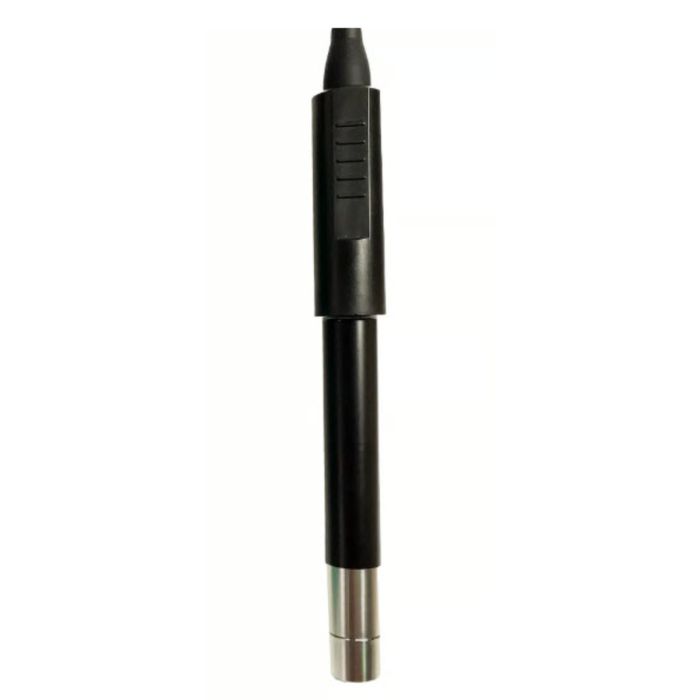


DO810 Luminescent Optical DO Probe(10M)
was $799.00 Special Price $713.11
The DO803 Luminescent Optical DO Probe is the replacement optical DO probe for Apera DO850 and DO8500 Portable Optical DO meters. The probe adopts state-of-the-art optical DO sensor, which has significant advantages compared to the traditional galvanic/polarographic probes. (1 per EA )
Manufacturer: Apera Instruments
SKU
AI4102-EA
DO810 Luminescent Optical DO Probe(10M) is available to buy in increments of 1
Product Details
| Traditional Polarographic/Galvanic DO Probes vs. Optical DO Probes | ||
| Polarographic or Galvanic DO Probes | Optical DO Probes | |
| Measurement | Consume oxygen during test — unstable readings. Users have to stir probes at a certain speed to get stable readings. | Adopts luminescent technologies. No oxygen being consumed during test — readings get stabilized quickly. |
| Calibration | Serious polarization problem will occur, requiring frequent calibration | No polarization. No need to calibrate frequently. |
| Maintenance | Need to replace membrane, replenish electrolytes, and clean cathodes and anodes | No electrolytes to replenish; No cathodes and anodes to clean. |
| Performance | Slow response, poorer repeatability, lower accuracy | Fast response, good repeatability, high accuracy |
| Lifetime | Short service life. Need to replace the membrane frequently. | The replaceable membrane cap's service life >8000 hours |
Effortless Operation
The Optical DO probe does not consume oxygen in the liquid, hence there is no requirement for water flowing speed. Just insert the probe in the liquid, and get the readings when it's stable -- as simple as measuring pH.
Quick Stable Reading
It takes only 1 to 3 minutes for reading to get fully stabilized. Frequent calibration is not necessary. Calibration only takes 1-2 minutes
Virtually No Maintenance
There is no electrolytes to replenish; no cathodes and anodes to clean.
Manufacturer Part Number/SKU: AI4102-EA
Tags: Apera Instruments